Day 361 – Is the Brain Getting Old or Just Changing?

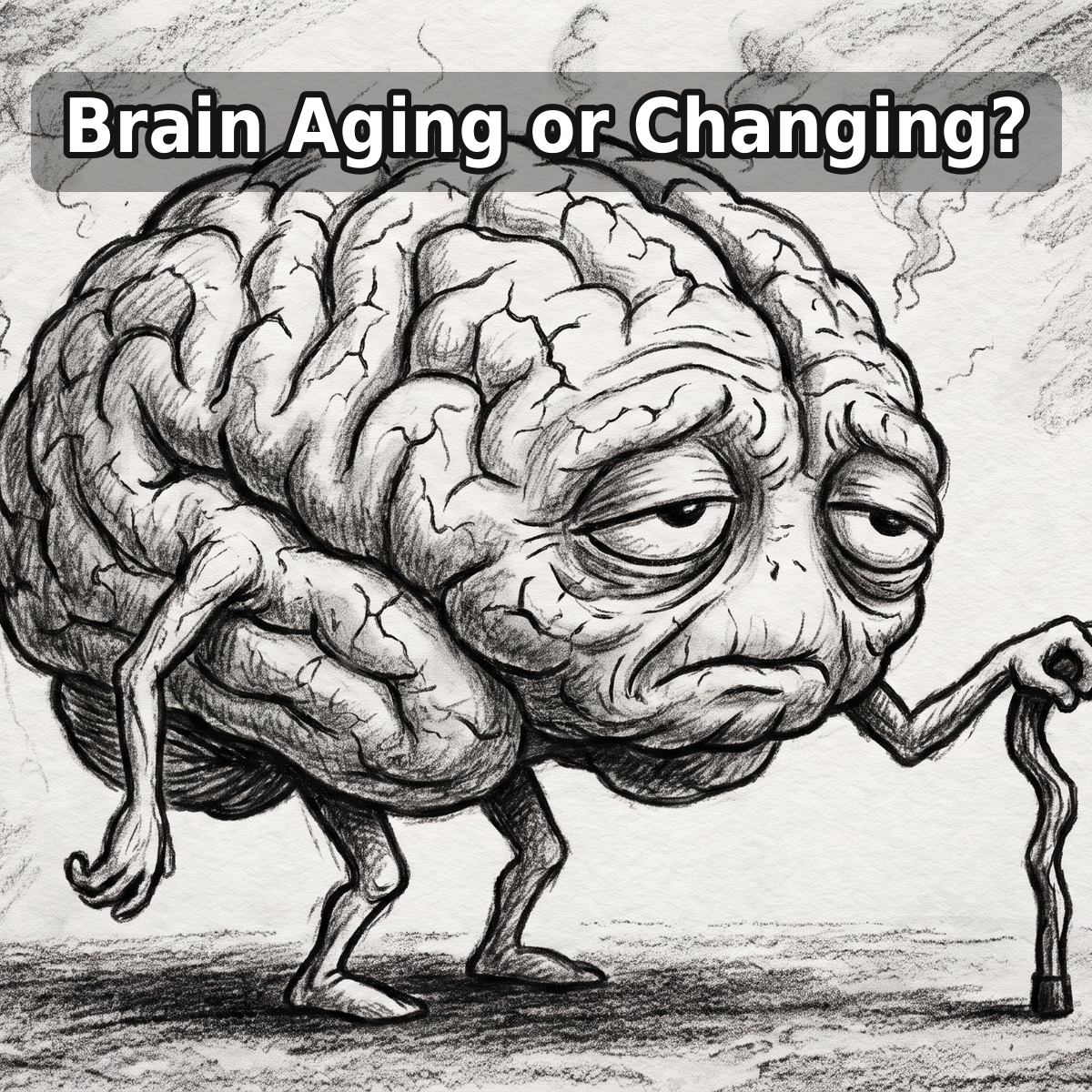
As we age, our brains may shift from remembering every detail to focusing on meaning and wisdom. This natural cognitive shift, supported by research from the University of Arizona, suggests that difficulty recalling minutiae isn't a sign of decline but an adaptation towards higher-order thinking.

When I was younger, I had a steel-trap brain. I was wickedly smart and remembered every little detail. This superpower came in handy. Everything from system admin command-line details to the day’s grocery list. Now that I am getting older, that trusty recall capability has started to fail me. It is unsettling to suddenly realize that I cannot remember every detail. I have to write things down or find a way to keep track so I don’t find myself drawing blanks at the wrong time. So is my brain just getting old?

Recent studies suggest it’s less about getting old and more about changing jobs. When you were younger, capturing details was an important part of the job. However, as you get older, your brain may shift toward more important tasks. Healthy aging may shift cognition away from preserving every detail and toward extracting meaning, judgment, and transferable wisdom. Recent research from the University of Arizona by Fabian-Xose Fernandez and colleagues has introduced an adaptive aging concept. They theorize that healthy aging includes this exact shift in focus away from the brain’s frontal systems and toward areas that need more integration.

So there is still hope for me. What I need to understand is that I am finding it difficult to recall details with the same capability as my younger self, not because something is wrong, but because there is a natural cycle going on as I get older. I am being drawn away from the technical minutiae that have been part of my entire life toward higher-order things that imply more meaning and purpose.

The important point is that perhaps I should focus less on holding myself accountable for consistently collecting and learning facts. That consistency can mature from collecting more facts to transmitting what matters. So rather than being discouraged about losing mental power, I should instead be listening to what my brain is encouraging me to do. It could very well be that my mind knows what it is good at and I am being slowly guided in that direction.

Ah, that feels better. Now, if I could only remember what I was supposed to be working on today?
Subscribe
Notify of
guest
0 Comments
Inline Feedbacks
View all comments
Share the Post:

Recent Blogs

Day 361 – Is the Brain Getting Old or Just Changing?

As we age, our brains may shift from remembering every detail to focusing on meaning and wisdom. This natural cognitive shift, supported by research from the University of Arizona, suggests that difficulty recalling minutiae isn’t a sign of decline but an adaptation towards higher-order thinking.

Read More

Day 360 – The Concept of Eudaimonia

Aristotle’s concept of eudaimonia, or the highest human good, suggests that true happiness comes from aligning our actions with our cherished virtues over a sustained period, rather than from fleeting pleasures. This involves living a life that feels purposeful and authentic, even through struggles.

Read More

Day 359 – Opinionated or Good Judgement?

The distinction between having an opinion and being opinionated lies in how strongly and frequently one expresses their views, and their openness to others’ perspectives. While strong opinions can be admired when backed by expertise, constant and forceful expression across various topics can be perceived as arrogance or exhausting. The key to being seen as having good judgment rather than being opinionated is to deliver opinions appropriately and remain open to new evidence.

Read More

Day 358 – We Remember Legend

This article explores the concept of legend versus history, arguing that legends are what people choose to remember and retell over generations. Using the story of Noah’s Ark as an example, it discusses how historical events can become exaggerated and imbued with cultural meaning, posing the question of what makes a legend meaningful enough to endure. The author also reflects on personal and family legends, and contemplates what actions in their own life might become legendary for future generations.

Read More
0
Would love your thoughts, please comment.x
()
x