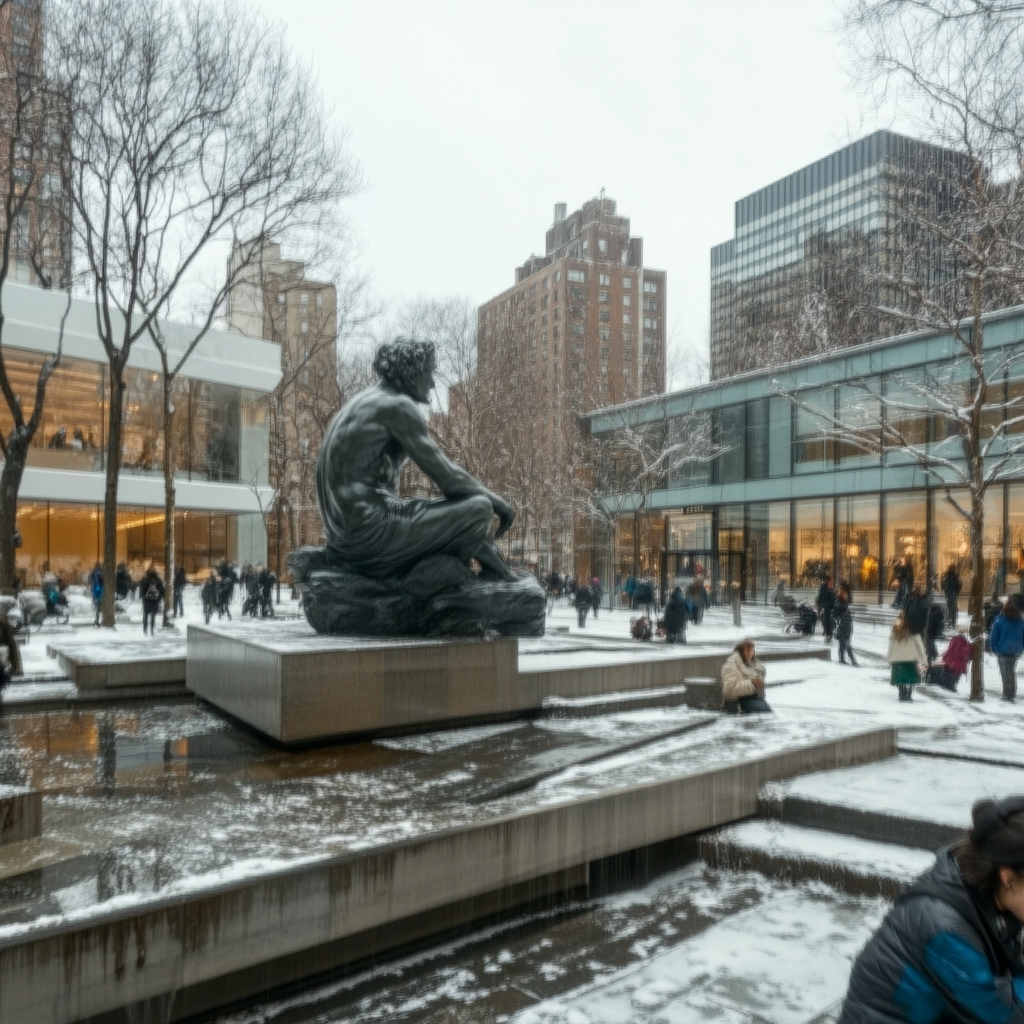
Today marks Day 31, and I’m diving into an idea that has been a cornerstone in philosophy—Cogito ergo sum, or “I think, therefore I am.” This phrase, coined by René Descartes, may sound familiar. This morning, as I woke up, I looked in the mirror and thought about this concept in a new way. I was reminded of a talk I heard back in my twenties, where the speaker suggested, “Every day when you wake up, nothing that you believe is true.” I remember being unsettled by that thought for years. It was only after I started exploring existentialism that it began to make sense.
Existentialism’s Role in Times of Conflict
Existentialism, a branch of philosophy that explores why we exist, really took hold during times of profound human struggle—particularly around the World War II era. Many existentialist philosophers, from different backgrounds and ideologies, tried to understand what defines our existence and whether life has meaning. Figures like Friedrich Nietzsche emerged just before the major World Wars and many others would following during the war years. Jean-Paul Sartre, in particular, grappled with the contrast he saw as a prisoner of war, where the same society could be outwardly civilized yet capable of terrible cruelty.
Sartre’s concept of “existence precedes essence” is a challenging yet empowering idea. It suggests that each of us is responsible for our own choices, free to shape our lives without relying on a predefined script. He believed in personal accountability so deeply that he said we are “condemned to freedom.” To him, our lives reflect our choices alone. He rejected the idea that we could rely on external authorities—society, religion, or anything else—to dictate our beliefs and actions. I do not agree with many things that Sartre wrote about, but there is one thing I can agree with. We own our freedom every single day, and that freedom is where our truth begins.
A Beginner’s Mind and the Freedom to Doubt
In my years of study, I encountered similar concepts beyond Sartre. Zen Buddhism introduced me to Shoshin, or “beginner’s mind,” which is all about approaching each experience without preconceived ideas clouding our perception. When we hold tightly to what we believe is true, we shut ourselves off from learning something new. Adopting a beginner’s mind means waking up each day with an openness to discover, allowing us to reexamine everything as if we were seeing it for the first time.
Descartes’ practice of radical doubt resonates with me as well. He proposed doubting everything and taking nothing for granted. This kind of daily skepticism can act as an anchor, a reminder to keep questioning our assumptions and rediscover what matters most to us. Kierkegaard, a Danish philosopher I admire, added yet another layer to this journey with his idea of a “leap of faith.” He believed that the ultimate path to discovering our true purpose required a deep, often irrational step beyond logic and societal expectations.
The Evolution of Purpose: Kierkegaard’s Stages of Life
Kierkegaard’s philosophy went further, exploring three stages of life. In our early years, he saw us in the “aesthetic stage,” seeking pleasure and beauty, avoiding boredom. As we grow, we enter the “ethical stage,” where we assume responsibilities—family, career, values that sustain society. For some, religion becomes part of this ethical framework, though that alone isn’t the transformative “religious stage” Kierkegaard described. The religious stage is more challenging, demanding a personal leap of faith and a commitment to something beyond ourselves. It’s about confronting limitations, embracing the unknown, and ultimately discovering a deeper sense of purpose.
Waking Up with Radical Doubt and Purpose
So, this morning, as I stood there, I realized that this daily exercise of questioning could be transformative. What if I approached each day with an open heart and mind, as if everything I thought I knew was up for debate? This isn’t about adding confusion to life but about embracing the chance to discover something new. By waking up with this eyes-wide-open mentality, we allow ourselves to look for ideas that inspire us to become more authentic versions of ourselves.
If there’s anything I’ve gleaned from these philosophers, it’s the priceless value of human agency. Our choices are our own. Every day, we can make decisions that shape our lives and those around us. There’s power in this freedom—power to discover truth, to grow, and to become better.
Today, let’s embrace the gift of thought and the courage to question. By choosing to examine ourselves and the world around us, we might just uncover something profound. Here’s to another day, another chance for discovery.
Very interesting, Guy….I enjoyed the listen / read. 🙂
Thanks!