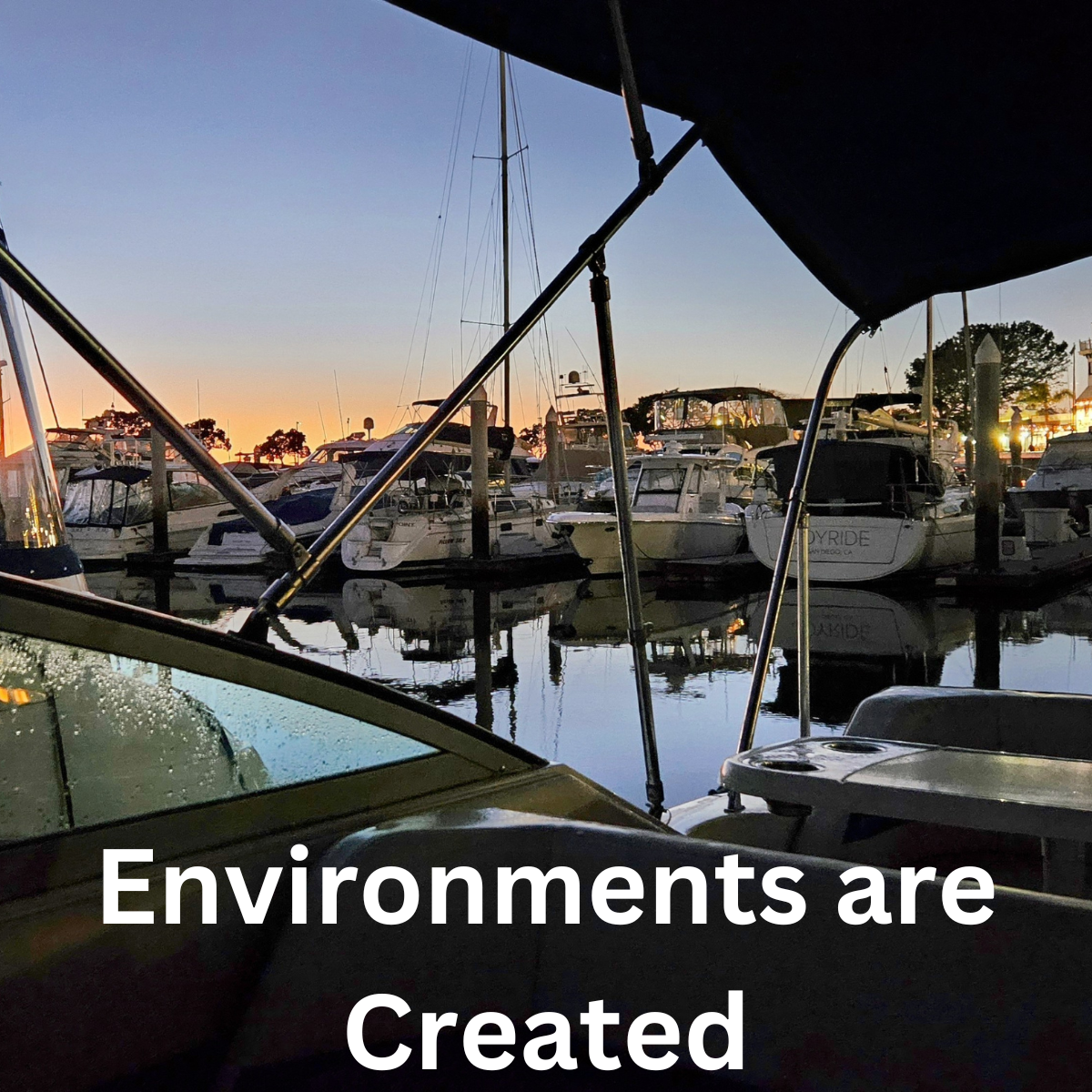
Day 95—marking a milestone, a farewell, and a reflection. Today, I’m letting go of a boat that has been a quiet backdrop to some of the best moments of my life. And as I sit here cleaning it out, preparing it for its next journey, I find myself thinking about the environments we build and how they shape us.
They say that the best days of owning a boat are the day you buy it and the day you sell it. But this doesn’t feel like the best day of my life. It feels heavy, as if I’m saying goodbye to more than just fiberglass and wood. This boat has been an environment for connection—a place where my family made memories and my uncle’s family made theirs before us. It has traveled from the calm waters of Lake Powell to the vast San Diego ocean. Now, it’s time to let it go, but not without gratitude for what it gave us.
Intentional Design Matters
The time spent on this boat reminded me of an important truth: good environments don’t happen by accident. They’re created. Whether it’s the cozy quarters of a family boat or the carefully curated setting of a backyard theater, environments that foster connection, joy, and growth are the result of intentional design.
I recall visiting a family as a child who had transformed their backyard into a miniature theater, complete with a stage, props, and seating. It was more than just a quirky addition to their home—it was a purposeful environment for creativity and learning. Their children would perform plays, even Greek tragedies, as part of their routine. What struck me most wasn’t just the theatrics but the deliberate way this family had built a space that encouraged exploration and storytelling.
This lesson isn’t limited to grand gestures like building a theater. Sometimes it’s as simple as making a room inviting or tailoring a digital workspace for comfort and focus. The intention behind a space determines how we feel and interact within it.
The Power of Subtle Details
Reflecting on this boat, I can see how the details mattered. My wife, for example, brought an incredible sense of warmth to what might have been just another functional space. She added touches—pillows, blankets, and small comforts—that made this boat feel like a home away from home. Those seemingly minor additions transformed it into a sanctuary where we could relax and reconnect.
Similarly, the host of a space—whether it’s a person or a community—sets the tone. Think about a restaurant where the warmth of the staff makes you feel like family. Or an Airbnb designed not just for utility but with thoughtful details that make you feel seen and cared for. The environments we cherish most often reflect the heart of someone who cared enough to make them inviting.
A Call to Action
The environments we inhabit have a profound impact on us—more than we often realize. If a space feels stale, uninspiring, or stressful, it’s within our power to change it. This applies as much to a home office as it does to a family boat. In my case, I’ve been rethinking my workspace. It’s efficient and functional, but it lacks the soul of a place that inspires creativity and deep thought. That’s something I can change with intention.
We have the ability to design environments that support the lives we want to live. Whether it’s a retreat for relaxation, a hub for connection, or a workspace that energizes us, these spaces can be built with purpose. Let’s take the time to reflect on the environments we’ve created and ask ourselves if they align with the lives we want to lead.
As I say goodbye to this boat, I’m taking a lesson with me: the environments we create are more than just places—they are vessels for the memories and connections that define our lives.