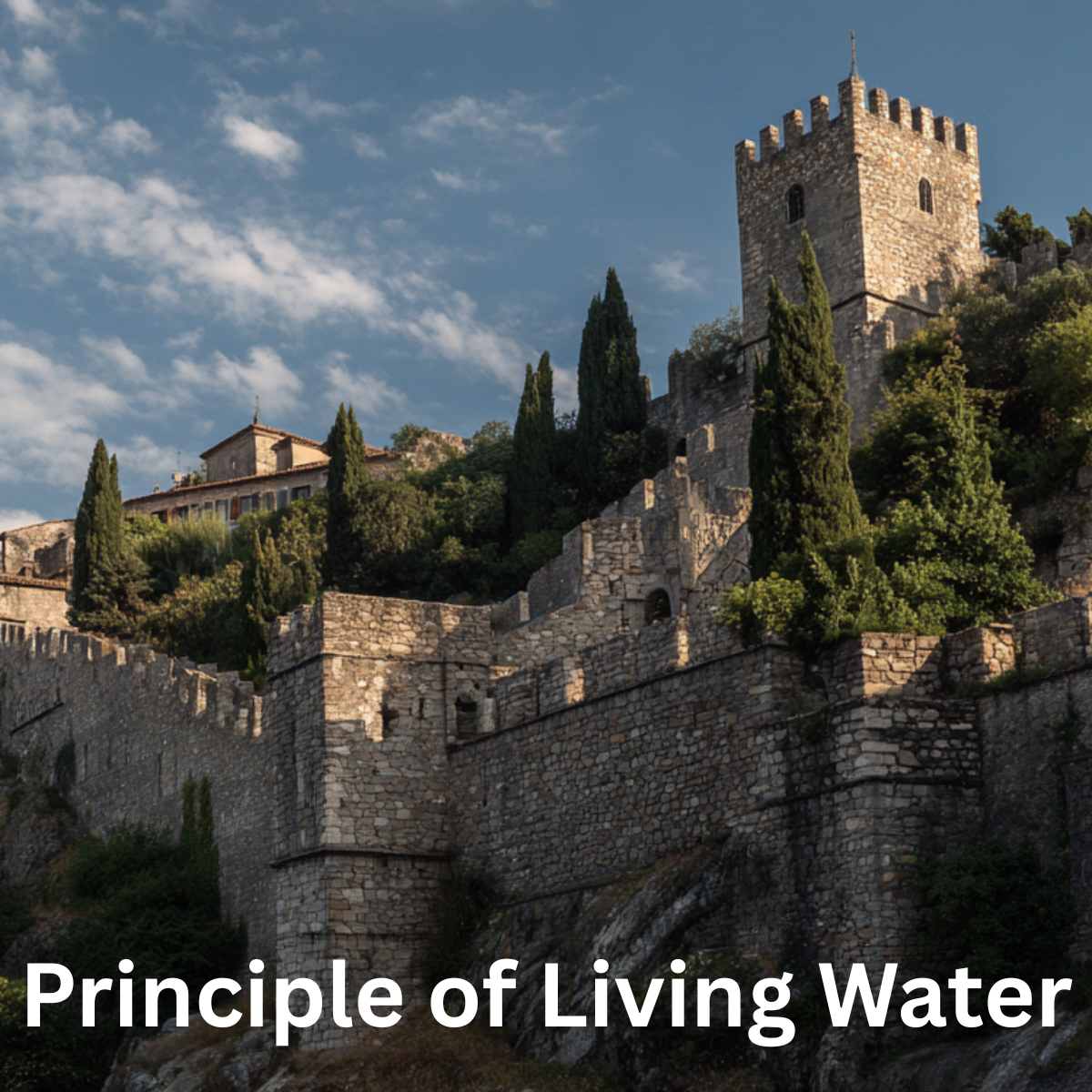
There is an image that has stayed with me for years. In the ancient world, walled cities like Jerusalem lived under the constant possibility of siege. The walls could keep out armies, but they could not create water. Without a steady, hidden source, life inside would wither. Engineers carved tunnels deep into the earth, drew water from unseen springs, and brought it quietly into the city. Just as vital, they built channels to carry waste away. One flow brought life, the other carried away what could not remain.
Over time, this was more than engineering. People began to understand it as a principle. In a siege, the city’s hope was not its walls but its living water. Leaders who secured that flow were remembered as wise and worthy. Losing it meant weakness, vulnerability, and often the end. The language of governance began to borrow from this reality—bring in what is pure, flush out what is corrupt.
Religion took the same image and gave it deeper meaning. In Jewish scripture, living water is moving, never stagnant. It symbolizes God’s provision, cleansing, and presence. In the Christian tradition, it becomes a picture of renewal—a fresh inflow that never runs dry. Cut off the water, and life dies. Cut off the spirit, and the soul grows still.
The idea reaches further still. A person who wants to grow must welcome the fresh and release the waste. New learning, new perspectives, and new experiences must find a way in. Old habits, false beliefs, and resentments must find a way out. An organization must do the same. Innovation and talent will not thrive if the environment is stagnant. New clients, new energy, new ideas—they cannot coexist indefinitely with what has gone sour or unproductive.
I have learned to see this as more than a metaphor. In my own work, a healthy business needs its living water. Without new people, new opportunities, and new thinking, the walls may stand but the life inside will quietly decline. And without a way to let go of what no longer serves, the good that does come in will be tainted.
The ancient builders did not think of their work as poetry, yet their solutions still speak. The principle remains: survival requires both flows. Keep what gives life moving inward. Let what is harmful find its way out. The strength of the walls will matter little if the water does not run.