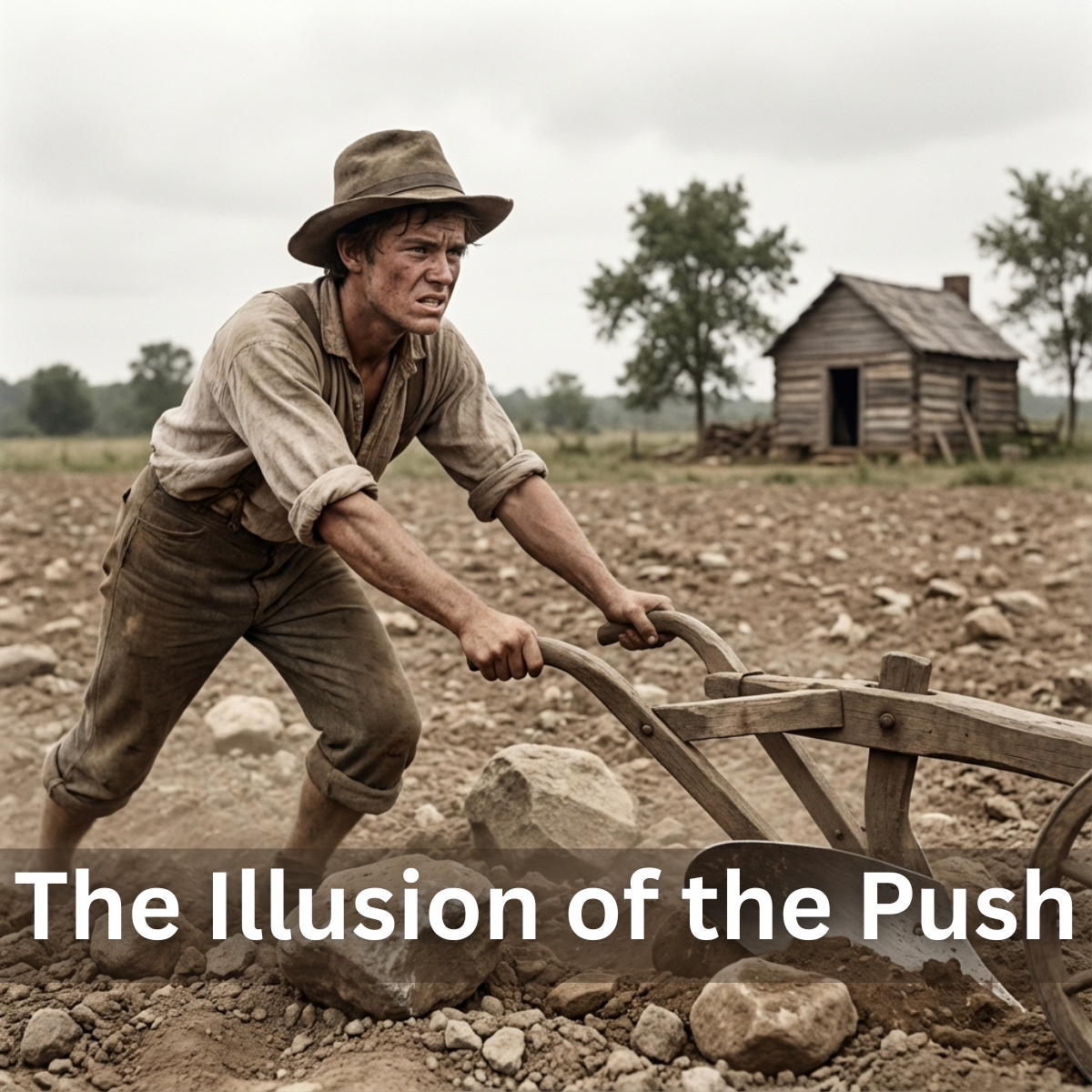
There is a voice that rises in us when the work piles high, and the deadline draws near. It says, “I will just plow through it.” It sounds brave. It sounds determined. It sounds like the kind of thing a person with grit would say. We admire that voice. We have been taught to admire it. The culture celebrates the all-nighter, the sprint to the finish, the heroic push that saves the day. But the voice is lying.
The truth is that plowing through rarely works. Not in the way we hope. Not in the way that produces something we are proud of. What it creates instead is exhaustion, shortcuts, and work that looks finished but is not really done. The final product carries the marks of haste. The rough edges. The missing details. The parts that were skipped because there was no time left to do them right. We tell ourselves it is good enough, but we know it is not. We know we could have done better if we had not waited until the last moment to begin.
The problem is not effort. The problem is timing. The problem is the belief that intensity can substitute for consistency. It cannot. A single day of furious work cannot replace weeks of steady progress. A burst of energy cannot make up for months of neglect. The work does not care how hard you try at the end. It cares how much attention you gave it along the way.
This is not just about productivity. It is about pride. The belief that you can plow through is a form of arrogance. It assumes that your will is stronger than the nature of the work itself. It assumes that you can bend time, that you can compress what should take weeks into days, that you can force quality out of chaos. But time does not bend. Quality does not come from force. It comes from care, and care takes time.
I have learned this the hard way. I have stood at the edge of a deadline with a mountain of work still undone and told myself I could push through. I have stayed up late, skipped meals, ignored everything else, and thrown myself at the task with everything I had. And sometimes I finished. Sometimes I delivered something that looked complete. But when I looked at it later, I saw the cracks. I saw the places where I had rushed. I saw the half-formed ideas, the arguments that were not fully developed, the details that were missing because I did not have time to find them. I saw work that was done, but not done well.
The alternative is not glamorous. It does not make for a good story. It is the slow accumulation of small efforts over a long stretch of time. It shows up every day and does a little bit. It is writing one page instead of ten. It is solving one problem instead of five. It is making progress that feels too small to matter, but doing it anyway. It is the discipline of consistency, and consistency is not exciting. It does not feel like grit. It feels like routine.
But routine is what works. The person who writes for an hour every morning will finish the book. The person who practices every day will master the skill. The person who makes incremental progress will reach the goal. Not because they are more talented. Not because they are more determined. But because they gave the work the time it needed. They did not try to force it. They did not wait until the last moment and then panic. They started early, moved steadily, and let the work unfold at its own pace.
This requires humility. It requires accepting that you are not above the process. You cannot skip steps. You cannot rush the work and expect it to turn out well. You have to respect the time it takes to do something right. You have to trust that small efforts, repeated over time, will add up to something significant. You have to let go of the fantasy that you can save yourself with a heroic push at the end.
The people who produce great work are not the ones who plow through. They are the ones who show up. They are the ones who do a little bit every day, even when it feels like nothing is happening. They are the ones who trust the process, who respect the work, who understand that quality cannot be rushed. They are the ones who finish strong because they started early and never stopped moving.
So when the voice rises and says, “I will just plow through it,” do not listen. That voice is pride talking. That voice is fear disguised as confidence. The real work is quieter. It is the decision to begin today, to do what you can, to trust that small steps will carry you across the distance. It is the choice to be consistent instead of heroic. It is the discipline to show up, not just when the deadline looms, but every day before it arrives.
That is what works. Not the push. The practice.