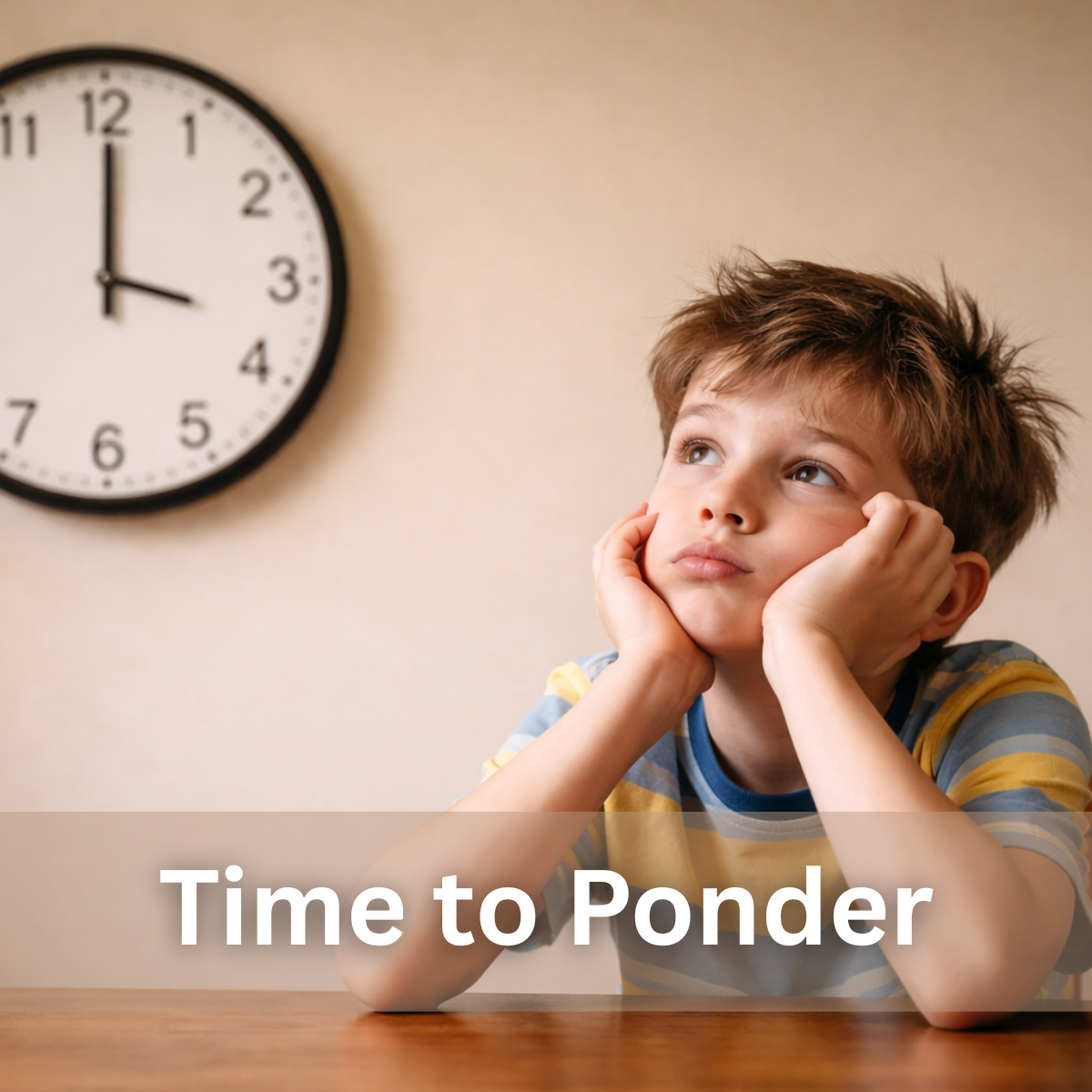
When was the last time you simply sat and pondered? Just sitting and pondering feels like a lost art. Many people, even when they take vacations or breaks, fill their time with things that keep their minds busy. Movies, streaming videos, music, activities. There is always something pulling attention outward.
But when was the last time you personally sat in a quiet space and allowed yourself to just think? Sitting in a comfortable chair, looking out at the world, letting thoughts rise and fall naturally. Allowing ideas to drift in, drift out, and then return again. Over time, those thoughts begin to settle and crystallize around what is truly important.
Pondering matters because when we are constantly doing, reacting, and consuming, we lose touch with a powerful inner voice. Simply sitting by a window, on a back porch, or out in nature on a tree stump, looking outward while thinking inward, carries real benefits.
The first benefit is clarity. When life is full of motion, our thoughts pile up. Unfinished ideas, unresolved emotions, and unexamined experiences crowd the mind. Sitting quietly and doing nothing allows those thoughts to settle. Patterns begin to emerge. Things that once felt complex start to feel simple. The problems themselves may not change, but the mind finally has space to process them clearly.
Pondering also provides discernment. It may look like doing nothing, but it is not a lazy or passive activity. It is deliberate. Pondering allows you to weigh ideas, understand your own motives, and recognize others’ motives. It helps you think through consequences. This is where wisdom is formed. Knowledge can be gained from reading and learning, but wisdom grows when you take time to reflect on actions and outcomes. Many poor decisions are not the result of a lack of intelligence, but a lack of reflection.
Another gift of pondering is reconnecting with meaning. Busyness can keep you productive while quietly disconnecting you from the reason you do what you do. Pondering brings you back to your values, your purpose, your faith, and your convictions. In stillness, you remember what truly matters.
Pondering also creates integration. Experiences do not automatically become lessons. They need time to be digested. Sitting in quiet thought allows you to learn from both failure and success. It helps you understand your emotions and turn experiences into insight or resolution. Many meaningful ideas are born in moments of solitude, when there is space to think deeply.
Perhaps most importantly, those who learn to ponder develop inner resilience. When you are comfortable sitting with your own thoughts, you become less dependent on noise, validation, and distraction. A quiet strength forms. It allows you to act under pressure, move forward amid uncertainty, and lead with confidence.
There is also humility in pondering. You realize you do not have to know everything or have immediate answers. Many of the greatest truths reveal themselves slowly. Across many faith traditions, pondering and meditation are practices rooted in listening rather than speaking. In a culture focused on being heard, it is more important to learn how to listen.
Pondering does not slow life down. It aligns life. When you sit and ponder, you find direction rather than having direction imposed on you by the noise of the world.