I stood in the hallway outside a conference room, watching two people receive the same assignment.
The request was simple. A new initiative needed a leader. The scope was loose. The timeline was tight. The outcome mattered. What happened next was anything but simple.
The first person leaned back and asked a series of reasonable questions. Who else is involved? Where does this sit in the org chart? What’s the reporting structure? What happens if it fails? The questions weren’t about the work. They were about the container. The boundaries. The protections. The conversation stalled before it ever started because movement didn’t feel safe yet.
The second person leaned in and asked different questions. What problem are we trying to solve? Who’s affected? What do we know? What do we need to learn first? Within minutes, they were sketching ideas on the whiteboard. The work had already begun.
I’ve seen this pattern repeat itself across teams, industries, and decades. The exact assignment lands in front of two people. One sees a risk. The other sees a puzzle. One waits for clarity. The other creates it. The difference isn’t talent or intelligence. It’s how they relate to the unknown.
Some people anchor their identity in their role. Their sense of value comes from clearly defined boundaries. Before they move, they need to know where they stand. Ambiguity feels like exposure. Without structure, they don’t know how to protect themselves, so they ask for scope, authority, and accountability up front. Until those are clear, forward motion feels dangerous.
Other people anchor their identity in impact. Their sense of value comes from progress. They don’t see ambiguity as a threat. They see it as raw material. They assume clarity will emerge through action, not before it. They don’t wait for permission because they don’t believe permission is required to begin.
This isn’t a personality difference. It’s a difference in how people relate to uncertainty.
For some, uncertainty is a risk. It should be reduced before action begins. Stability comes first. Structure creates safety.
For others, uncertainty is an information gap. It should be closed through movement. Action comes first. Momentum creates clarity.
Both are strategies. Both are rational. Both have costs.
The difference shows up most clearly in the first question someone asks when they receive an assignment. Is it about boundaries or about the problem? That question reveals how they believe work gets done.
Neither reaction is inherently good or bad. The failure comes from a mismatch.
When you need someone to build, and you get someone who needs structure, the work stalls. When you need someone to manage, and you get someone who needs motion, the work fractures. Teams fail not because they lack talent, but because the wrong energy is applied to the wrong moment.
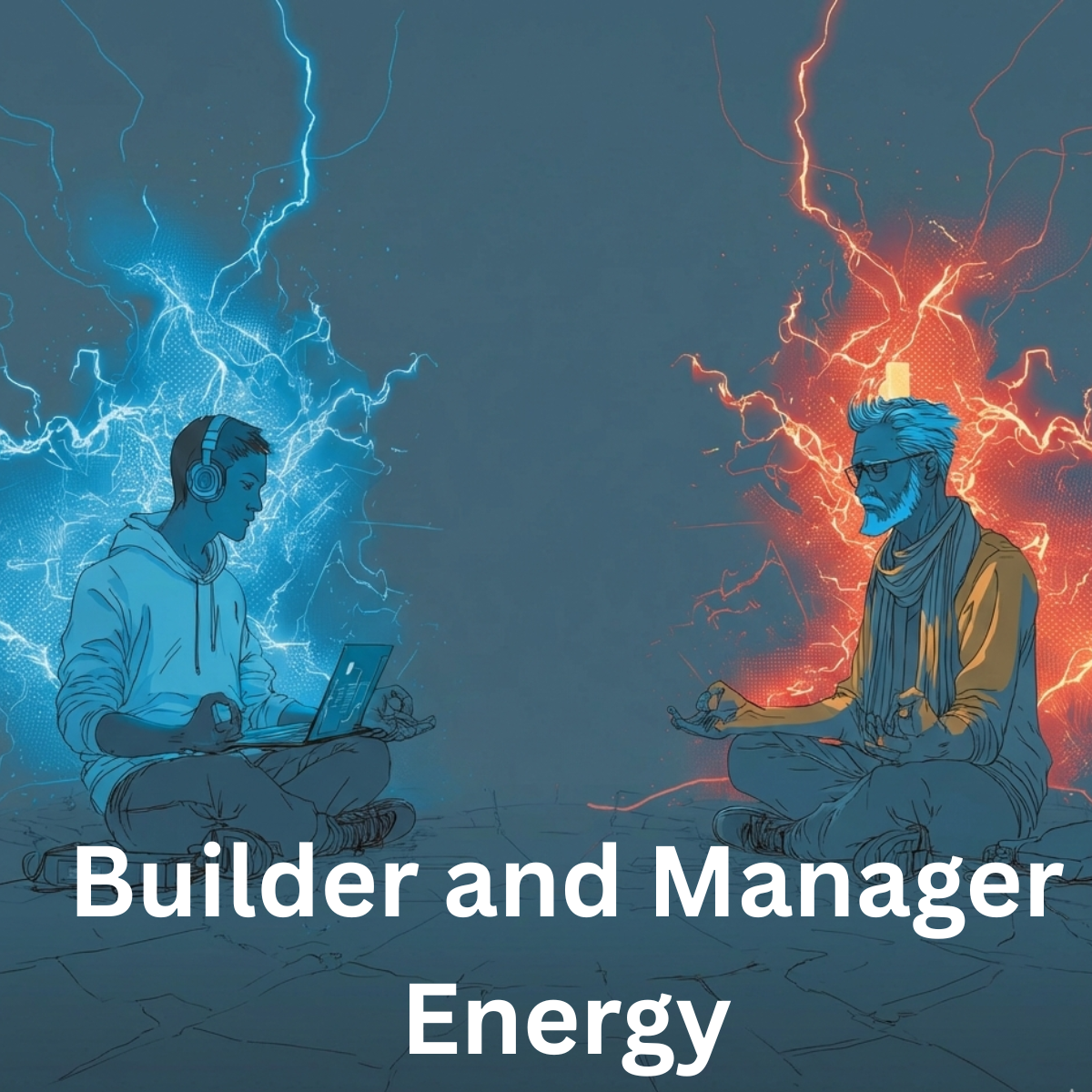
Builder energy optimizes for momentum, learning, and progress. It’s essential when the path is unclear, and speed matters more than precision.
Manager energy optimizes for stability, clarity, and predictability. It’s essential when the system is fragile, and the cost of failure is higher than the cost of delay.
Both are necessary. Both are responsible. Both believe they are doing the right thing.
The tragedy is when leaders can’t tell the difference.
When the work is undefined and the outcome uncertain, you need someone who will move without permission. When the work is defined and the path is clear, you need someone who will protect what’s been built.
The mistake is asking one to do the work of the other. The mistake is believing one reaction is proper and the other is wrong.
It depends entirely on what the moment needs. And the leader who can’t see that will waste both.