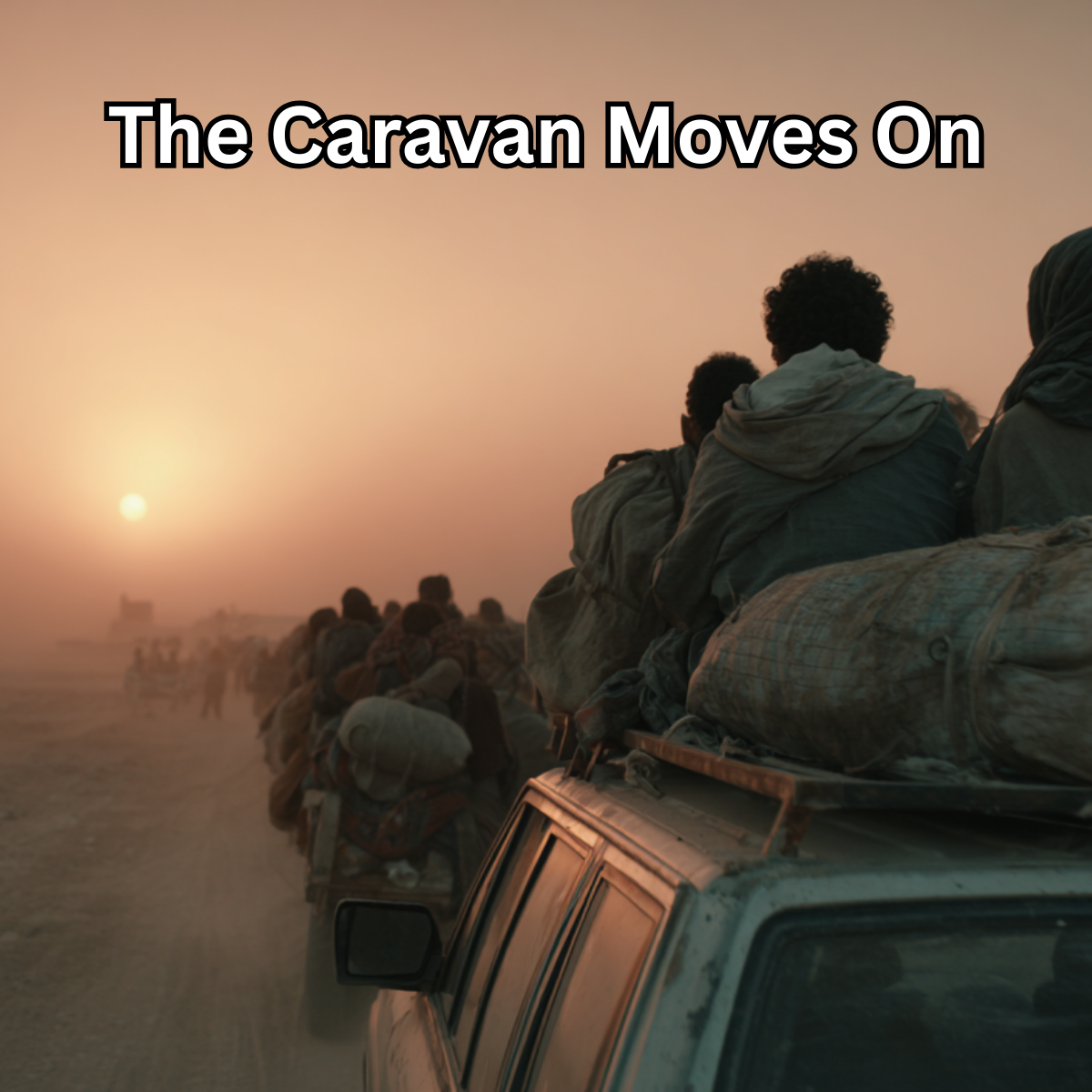
I have been thinking about caravans. Not the recreational vehicles parked in driveways, but the real ones. The ones that moved across deserts and plains for most of human history, carrying entire communities from one water source to the next. Those caravans had a rule that was unwritten but understood by everyone. The caravan moves on.
It had to. Survival depended on forward motion. If the group stopped too long, the water ran out. The food disappeared. The weather turned. Staying in one place was not an option, no matter how comfortable it felt or how tired people were. The caravan moved, or the caravan died.
There were always stragglers. Someone got sick. Someone twisted an ankle. Someone could not keep the pace. The group did what it could to help. They shared the load. They slowed down when possible. They carried the ones who could not walk. But there was a limit. If helping one person endangered everyone, the choice was clear. The caravan had to move on.
This was not cruelty. It was reality. The group could not stop for one person when a hundred others depended on forward motion. The decision was hard, but it was made. The caravan moved on, and those who could not keep up were left to catch up later or find their own way. It sounds harsh now, but it was the only way communities survived.
I think about this when I see people stuck. Not physically stuck, but mentally and emotionally stuck. They are waiting for the perfect moment. They are nursing old wounds. They are replaying past failures. They are holding onto grievances that no longer serve them. And while they wait, the world keeps moving. Opportunities pass. Relationships fade. Time runs out. The caravan moves on, whether they are ready or not.
The instinct to stop and fix everything before moving forward is strong. It feels responsible. It feels like the right thing to do. But it is also a trap. You can spend years trying to resolve something that will never be fully resolved. You can wait for closure that never comes. You can demand that everyone understand you before you take the next step. And while you wait, the caravan moves on without you.
This does not mean abandoning people or ignoring problems. It means recognizing that forward motion is not optional. You can help. You can slow down. You can carry what you can. But you cannot stop. The moment you stop, you start dying. The moment you stop, you lose the momentum that keeps you alive.
I have seen this in my own life. I have waited for things to be perfect before starting. I have held onto resentment longer than it served me. I have demanded a resolution before moving forward. And every time, I paid the cost. The world did not wait. The opportunities did not pause. The people who were moving kept moving, and I fell behind. The caravan moved on, and I was left standing still.
The shift that changed things for me was accepting that forward motion is the priority. Not reckless motion. Not motion without thought. But motion nonetheless. You do what you can with what you have, and then you move. You help who you can help, and then you move. You grieve what needs grieving, and then you move. The caravan does not stop, and neither can you.
“The caravan moves on, whether you are ready or not.”
So if you find yourself stuck, waiting for something to be resolved before you take the next step, remember the caravan. It did not wait for perfect conditions. It did not wait for everyone to be ready. It moved because moving was survival. And it survived because it moved. You can do the same. Take the next step. Help those whom you can. Carry what you can. But keep moving. The caravan is already ahead, and it is not slowing down.