I was watching a documentary the other night about a woman sentenced to more than ten years in prison for a serious felony. She did not fall apart. She looked at it as an exciting new chapter, a bunch of lessons to be learned, new people to meet. I caught myself thinking of Martha Stewart making the orange jumpsuit popular. That moment stuck with me because it revealed something I have been noticing for a while. Strong people do not treat negative situations as reasons to be discouraged. They treat them as opportunities to reset, reframe, and relearn.
People who believe in God have a built in advantage here. They practice something psychology calls cognitive reappraisal, and they do it constantly. It is woven into their faith, the belief that in some manner a divine creator is trying to teach them something. There is strong evidence that this serves as the key mechanism for building and strengthening resilience. Cognitive reappraisal is the ability to alter how you interpret events. Instead of throwing your hands up in frustration and asking, “Why is this happening to me?” a resilient person asks what lesson they are supposed to be learning or how they can use this experience to their advantage.
Religious people, those who are active in practice, learn from a young age to separate events that happen to them from their personal identity. Instead of saying, “I failed, I am now a convicted felon,” they can say, “Well, that failed. What can I do better next time?” What people of faith call the repentance process, psychology recommends as reframing. The questions are the same. After going through a tough time, you ask yourself what actually happened. Then you ask what you can learn from this. Then you ask what your next step is, or how you can do better next time.
This is not about religion versus psychology. It is about recognizing that resilience grows when adversity becomes information instead of identity. You do not have to believe in God to practice this, but if you do, you have been training for it your whole life. If you do not, you can still learn it. The process is simple. When something hard happens, pause. Look at it clearly. Ask what it is trying to teach you. Then take one step forward.
“Resilience grows when adversity becomes information instead of identity.”
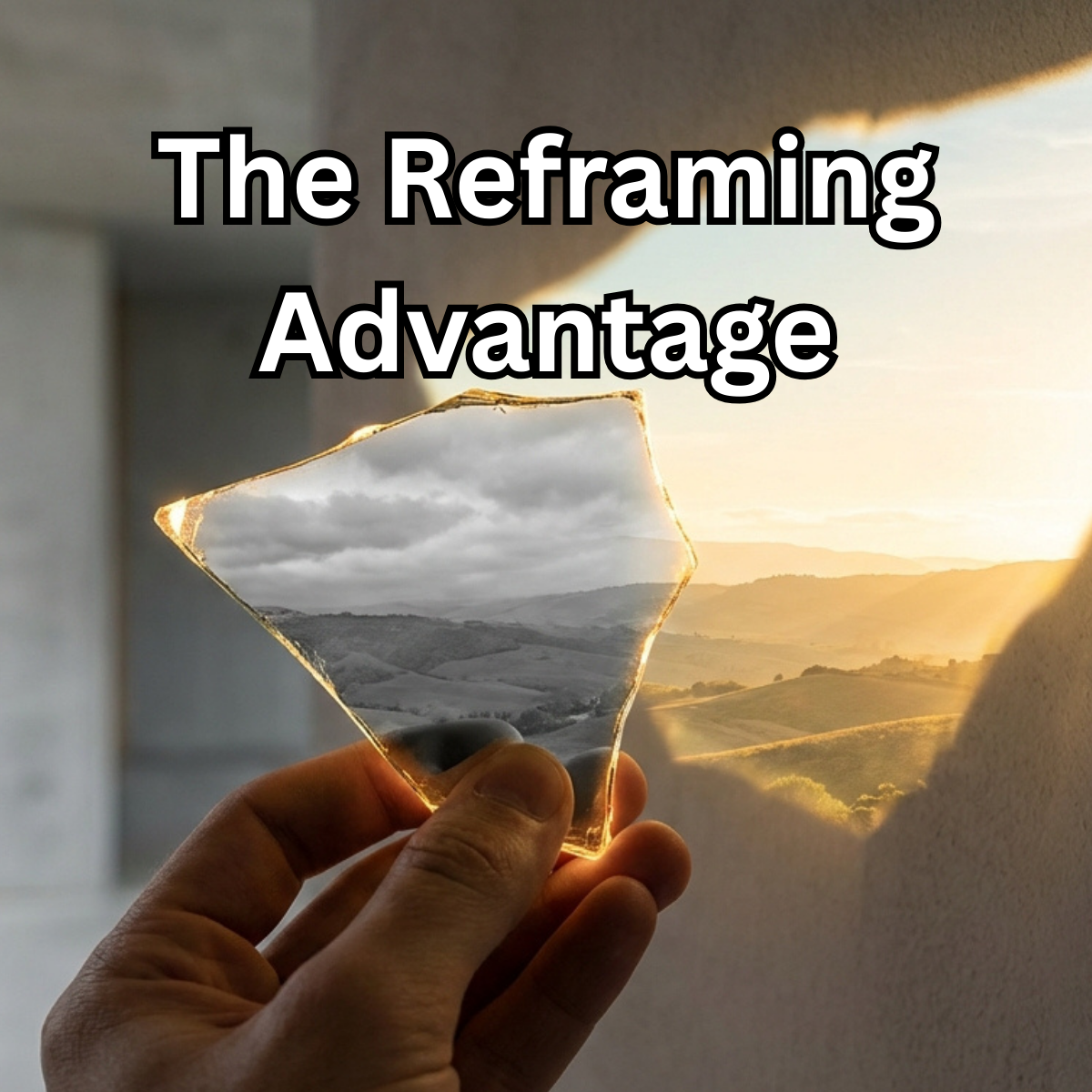
I keep thinking about that woman in the documentary. She faced a decade in prison and chose to see it as a chapter, not a conclusion. That is the reframing advantage. It does not erase the hardship, but it changes what the hardship does to you. The next time something goes wrong, try asking yourself those three questions. What actually happened? What can I learn? What is my next step? Start there.