If you own the language, you own the people. This sounds harsh, but it is a wise concept to remember. This power can be used for ill or gain, but it is something to understand because we are often being controlled by the language we are permitted to use.
Language is not just how we communicate. It is how we are taught to think, what we are allowed to notice, and what ideas we are permitted to challenge. When someone controls the words we use, they often begin to control the boundaries of what we believe is possible, acceptable, or true.
I have been thinking about this lately. Not in an abstract way, but in the daily moments when I catch myself using phrases I did not choose, or avoiding words that feel suddenly off limits. The shift is subtle. It starts with a suggestion, a correction, a raised eyebrow. Then it becomes habit. Then it becomes the only way we know how to speak.
If you control the language, you influence the way people think. And if you influence the way people think, you gain power over what they accept, question, fear, or pursue. This power can be used to liberate or manipulate, but it must always be understood. Much of the control we experience begins with the language we are permitted, or pressured, to use.
This matters when you are leading a company. It matters when you are raising a family. It matters when you are attending a church, attending a social function, or trying to create your own movement. The words you allow, the words you repeat, the words you forbid, these shape the culture around you. They shape what people believe they can say, and therefore what they believe they can think.
It also matters when others are trying to sway you, convince you, or get you to follow them. Pay attention to the language they use. Pay attention to the language they ask you to use. Notice when certain words are celebrated and others are quietly discouraged. Notice when the vocabulary narrows. That is often the first sign that someone is trying to own more than just the conversation.
“Language is more powerful than we understand, because language is the first real thing we grab onto as we become conscious of our own identity.”
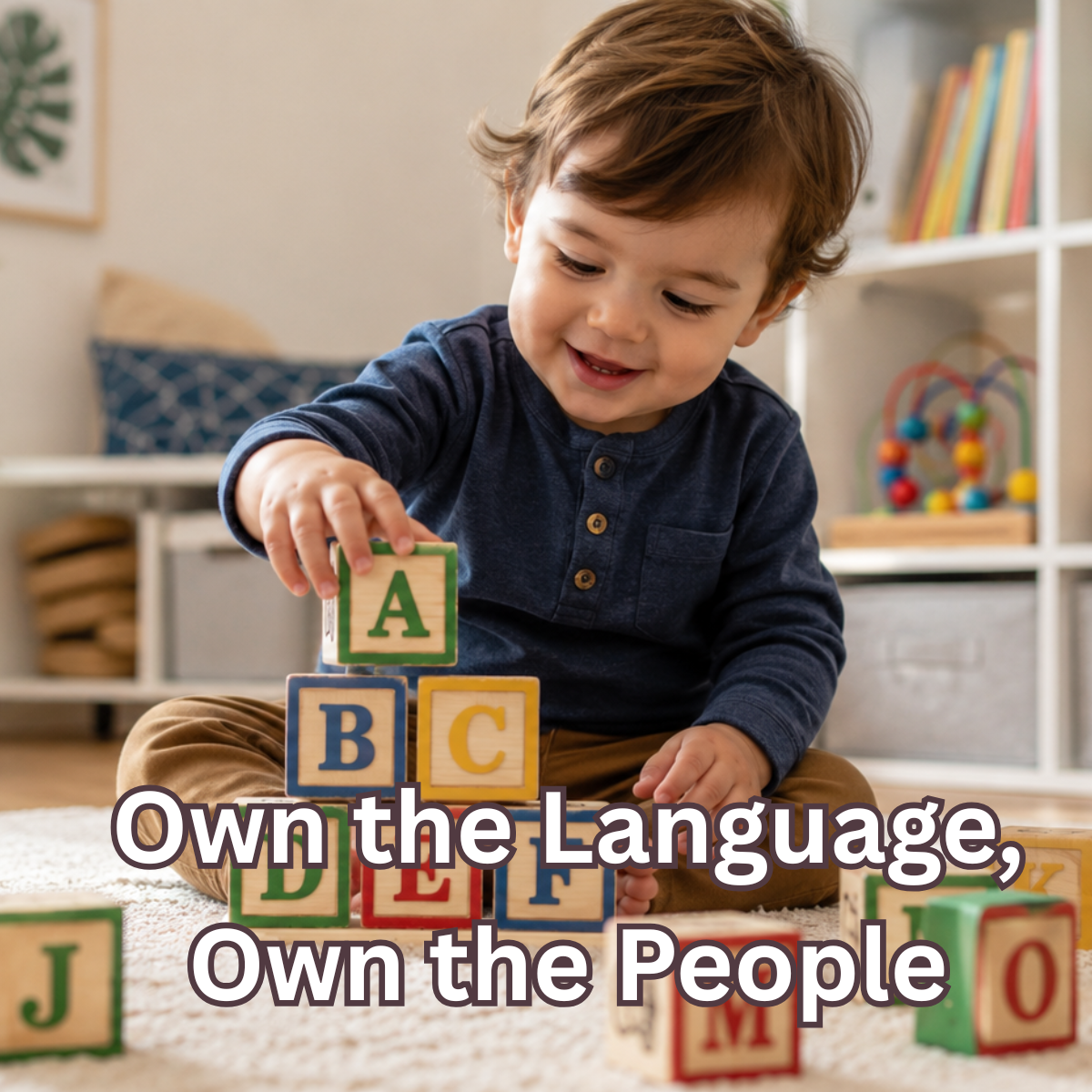
Language is the first real thing we grab onto as we become conscious of our own identity. It is how we name ourselves, how we name the world, how we decide what is worth noticing. When that language is shaped by someone else, our identity is shaped by someone else. Our sense of what is true, what is right, what is possible, all of it bends toward the vocabulary we are given.
This is not a call to panic. It is a call to pay attention. To notice the words you use and where they came from. To ask whether the language you speak is your own, or whether it was handed to you by someone with an agenda. To reclaim the words that matter, and to use them with intention.