Day 3,231 – Low Tolerance for Friction?

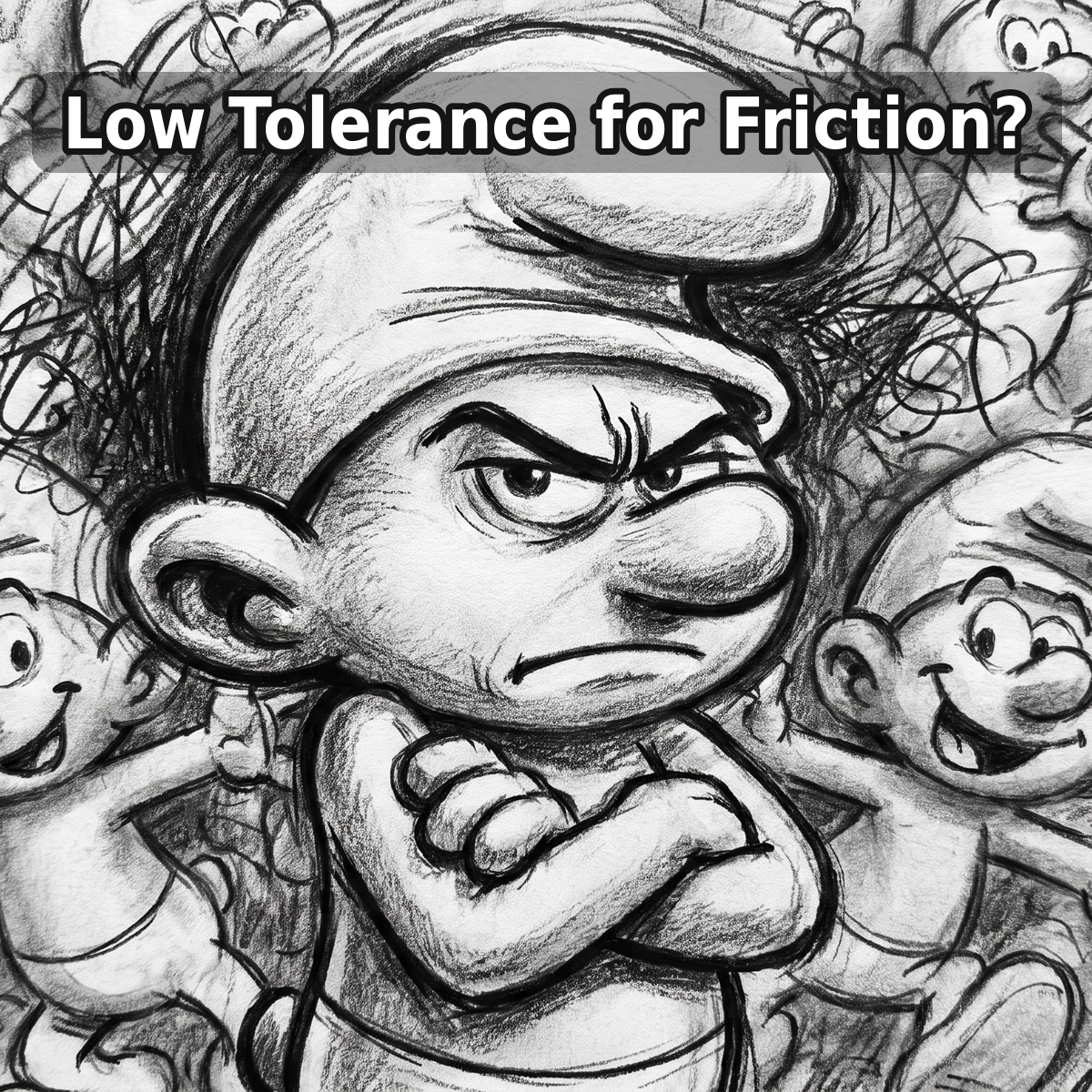
The author explores the concept of having a low tolerance for friction, where the mental fatigue of guiding others to a conclusion already reached can lead to annoyance. The piece suggests recognizing this as a potential cause for mental anxiety and encourages understanding that others need time and justification for decisions.

I have been struggling with mental fatigue for the last few days. That has made me more annoyed with things around me than usual. Because I am always looking for things to write about, I decided to take a pause and consciously try to figure out what was causing me to react this way. Is it that I find people annoying to deal with, or is something else going on?

I think I finally figured it out. I have a low tolerance for friction. Let’s see if this rings true for you as well.

Suppose you recognize a problem, understand the variables, and reach a reasonable conclusion relatively quickly.

But now you must navigate three meetings, several emotional objections, competing priorities, and individuals who need considerably more time to reach the same conclusion.

You are perfectly capable of guiding everyone through that process. You might even be exceptionally good at it. But that doesn’t mean you enjoy it.

In fact, the better you are at recognizing what needs to happen, the more exhausting it may become to repeatedly guide others toward that recognition.

So, what do we do with all this? It’s not about becoming a hermit or demanding the world bend to our every whim. It’s more about a gentle recalibration, a quiet commitment to ourselves. Maybe it’s about noticing those little energy leaks and deciding which ones we can plug, or at least acknowledge.

If you stop and think about this, it is not rational for us to think that just because we decided something, everyone else should just fall in line with our thinking and accept without hesitation or question. It is a normal response for people to ask questions, seek understanding, and question a new direction.

So if mental anxiety is causing you to be short with people, you might want to consider if you are actually suffering from a low tolerance for friction and that you need to take a deep breath and understand that people can, should, and will need you to justify your decisions.

Subscribe
Notify of
guest
0 Comments
Inline Feedbacks
View all comments
Share the Post:

Recent Blogs

Day 3,231 – Low Tolerance for Friction?

The author explores the concept of having a low tolerance for friction, where the mental fatigue of guiding others to a conclusion already reached can lead to annoyance. The piece suggests recognizing this as a potential cause for mental anxiety and encourages understanding that others need time and justification for decisions.

Read More

Day 3,230 – You are Protecting Capacity

The author explores the source of their irritation during social interactions, realizing it stems from protecting their capacity rather than disliking people. This insight highlights the difference between ordinary social fatigue and deeper issues like stress or burnout.

Read More

Day 3,229 – What Only Time Can Reveal

This article explores the idea that the most important qualities in people, such as character, trust, and compatibility, are not immediately apparent but are revealed over time through consistent actions and repeated behaviors, especially during challenging circumstances. It suggests that true understanding of others comes from observing their consistent actions rather than relying on initial assessments or declared attributes.

Read More

Day 3,228 – Reduce Decision Latency

The author explores the cost of indecision, drawing inspiration from a former Tesla executive’s emphasis on decision speed. They argue that while deliberation is important, fear of being wrong often leads to unnecessary delays. The author advocates for a proactive approach to decision-making, emphasizing action, feedback, and adaptability over endless speculation.

Read More
0
Would love your thoughts, please comment.x
()
x