This morning, I found myself sitting in my electric vehicle at a Tesla Supercharger station. This particular location had approximately 70 charging stalls, and it was busy. Tesla vehicles were everywhere, all neatly backed into their respective spots, charging cables conveniently connected to the rear side panel of each vehicle. Everything seemed to work exactly as intended.
Then there was me.
My non-Tesla electric vehicle stood out rather dramatically. I had pulled in front end first, with a giant adapter connected to the charging cable, which could barely reach the charging port on my vehicle. To make matters worse, I was straddling multiple charging stalls just to get the whole arrangement to work. While everyone else seemed to be enjoying a rather seamless experience, I was performing some elaborate maneuver just to get electricity into my car.
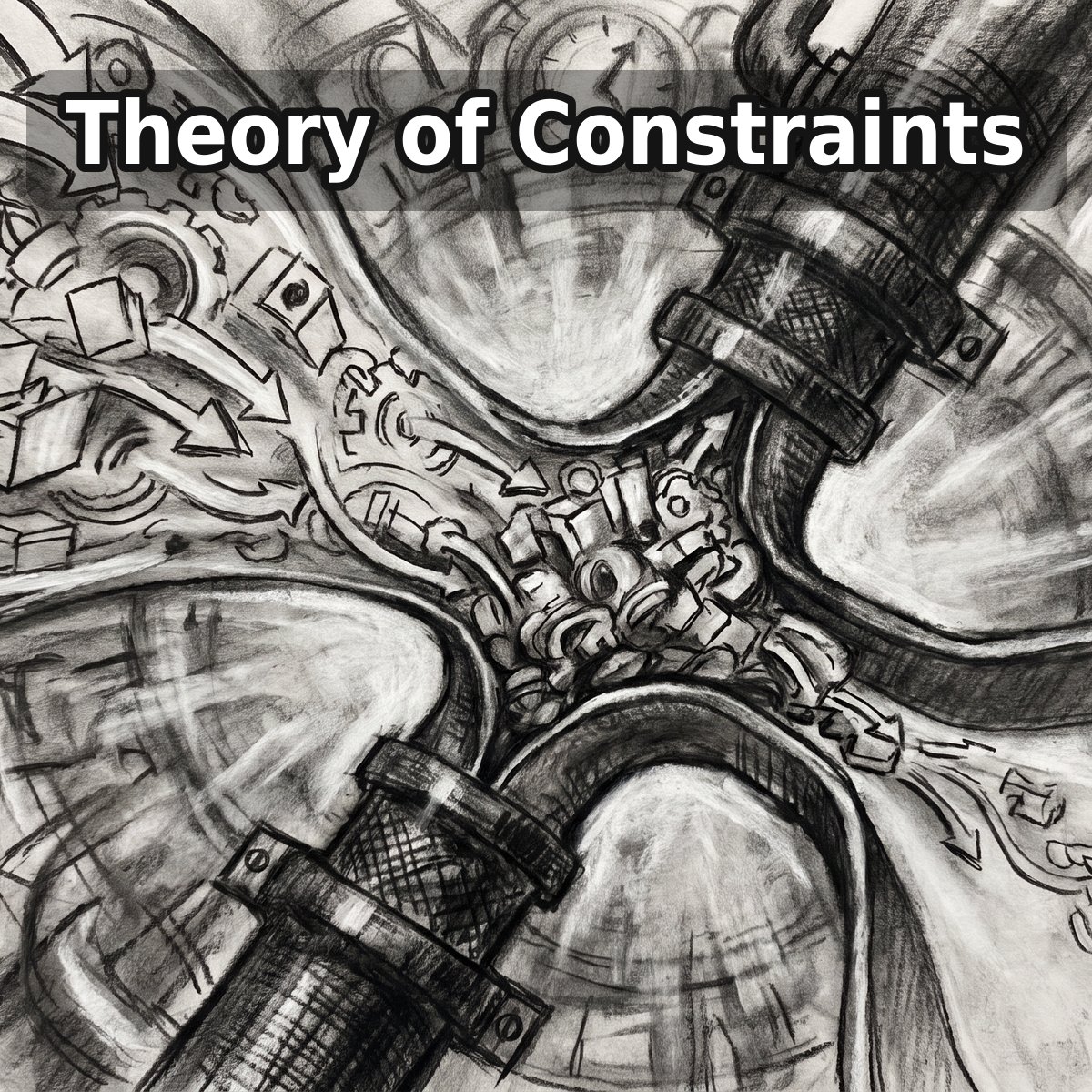
As I sat there contemplating my rather awkward situation, I realized that I was witnessing a practical demonstration of something called the Theory of Constraints.
Eliyahu Goldratt introduced this management philosophy in his famous book, The Goal. The underlying concept is relatively simple. Every system has a constraint, something that limits its ability to achieve its intended outcome. Improving other parts of the system does very little good if you fail to address the primary constraint.
Tesla understood this principle exceptionally well.
When Tesla began building electric vehicles, they recognized that the greatest obstacle to widespread adoption was not necessarily the vehicle itself. It was the ability to charge it conveniently and reliably. You could build the greatest electric vehicle in the world, but if people could not easily charge it, the entire experience would suffer.
So Tesla attacked the bottleneck directly. They built their own charging infrastructure, integrated it into the vehicle’s navigation and software, and made the entire process part of the ownership experience. You buy the car, and the charging network is there to support you.
Other manufacturers largely concentrated on building electric vehicles and relied on someone else to solve the charging problem. They eventually recognized the importance of the infrastructure, but Tesla had already spent years addressing the very constraint that would limit the success of the entire industry.
I started thinking about how frequently we make this same mistake in our personal lives.
We have ambitions. We want to become better parents, successful entrepreneurs, accomplished athletes, stronger leaders, or more disciplined individuals. We establish goals and then begin investing enormous amounts of effort toward achieving them.
However, we rarely stop to consider what is actually preventing us from succeeding.
We assume that more effort is the answer. We work harder, spend more time, and increase our intensity. Sometimes this produces results, but often we find ourselves frustrated because all that additional effort does not seem to be moving us forward.
Perhaps we are working on the wrong thing.
Consider someone trying to become a successful entrepreneur. They might spend countless hours improving their product, refining their strategy, and developing new ideas. Yet the actual constraint might be their inability to acquire customers. Until they address that bottleneck, all their other improvements have limited value.
An athlete might continue increasing training intensity when the actual constraint is inadequate recovery. A parent might work harder to provide for their family when the real limitation is the amount of meaningful attention they give their children.
I wonder how many of our frustrations in life come from spending tremendous energy improving things that are not actually limiting our progress.
There is another interesting aspect to Goldratt’s theory. Once you resolve a constraint, another one emerges. The bottleneck moves. This means that achieving success is not necessarily about eliminating every obstacle. It is about becoming increasingly effective at recognizing which obstacle matters most right now.
That requires some honest reflection. Sometimes the constraint is something external that we need to work around. Other times, it is something about ourselves that we would rather not acknowledge. Perhaps a habit, a fear, a weakness, or an unwillingness to change.
I think this gives us a different way to approach our daily commitments. Instead of constantly asking what more we should be doing, perhaps we should ask what is preventing the things we are already doing from producing better results.
That question might be far more valuable than simply committing to work harder.
This morning, Tesla had 70 charging stalls full of vehicles that seemed to fit perfectly into the system they had designed. Meanwhile, I was sitting awkwardly across multiple spaces, wrestling with an adapter and a cable that barely reached.
It was a rather amusing reminder that the effectiveness of a system is often determined by how well we have addressed its greatest limitation.
And I think the same is true for our lives.
Your success is not determined solely by how much effort you put into a pursuit. It is determined by how effectively you direct that effort toward the things that are actually limiting your progress.