Fortis Fortuna Adiuvat

Does Fortune really favor the bold? Probably not. Fortune probably can be equated to opportunity. So we can rephrase this statement to Opportunity comes to the Bold. So lets just pretend for a moment that the concept of fortune just does not exist. If that is true then we are really just talking about the ability to gain access to more opportunity. Perhaps, in this consideration, is that success is really just the ability, capacity, desire, willingness to pursue opportunity? So perhaps the latin phrase is absolutely correct. The bold get access to more opportunity and therefore will be more successful.

Is it that simple? I had someone ask me once. Why did that person get promoted and I did not? Thinking back on that question, I realized that the person that did get promoted was just far more aggressive. That person was very vocal about their desire and intent. In essence, they were bold. Consequently, the bold got the opportunity. This makes me wonder. How many opportunities are passing us by each day, not because they are not there, but because we are not bold enough to ask for them?

I had a client once that gave business to a competitor of mine. When I asked why he did that, his reply was simple. I had no idea that you wanted the business. I was like, huh? However, in reality I never really did tell him that I wanted that business. How was he supposed to know? I was not bold and therefore I did not get the opportunity.

So boldness probably does have a direct tie to the amount of opportunity that you are exposed to. Is this a major equation to success?

Guy Reams

 

Subscribe
Notify of
guest
0 Comments
Inline Feedbacks
View all comments
Share the Post:

Recent Blogs

Day 357 – Curiosity is Cheap

This article explores the challenges introverts face with draining conversations and offers a solution: embracing curiosity. By shifting from feeling the need to “perform” in conversations to simply being curious and asking questions, the perceived energy cost of interactions can be significantly reduced, fostering better relationships.

Read More

Day 356 – Anger Caused by Friction

The author explores the emotion of aggravation, defining it as a low form of anger caused by friction. They propose an escalation pattern for anger, starting from friction and leading to full-blown anger. The core idea is that aggravation arises when one repeatedly spends attention on something they believe doesn’t deserve it.

Read More

Day 355 – The Canary Principle

The canary principle, originating from coal mining, involves testing changes on a small scale before full implementation. This concept applies to software development and personal life, encouraging small, reversible experiments to reduce the cost of learning when uncertainty is unavoidable.

Read More

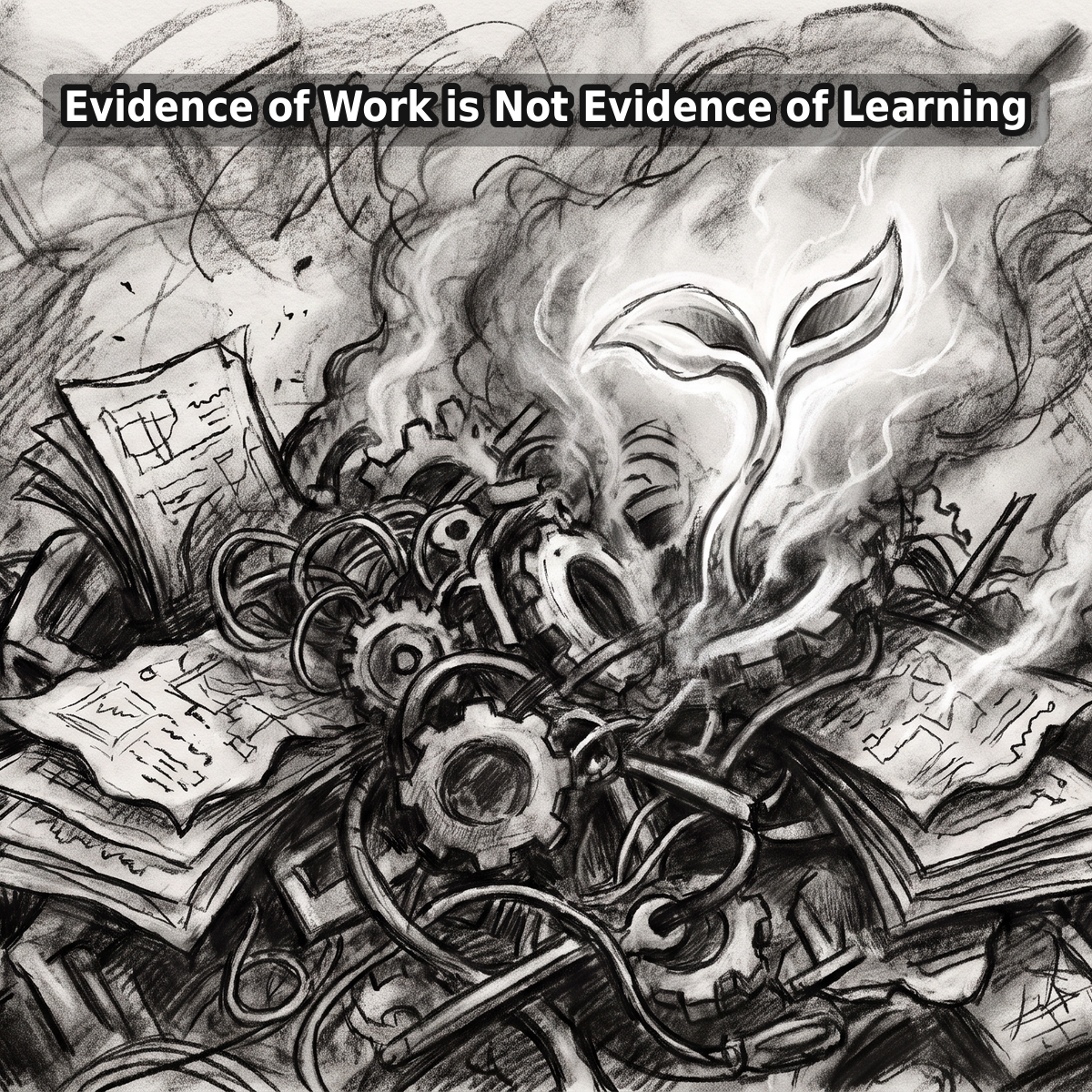
Day 354 – Evidence of Work is Not Evidence of Learning

This article argues that AI has exposed a fundamental flaw in modern education: the substitution of “evidence of work” for “evidence of learning.” It highlights how schools have increasingly focused on quantifiable outputs like completed worksheets and assignments, which AI can now easily generate without genuine understanding. The author contends that AI’s proliferation forces education to return to its core purpose—actual teaching and fostering cognitive development—rather than merely verifying compliance.

Read More
0
Would love your thoughts, please comment.x
()
x