Day 110 – The mind

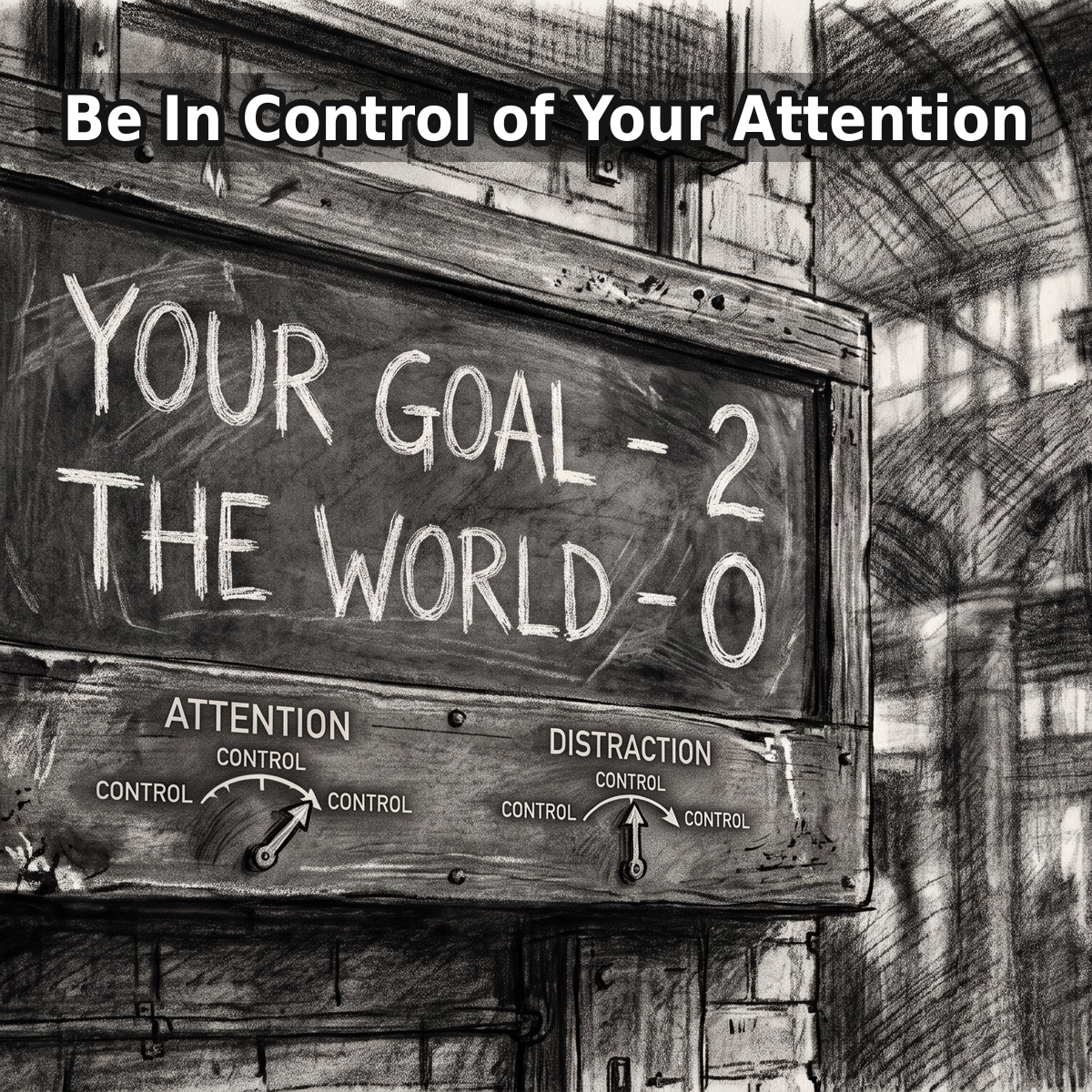
I am learning a bit about my mental cycles. An interesting side benefit of keeping track of my commitments each day is that I am starting to really notice the mental pattern of degradation that I go through every 30 days or so. I have done well in convincing my mind to overcome the physical. I have woke up at 5am every day for 60 days now. I did this morning 60 pushups, 60 situps, and 60 squats. I also have ran at least 2 miles every morning for 60 days. This has taken an exhausting amount of convincing to force my mind to will me forward on some days.

However, the physical seems to be the easy part. The mind is much more difficult. I am on the downward side of a mental collapse, and that has left me wondering why? Looking back through the last 110 days, I have noticed a pattern. I start to get overwhelmed by input. It seems when that input reaches a critical level, my mind starts to break down. I start to turn inward and start to look for ways to avoid people and other interactions. This is because my mind is on overload.

I think I am not allowing my mind to think freely for a period of time. So I am scheduling some time for my brain just to think freely. Yup. I am going to sit myself in a room, with no music, no videos, no books on tape, no computer, no phone and just force my mind to think freely for a while. Let myself process everything I have experienced since my last brain melt down. I think I need to recognize that my mind needs this time. I think this is why hiking in nature or taking long walks is always appealing to me. Time for my brain to process things.

Unfortunately, I fell into this habit of listening to music or youtube talks while running. That was good when my mind was fresh, but I kept pelting new ideas at it every morning. Eventually that is going to lead to a full tank and that is the root cause of my symptoms. Brain overload.

So for my 365 Commitment I am going to force myself to take time just to “sit and think” and see what happens.

Guy Reams (110)
365 Member
Subscribe
Notify of
guest
0 Comments
Inline Feedbacks
View all comments
Share the Post:

Recent Blogs

Day 311 – Finding Someone is Probability Problem

This article explores the idea that finding a partner, or any new relationship, is fundamentally a probability problem influenced by one’s environment. It suggests that by changing the environments we inhabit, we can increase the number and variety of people we meet, foster repeated exposure for deeper connections, and create new ‘weak ties’ that expand our social universe, ultimately leading to more opportunities for meaningful relationships.

Read More

Day 310 – I Actually Love Opera

The author explores the reasons why people might hesitate to reveal certain aspects of themselves, using their love for opera as an example. They differentiate between privacy and concealment, arguing that while privacy is a healthy boundary, concealment stems from a fear of judgment and can be a burden. The piece concludes by advocating for the freedom found in being less concerned with labels and more comfortable with revealing one’s true complexity.

Read More

Day 309 – The Price Tag of Automation

The author recounts his frustrating experience with home automation after Google abandoned its Nest architecture, leading him to build his own system. He highlights the significant time and effort required for maintenance and the eventual abandonment of his automation efforts due to the high ‘economic life’ cost. However, with the advent of AI, the cost and effort of automation have decreased, making it more feasible and renewing his interest in deploying future automations.

Read More

Day 308 – Speed is The Champion

This article explores the concept that speed often leads to success in various fields, from business to technology and sports. It argues that systems capable of rapid action, feedback, and adjustment tend to outperform those focused on avoiding errors. The author highlights the importance of fast feedback loops, citing John Boyd’s OODA loop and its application in AI systems. The piece also discusses the speed-accuracy tradeoff, noting that while speed can lead to more mistakes, these are often recoverable, and the compounding effect of rapid learning ultimately drives better results.

Read More
0
Would love your thoughts, please comment.x
()
x