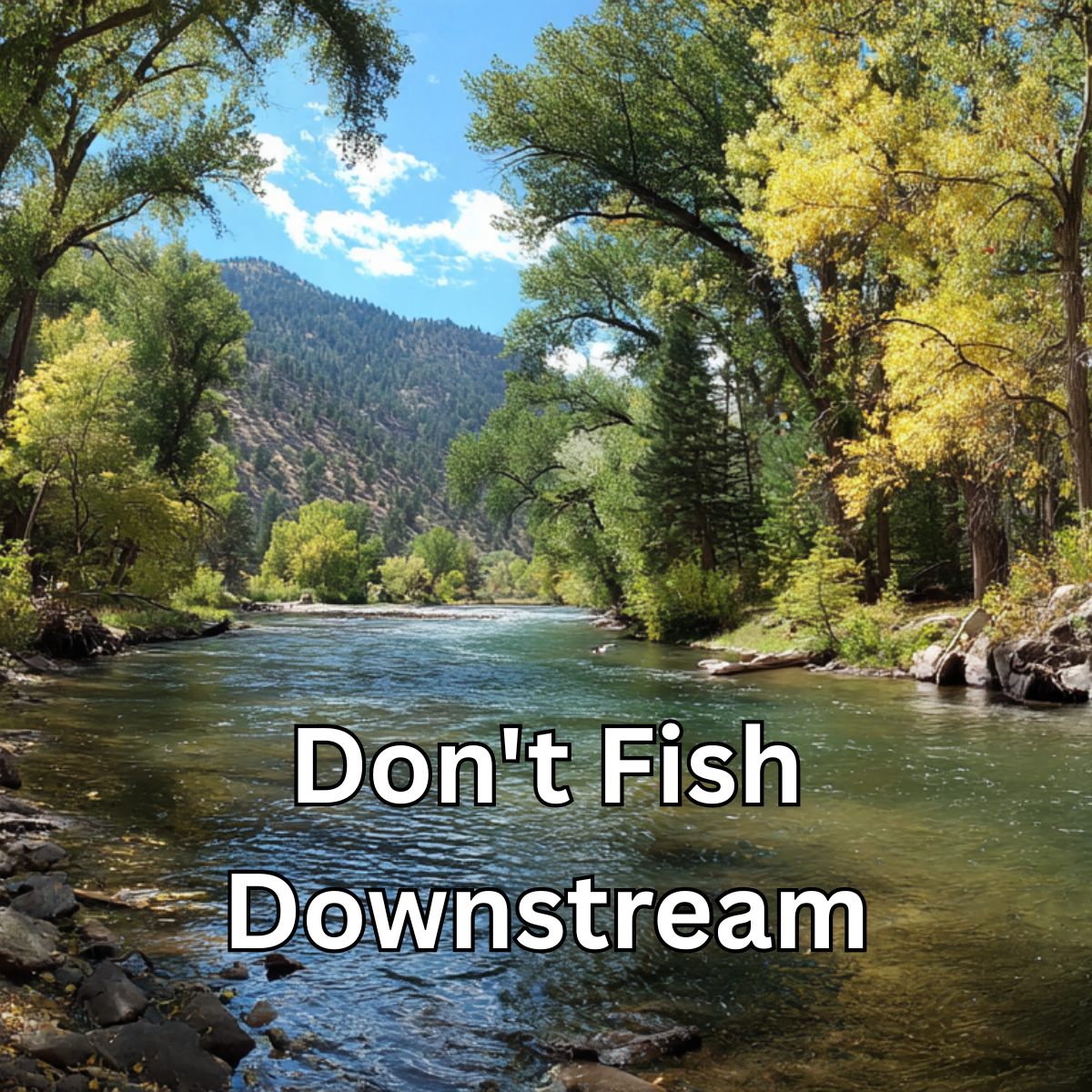
Yesterday, I saw a beautiful photograph of an older man enjoying his retirement fly fishing. The group of people admiring the photograph immediately started to share stories of their favorite fly fishing spots. As they talked, I reminisced about my time fishing the Black Canyon of the Gunnison River—in my humble opinion, the best fly fishing spot in the world. However, I am biased. My family’s roots in fly fishing run deep. They owned a 750-acre ranch and had water rights on the Gunnison River, and I have spent more than one afternoon hanging out with Grandpa as he traversed his way through the river. I think I caught my first fish by myself in a small stream that was diverted from the Gunnison through the property, but that is a distant memory and may be more fancy than truth. However, I’ll go with that because it seems romantic.
Anyway, one early morning in a not-so-romantic setting, I was with my grandfather on another trip down the Gunnison River. We found a place to park, and after climbing down to the river, my grandfather handed me a fly rod, a basket, and pointed down the stream. He said that I could fish that way. He would fish the other way, and we would meet back at this spot in several hours.
I spent all day trying to catch a fish. Nothing. Not even a bite. I got my fly caught on numerous branches and small rocks, but never a fish. I didn’t even see a fish. No browns, no rainbow, and certainly no cutthroats. I fished down that stream for hours and eventually grew tired. I climbed my way back up the stream, feeling fatigued, hungry, and thirsty. I couldn’t believe how far I had come down, but eventually, I made it back to the designated spot.
After waiting for another hour or so, I finally saw my grandfather making his way down the stream. He came up to me and asked how I did. After learning of my poor results, he opened his creel—and it was jammed full of fish. Large ones, too. He said, “Your grandmother will be pleased that we have some nice fish for dinner tonight!”
That turned out not to be the case, by the way. My grandmother was not excited at all about preparing and cooking fish that evening. This was not what she looked forward to in life, but she did it anyway, and that night we did indeed eat our fair share of fresh trout. As we walked toward the car, I asked my grandfather why I hadn’t caught any fish when he had caught so many. He stopped, turned around, and said, “Don’t fish downstream.”
Years later, at his funeral, I learned that more than one person had this experience with Mr. Warren F. Reams. My father related the exact same story from when he was a boy, and after I gave the eulogy, I learned from a man in the audience that he too had had that humbling lesson. You see, Warren would always send his guests downstream while he went upstream. That almost guaranteed he would have the most success.
Was this planned? Calculated? Designed this way? Absolutely. Was there a secret, hidden lesson here? Perhaps.
I definitely learned the hard way that fishing downstream has two major disadvantages. First, when fishing downstream, the fish can see you. They always point upstream to catch bait as it comes down the river. As a consequence, they see you coming and are quick to avoid you—and anything else you might throw at them. Secondly, after the day is done and you’re tired, walking back upstream is not fun at all.
So I learned that when you fly fish, head upstream. Not only can you catch fish less aware of what you’re up to, but you’ll also find an easier journey back home when you’re done.
However, perhaps there is another lesson here? In the river of life, where should we aim to catch our fish? Upstream or down?
Seems to me that if we are going to be fishing, then we might as well aim upwards.
In fishing, there is one maxim that will always be true—the bigger, the better.