As the days, hours, and seconds tick by and we continue to fail at being perfect you might really taken for a loop when you realize that even time itself is not perfect. The one universal constant that the world has come to agree upon is not even based on truth. It is artificial.
We have had clocks for a very long time, and up until the 1600s there was always known differences between solar time and clock time. However, as clocks became more accurate with the rise of the pendulum clock the pressure to close the gap on this increased.
Here is the problem. Solar is not perfect, not even close. The sun is not consistent. It varies constantly and we do not even know why. We are working on high temperature probes to measure gas quantities in the sun but we are probably hundreds of years away from even having the slightest working knowledge of how all that really does work.
The answer?
John Flamsteed published a paper on basic creating a formula for deriving the mean time on solar activity. That could then establish clock time. Yup, he basically created an average for the inconsistency of solar time. He got a job as the first astronomer for the Royal Observatory in Greenwich. He used his formula for calculating the average time based on when the sun would cross the meridian at Greenwich. Thus was born, Greenwich Mean Time or GMT. Btw, the sun does not cross the prime meridian consistently, it never has. We make it up and we base it on this formula that Flamsteed figured out in the late 1600.
Sorry to burst your bubble, but even time itself is not consistent. So get over yourself, you will never be perfect either.
Guy Reams
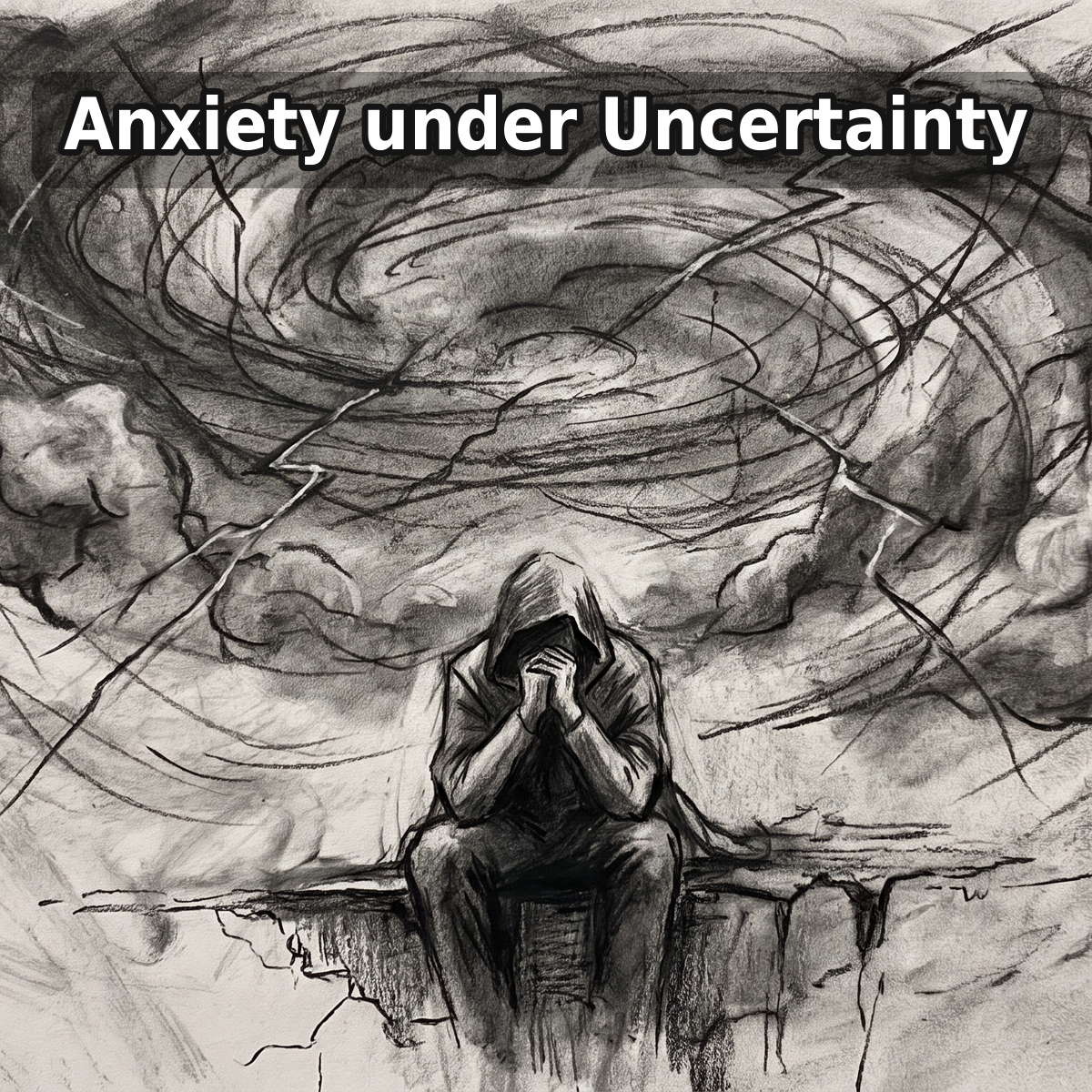
Day 3,207 – Anxiety under Uncertainty
This piece explores the anxiety that arises from uncertainty, explaining how the brain interprets unpredictability as danger and generates negative scenarios. It emphasizes that thinking harder doesn’t always lead to certainty, but often to more anxiety. The key takeaway is to recognize that a thought about a possible future isn’t evidence it will happen, and it’s okay to let things be uncertain.

Amen!