“The Europeans are marvelous, in particular the French, at making the most savory dishes out of really the most plain cuts of meat.” – Julia Child on the debut of her first show on PBS – February 2nd 1963
If you were to walk in my house right now you would think we are food obsessed. Every TV you walk past most likely has a cooking channel on, and we are all constantly worried about breakfast, lunch, or dinner. Being stuck at home has certainly elevated the conversations around meal preparation. I was watching YACS (Yet Another Cooking Show) and I was thinking about where this all started. That reminded me of Julia Child. I thought, wow, now this was an interesting person. She was the first to create an American cooking show. She had many special presentations prior to that, so they finally syndicated a show on PBS called “the French Chef.” Here was a an obscure woman from a well to do Pasadena, CA family who would basically invent an entire genre of entertainment. Interesting, she was 6’2″ and quite the athlete. Her family was wealthy enough to have their own private chef. Seemingly the most unlikely person to be the first super star chef in America.
Her husband, Paul, served in the United States Foreign Service which landed them in Paris after WWII. He was an eccentric, who loved fine cuisine and that is how Julia got engrossed. I read of her first meal of oysters, fish and wine as a revelatory experience. She joined a female cooking club, took some classes and would eventually co-author the famous work, Mastering the Art of French Cooking. The french chef, Simone Beck wanted her help to get the work to appeal to the average American woman. Everyone would forget the other authors of the book, Julia become celebrity pretty quickly as she started going on a public relations tour to sell the new book.
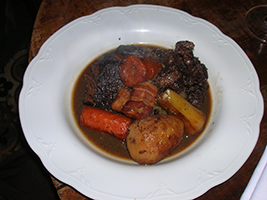
I decided to watch her first show, Episode 1, Season 1 of the French Chef. She would teach people how to cook the most basic french recipe, that of Beouf Bourgignon. The French have this way of making the simple sound elegant. American call it stew. French call it Bourgignon. That about sums up the culture difference, right there. Here I see, Julia grabbing fist fulls of chopped beef and slapping them down on a cutting board. Her big hands patting down the meat, flipping them over and showing you the size and measurements of the cut. She then pokes fun at “stew meat” American style with a little side by side comparison. She then says, this looks like cat food and I just don’t like it as she grabs the little chunks and throws them down and laughs. She walks you through then how to do it right, get some good ol chuck roast and cut it up. That is real stew meat. She then shows you, she even puts on her glasses because she cannot see (just like us) and talks as she does it. You can take that little American stew meat and ground it up or give it to your cat she chides. She continues on, making fun of how people sell you a bunch of fat to make more money, shows you how to cut along the seam of the meat and how to prepare this for a good solid basis for your stew.
What I was thinking about as I watched this was just how amazing this was. The mystery and romance behind French cooking brought right to your television and taught by someone that looks like your eccentric Aunt that comes to visit during the holidays. She just did this because she could. She did it because it was fun and she enjoyed it. A pure art form, done for pure pleasure of doing it and as a result started a revolution that fills our streaming content today. The Smithsonian now has a dedicated space to the ultimate “foodie.” The clumsy American home maker that took the little french class one afternoon is now considered cooking royalty and a household name.
I watched an interview with her a few years before she died, a remarkable person. Authentic and genuine. Incredible to think of how a person, with passion and joy can change the world.
Guy Reams