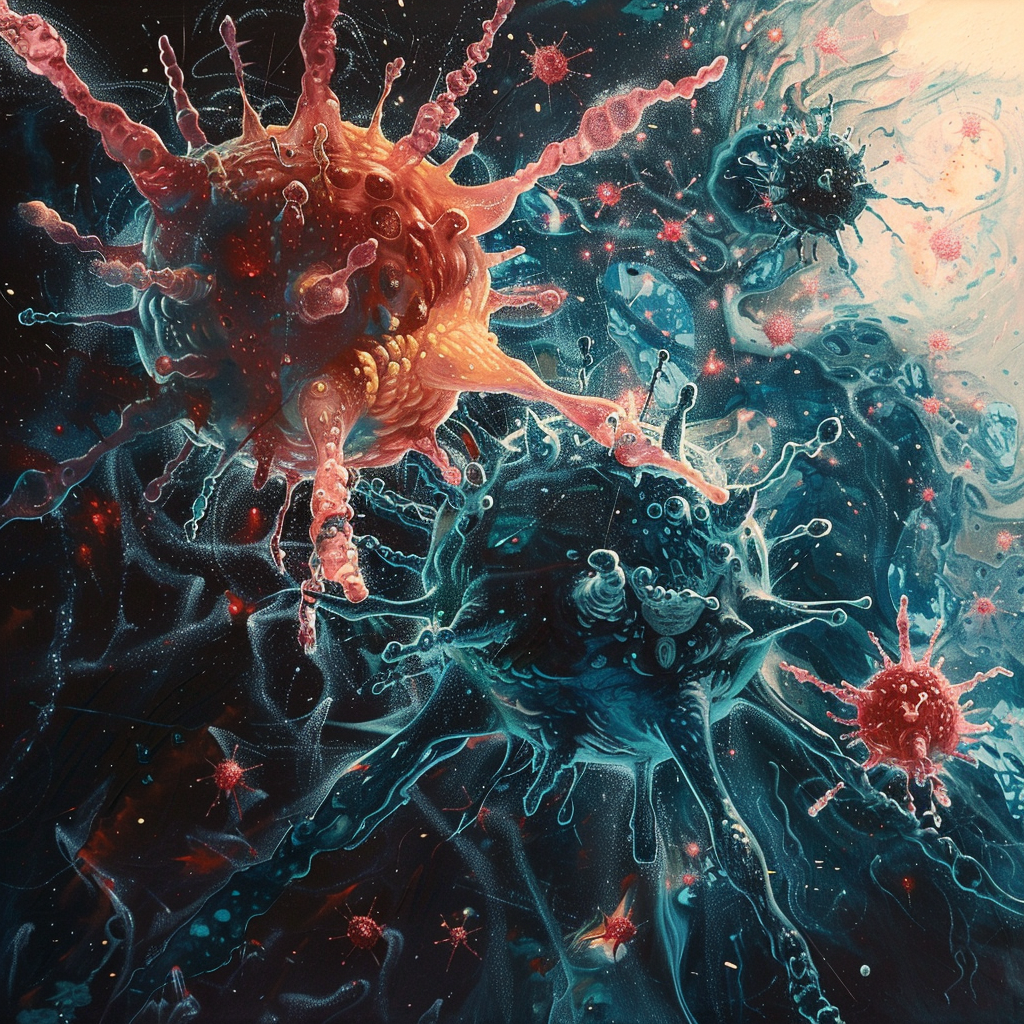
I was listening to a lecture on a study on inflammation and immune system response, in which a team was recapping some of the recent lab results in this area. During this lecture, I heard a phrase called a Cytokine Storm, which I never heard of before. So I thought it would make a great title for a blog article. This refers to a mishap that can occur in the human body when there is an excessive or uncontrolled release of cytokines in response to infectious disease and some forms of cancer. This is usually associated with an extreme inflammatory response. I have never experienced this, but I have certainly felt like it, especially when spending an evening eating bad food.
The human body is incredible, really. Our organic system is incredibly resilient, and despite the fact that we are constantly exposed to a variety of chemicals, toxins, foreign substances, diseases, and radiation, the body can absorb this, react to it, and most of the time, overcome the negative effects, and continue living. The problem is that it is too resilient. We take it for granted. We can consume something really harmful and only feel the effects for a short period of time before the body figures out how to neutralize and get rid of the harm.
Take alcohol, for example. It is widely processed for human consumption throughout the world. I was at a hotel this last week where a literal shrine was built to celebrate the creation of Scotch Whiskey. Alcohol, for the most part, is a poison, or at least is converted into a poison. We are basically drinking a malformed carbohydrate that has broken down into ethanol. Effectively, glucose is broken down into ethanol and carbon dioxide through fermentation, and then we willingly and enthusiastically drink it. I could write an entire book on the effects of alcohol on the human body. Still, I daresay that if we actually knew the metabolic and cellular process the body goes through when we consume alcohol, we would not be drinking it. Instead, our body absorbs it, processes it, and disposes of the harmful effects. Unless, of course, we continue to ingest way too much in a short period of time, and then our bodies fail, and then, well, many people know what happens next!
We depend on this resilience too much. Alcohol is a fun one to pick on, but the same goes for anything we take in. If we knew what our bodies go through in digesting and processing food we would be much more careful. When we decide to eat that double-double hamburger, a basket of fries smothered in ketchup and cheese, and wash it all down with a strawberry shake and a diet Coke, we are dumping the equivalent of unloading an entire landfill into the streets of New York City. Amazingly our body goes to work and figures this all out and handles it. Incredibly, we survive and live to eat another unhealthy meal.
These bad eating binges do not cause enough harm to illicit a cytokine storm, as was talked about in this lecture, but it does cause a serious response. When we dump foreign things into our body, it goes to work. Chemical signals firing off all over the place. Most of this is good, the process of ingesting energy and nutrients to sustain ourselves, but there are a lot of things that need to be cleaned up. This lecture focused on cytokines and the response in blood cells, immune cells, and other reactions to deal with potentially harmful toxins. Once again, if we knew what was going on behind the scenes, we would be more careful about what we ate. How much of our food is pure and comprised of basic glucose, fat, and nutrient structures? Most of us, unfortunately, have a lot more coming in than just that. We are relying on our bodies to process a whole lot of things that do not belong.
The lesson I learned from this was to think more carefully about what, how much, and how fast I eat. Understanding what is happening in the body when you consume something is an eye-opener when you consider what you decide to eat and drink. Of course, I am sure that I will still rely on my body’s resilience and enjoy fast food, desserts, etc., but perhaps I can be more conscientious about it. I might be able to keep my inflammation down as I age and avoid cytokine or other storms in the future.