
Looking back to my twenties, I realize that one of my biggest limitations was simply not knowing where to look for knowledge. I had a hunger to grow, to succeed, but I didn’t fully grasp how to seek out the kind of learning that would truly shape my path forward. College played a role—it gave me access to a few wise authors, pushed me through challenges like those infamous term papers, and helped me understand that perseverance often trumps talent. Yet it wasn’t until years later that I understood the real power of exposure: seeing beyond my own narrow scope to what others knew, even beyond what my mentors and older family members could share. And that’s the first big piece of advice I’d give my younger self: seek as much exposure as possible.
It’s not that the advice I got was bad; it’s that, like me, the people giving it were often limited by their own experience. For the most part, we all did the best we could with what we had. But what I couldn’t see back then was that much of what we knew was confined to the same circles, the same books, and often the same industry. Now I realize that if you want to grow in a way that prepares you for what’s coming—not just what’s right in front of you—you need to stretch well beyond what’s familiar and seek out ideas, people, and perspectives that challenge your comfort zone.
Exposure has a way of expanding the mind and deepening your awareness of what’s possible. And here’s a word of caution I’d add for my younger self: most of what’s worth diving into will likely be new technology or a disruptive trend shaking up an established field. It’s tempting to immerse yourself in all the practical, how-to advice out there—people are always quick to share their “ten steps to success” or “proven formulas.” But if you get too caught up in specifics, you can end up preparing for a world that may not even exist by the time you’re ready to tackle it.
Instead, focus on timeless principles—concepts that are evergreen. Learn the fundamentals of raising capital if business is your aim, or develop a keen understanding of how to connect with and acquire customers. These are the kinds of skills that can adapt to whatever industry or trend you find yourself drawn to. Too much practical advice can sometimes be like a set of training wheels that never come off, keeping you pedaling in place while the world speeds forward.
Exposure is about more than just reading widely or following the latest thought leaders. It’s about positioning yourself where you can listen, learn, and absorb from a diversity of voices and fields. When I was younger, I didn’t always see the value in learning from someone whose career looked nothing like mine or studying something that seemed unrelated to my chosen path. But what I see now is that the truly transformative ideas often come from outside the walls of what we know best.
So, to my younger self, here’s the bottom line: get comfortable exploring what’s outside your current knowledge base. Don’t just deepen your skills—widen them. Seek out mentors whose lives look different from yours, find concepts that resonate across industries, and invest in exposure as deeply as you would any other skill. It’s not about gathering answers; it’s about learning how to find better questions. Because in the end, it’s the things you’re willing to expose yourself to—the ideas that surprise, the knowledge that challenges—that end up becoming the strongest foundation for growth.


Guy, young people need THE TRIVIUM = Grammer, Logic, Rhetoric
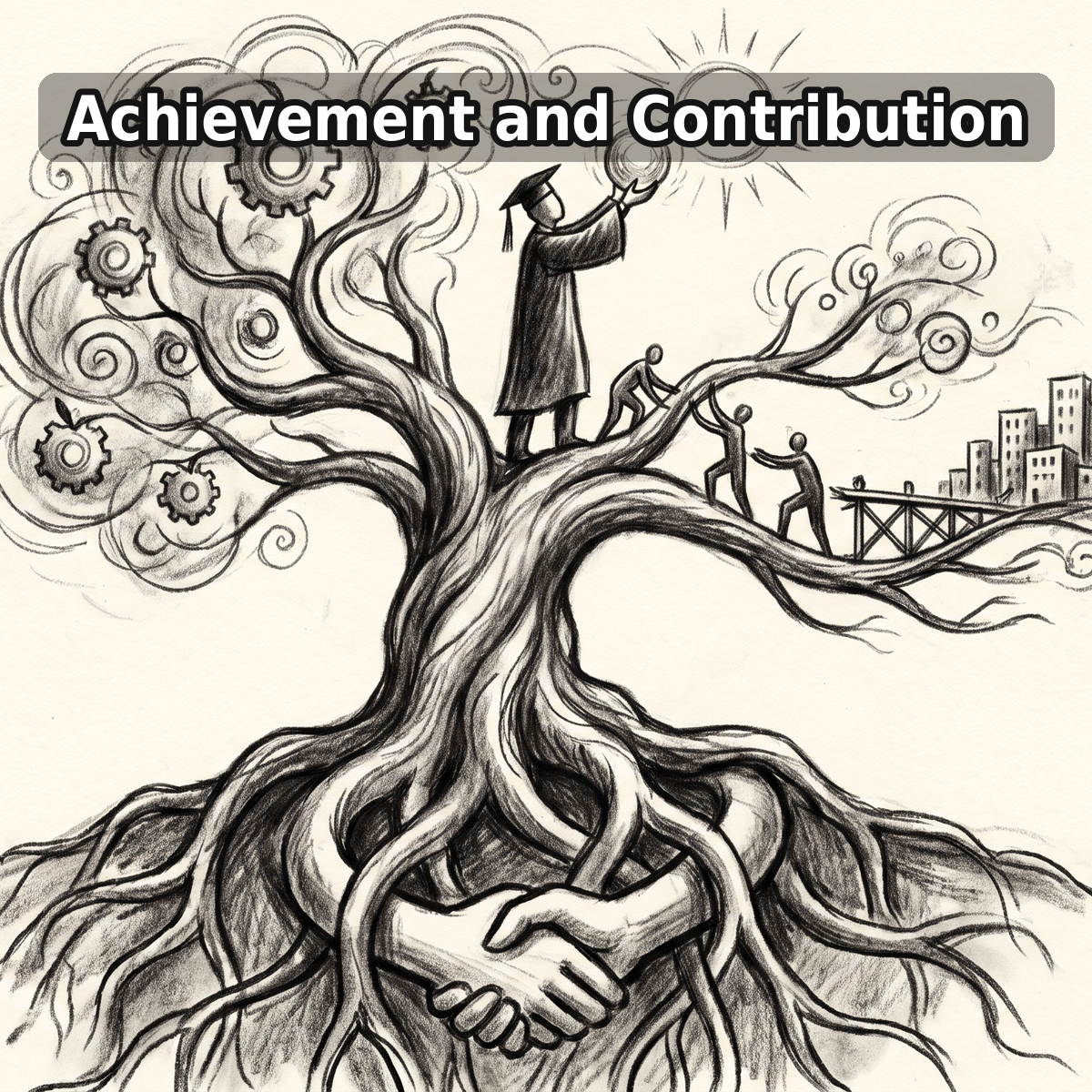
These are the three steps required to become a creator – to become more though knowledge, to produce from your imagination actual value/results in this life.
Grammer. To me, this means within any field first learn the building blocks e.g., core concepts (alphabet, punctuation, structure) – what are the building blocks of what you are interested in? (Writing, Music, Sales, Buildings, Animals, Electric Cars . . . ?)
Logic. This is the practice phase where you play with (use, apply, practice) the building blocks – practice, experimenting, practice, playing, failing, more practice. Understand how it works.
Rhetoric – create something of value – write that book, build that building, build that customer base, fly a planeload of people to their destination, put your song in YouTube, build a civilian rocket company. Boldly produce – become a creator (small c) – in a small way reflecting The Creator God – whose image we reflect.
Schools do not teach the Trivium – they teach compliance through forced short term memorization then reproducing the answers on a test, they teach following orders, they indoctrinate. FUCK THAT –
Now, this next concept goes hand in hand with the Trivium. Become AUTODIDACTIC = become your own teacher. This does not mean not learning from others – it means ultimately we teach ourselves -drive our own learning – know this and own this – Drive yourself to learn.
When I read your post – these are the concepts I thought young people desperately need.