This week, I’ve been on a quest—a mission, really—to improve my focus and concentration. At first, I thought I was simply trying to discover new strategies or techniques: maybe an app, a clever hack, or even a mindset shift to sharpen my mental clarity. But the more I dug, the more I found myself circling back to something I didn’t want to talk about.
The truth is, I know the root of much of my distraction. It’s not some nebulous outside force or an unavoidable circumstance. No, it’s something I choose to hold on to—things I love, things I’m proud of, things I don’t want to let go. And that realization stings.
I’ve been here before, too many times to count. It’s a familiar dance: recognizing the problem, admitting it, and then finding some justification to keep that distraction in my life.
Why do we do this? Why do we clutch so tightly to the very things that sabotage us?
A Lesson From the Sermon on the Mount
As I wrestled with this, I was reminded of something Jesus said in one of His sermons. He spoke plainly (paraphrasing):
“If your right hand causes you to sin, cut it off and throw it away. It is better for you to lose one part of your body than for your whole body to go into hell.”
At first glance, this can seem harsh, even extreme. But when you look closer, it’s not about mutilation—it’s about clarity. Jesus was pointing out a simple, yet profoundly uncomfortable truth: anything that pulls us away from our purpose, our relationship with God, or our goals isn’t worth keeping, no matter how much we treasure it.
That thing, that distraction, might feel like a cherished part of who you are. Maybe it’s a hobby, a habit, or even a relationship that’s no longer serving you. Whatever it is, holding on to it might seem harmless. But in reality, it’s a weight, keeping you from running your race.
Pride and the Comfort of Distractions
For me, a lot of these distractions are tied to pride. They’re things I’m good at, things that make me feel important. Cutting them out feels like losing a piece of my identity. But here’s the hard truth I’ve come to face: pride has no place in a life of purpose.
Your goals, your desires, your mission—they are too important to let pride stand in the way. Pride will tell you, “You can keep this distraction and still achieve your goals.” But pride lies. Every minute spent on distractions is a minute stolen from what matters most.
What Needs to Be Cut?
I don’t know what your “thing” is, but I’m guessing you do. That’s the thing about distractions—they’re not strangers. They’re familiar, even comforting. And they’re sneaky. They whisper, “I’m not the problem. You just need more discipline.”
For me, I’ve identified a few areas that need cutting. It won’t be easy—change never is—but I know it’s necessary. Because when I picture the life I want, the goals I’m striving for, and the person I want to become, I see a version of myself unburdened by unnecessary distractions.
A Challenge
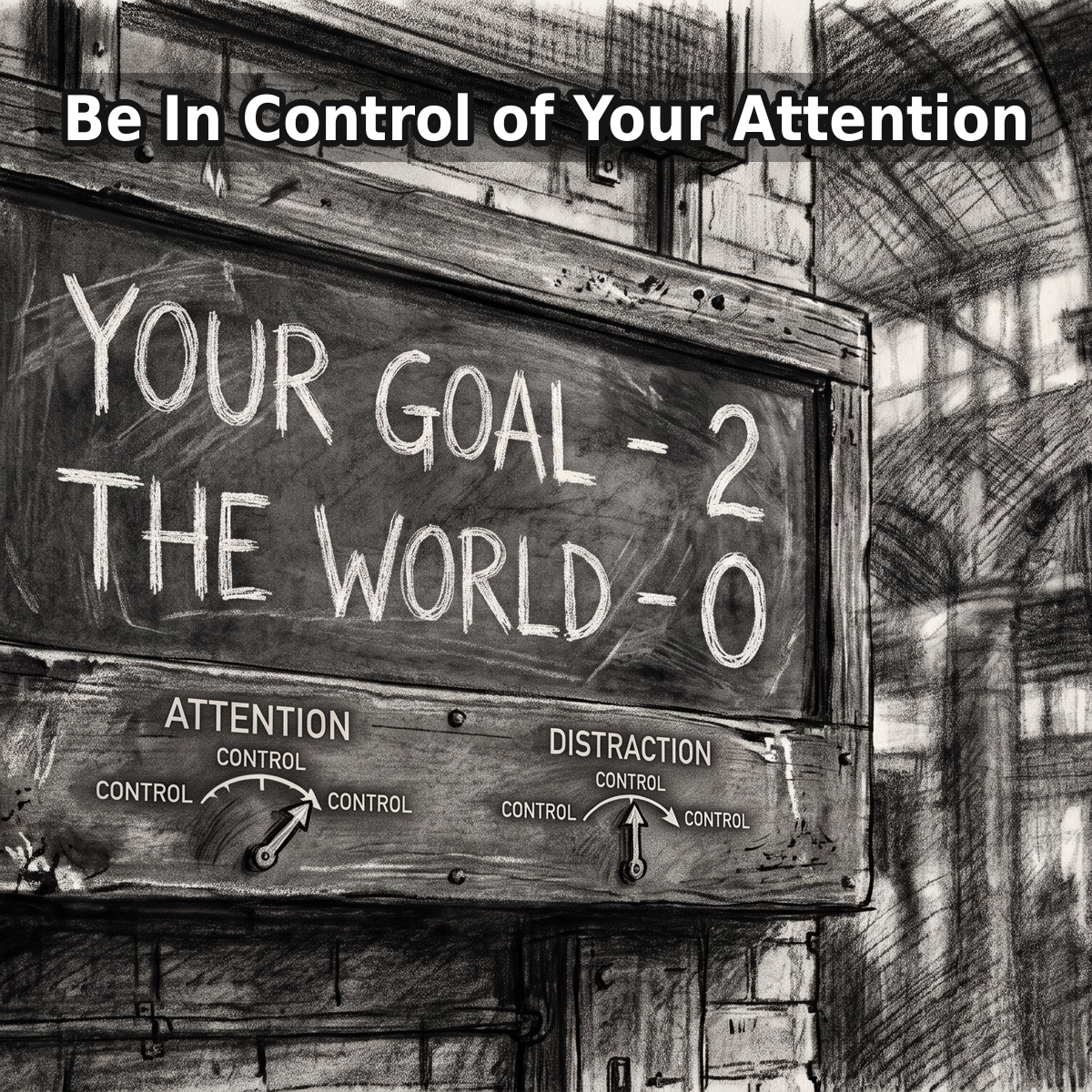
So here’s my challenge, to myself and to you: Be honest. Look at your life and ask, What’s offending me? What’s holding me back? And then cut it out.
It’s not easy to admit that the things we love might be the very things that hinder us. But your purpose is too important to let distractions win. Take the first step. Be brave enough to let go.
When you do, you’ll find something amazing waiting on the other side: clarity, focus, and a renewed sense of purpose. It’s worth it. Trust me.