Integrity is often praised as one of the highest virtues—doing the right thing, being honest, staying consistent in your actions. But have you ever stopped to ask: What is the right thing? What does it mean to be honest? What standard determines consistency?
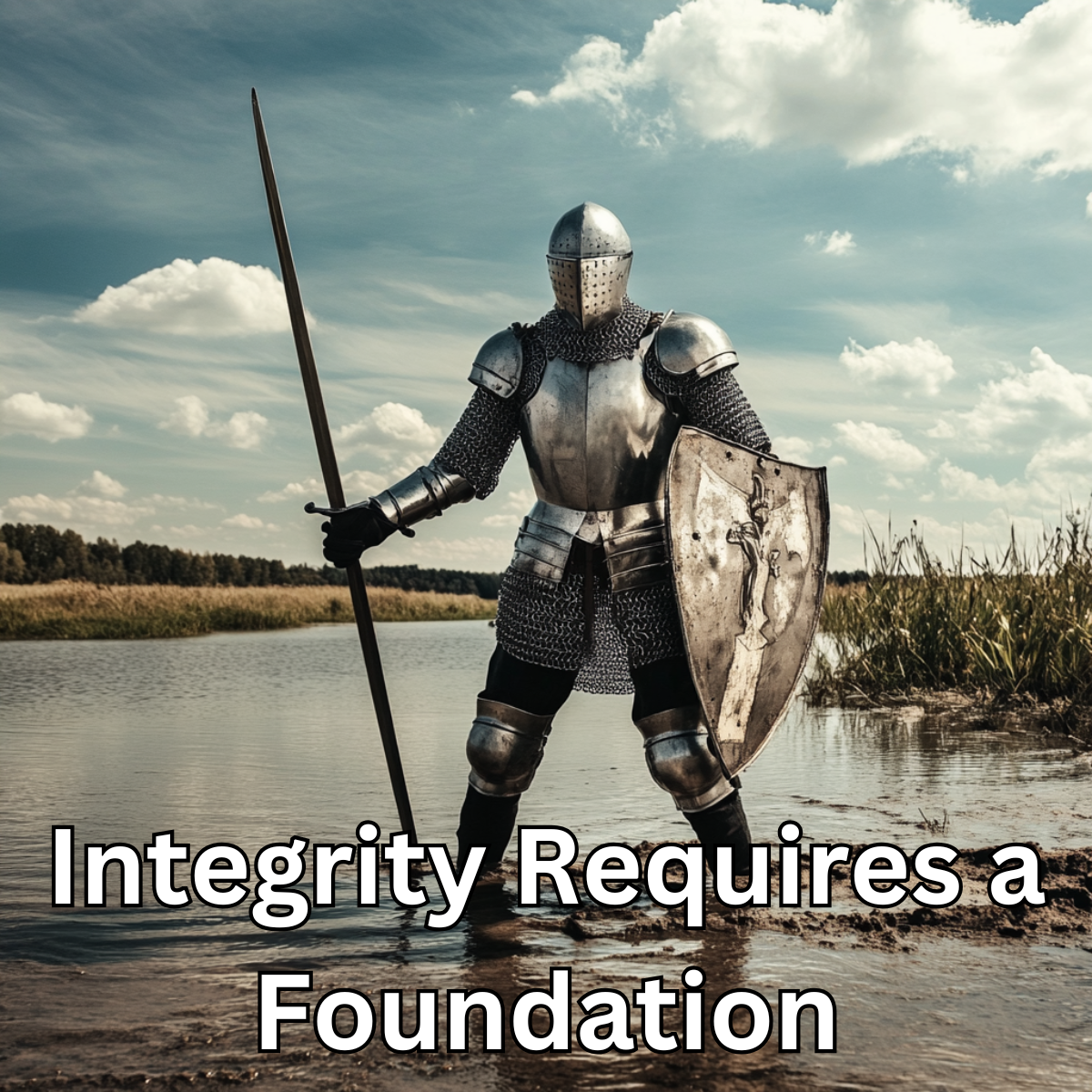
The truth is, integrity cannot stand alone. It requires something deeper—a foundation. Without a clear foundation of principles, values, or objectives, integrity is just an empty shell. You may be consistent, but consistent in what? You may be honest, but honest about what? Without an underlying structure, integrity has no meaning.
Integrity Without a Foundation Is Just Conformity
Many people believe they have integrity simply because they follow societal norms, corporate policies, or legal requirements. But compliance is not the same as integrity. If your behavior is merely a reflection of external pressures rather than deeply held convictions, then you are not operating with true integrity—you are just conforming.
Integrity means standing firm on something, even when it’s difficult, unpopular, or inconvenient. And to stand firm, you need to know what you’re standing on.
Defining Your Foundation
If integrity requires a foundation, then what should that foundation be? That is a question only you can answer. It begins with identifying your core values—those principles that you are willing to uphold regardless of external circumstances.
Some people build their foundation on faith, others on personal ethics, and others on a well-defined mission or purpose. Regardless of the specifics, the key is to know your foundation. You must deliberately choose it, articulate it, and internalize it.
Without this clarity, integrity becomes reactive rather than proactive. You may find yourself shifting with circumstances rather than standing firm in conviction. Worse, you may be deceived into thinking you have integrity when, in reality, you are just following the path of least resistance.
Living with Integrity
Once your foundation is in place, integrity becomes more than just an abstract ideal—it becomes a way of life. It influences your decisions, your interactions, and even the way you think about success and failure. Integrity is no longer just about avoiding dishonesty or hypocrisy; it becomes the active pursuit of aligning your life with your values.
But this alignment does not happen automatically. It requires constant reflection, self-examination, and commitment. You must test your actions against your principles. You must ask yourself difficult questions: Am I living in alignment with what I believe?Do my actions reflect my deepest convictions?Am I upholding my standards even when no one is watching?
The Strength of a Well-Built Foundation
The greatest test of integrity comes in adversity. When pressures mount, when shortcuts present themselves, when standing firm comes with a cost—that is when you will discover whether your foundation holds.
If your values are vague, borrowed, or unexamined, they will crumble. But if they are deeply rooted—deliberately chosen and reinforced through action—then they will sustain you. Integrity will not be a burden but a source of strength.
Conclusion
Integrity is more than just a personal trait—it is the manifestation of something deeper. It is the visible structure built upon an unseen foundation. If you desire to live with integrity, start by asking: What do I stand on? Because without a foundation, integrity is just an illusion.