Some days, it feels as though I can do nothing right. I sit down to work, full of good intention, but the minutes slip by in a fog of distraction. Everything feels like a false start. I pick up a task, drop it. Reorganize my desk. Check my schedule. I reach for productivity but grasp at air.
Yet I can remember—perhaps only days ago—feeling the exact opposite. Tasks flowed effortlessly from one to the next. I made progress without friction. A rhythm took over, and it felt as though I was simply along for the ride.
What’s the difference between those days? Why does it sometimes feel so easy and other times so hard?
I believe the answer lies in a word we use often but rarely examine: rhythm.
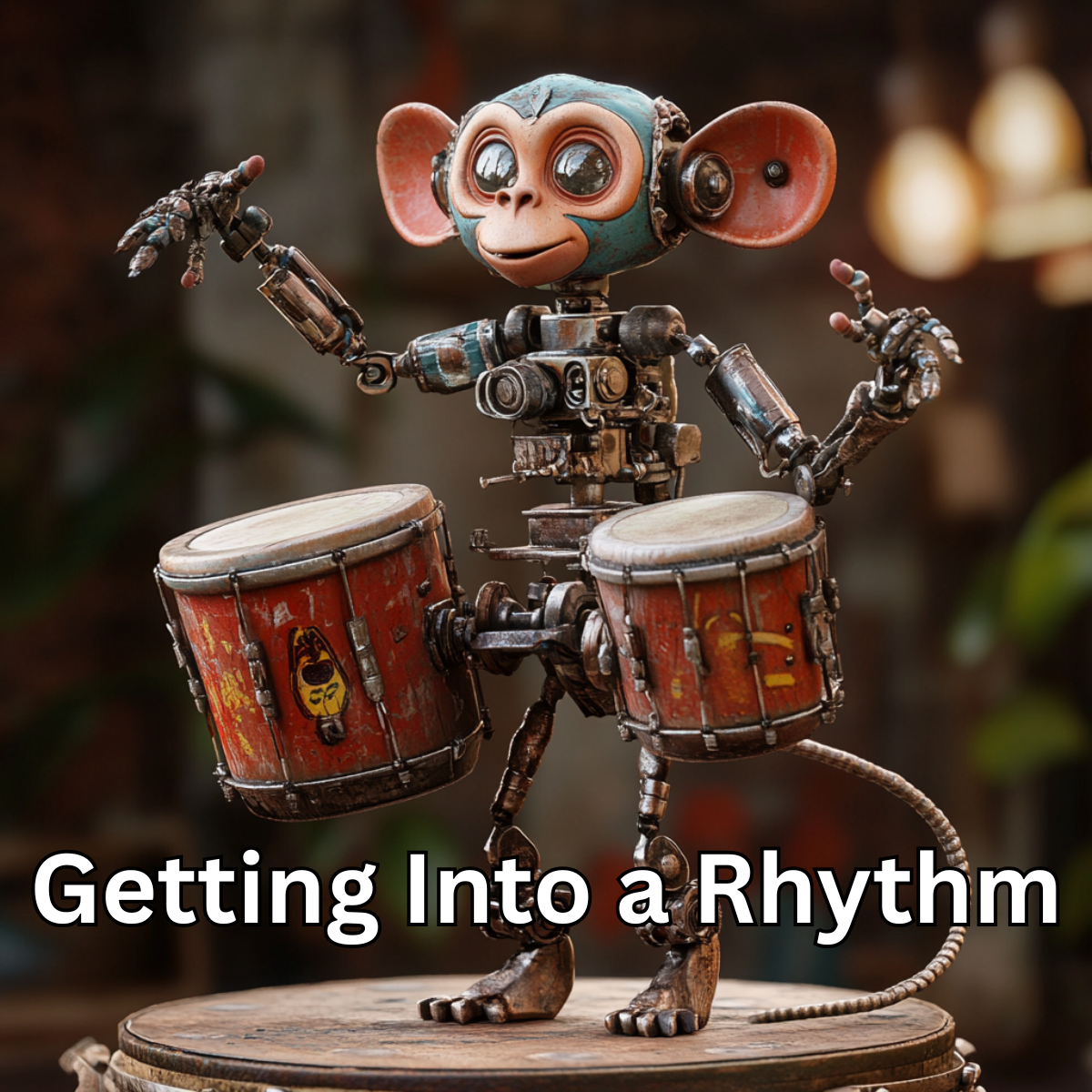
When people say they’re “in a rhythm,” they’re usually describing a state where everything is clicking. They’re not fighting themselves. There’s no mental friction. Movement is smooth. In music, rhythm is not just the beat—it’s the foundation. Without rhythm, even beautiful notes collapse into noise. In life, it’s the same. Without rhythm, even the best intentions fall flat.
Rhythm is not just a habit. It’s not just a schedule. It’s a relationship with time. It’s the art of aligning your internal pace with the demands of the world around you. It’s when the routines you build match the natural ebb and flow of your energy, your attention, your purpose.
But rhythm doesn’t happen by accident. It has to be cultivated. And the first step is noticing when it appears. You have to learn what it feels like—what you feel like—when you are in rhythm. What time of day it tends to occur. What you were doing in the hours before. What your environment was like. There are clues there, if you’re paying attention.
Let me describe how one might begin to cultivate it:
Start with a morning routine—not for the sake of checking boxes, but to establish a tempo. A walk, journaling, reading something meaningful. Something predictable, repeatable, and deliberate. Not rushed. Not mechanical. Just steady.
Then you find your pace for the day. Set the first task, complete it, and then pause. Don’t sprint from one thing to the next. Take a breath. Let your mind settle before you start the next. Slowly, you begin to find a pattern. Tasks link together. Thoughts flow in sequence. You’re no longer starting from scratch with each effort.
And if you’re interrupted, you know how to return—because you’ve established the rhythm. Like a song you’ve heard before, you can pick it back up. You know the tempo, the feel of it.
Rhythm, once found, creates momentum. It reduces the energy cost of decision-making. You no longer ask, what should I do next?—you just do it. The groove is there. It carries you.
And this is the key to sustained productivity. Not heroic bursts of effort, but rhythm. Not just discipline, but alignment. When your mind, your body, your habits, and your environment fall into step, work becomes less like pushing a boulder uphill and more like walking in stride with something larger than yourself.
The goal, then, is not to chase peak performance as a rare high. It is to design a life—through routines, attention, and patience—that gives rhythm a chance to show up more often.
Because in the end, it is rhythm that transforms effort into motion, and motion into achievement.