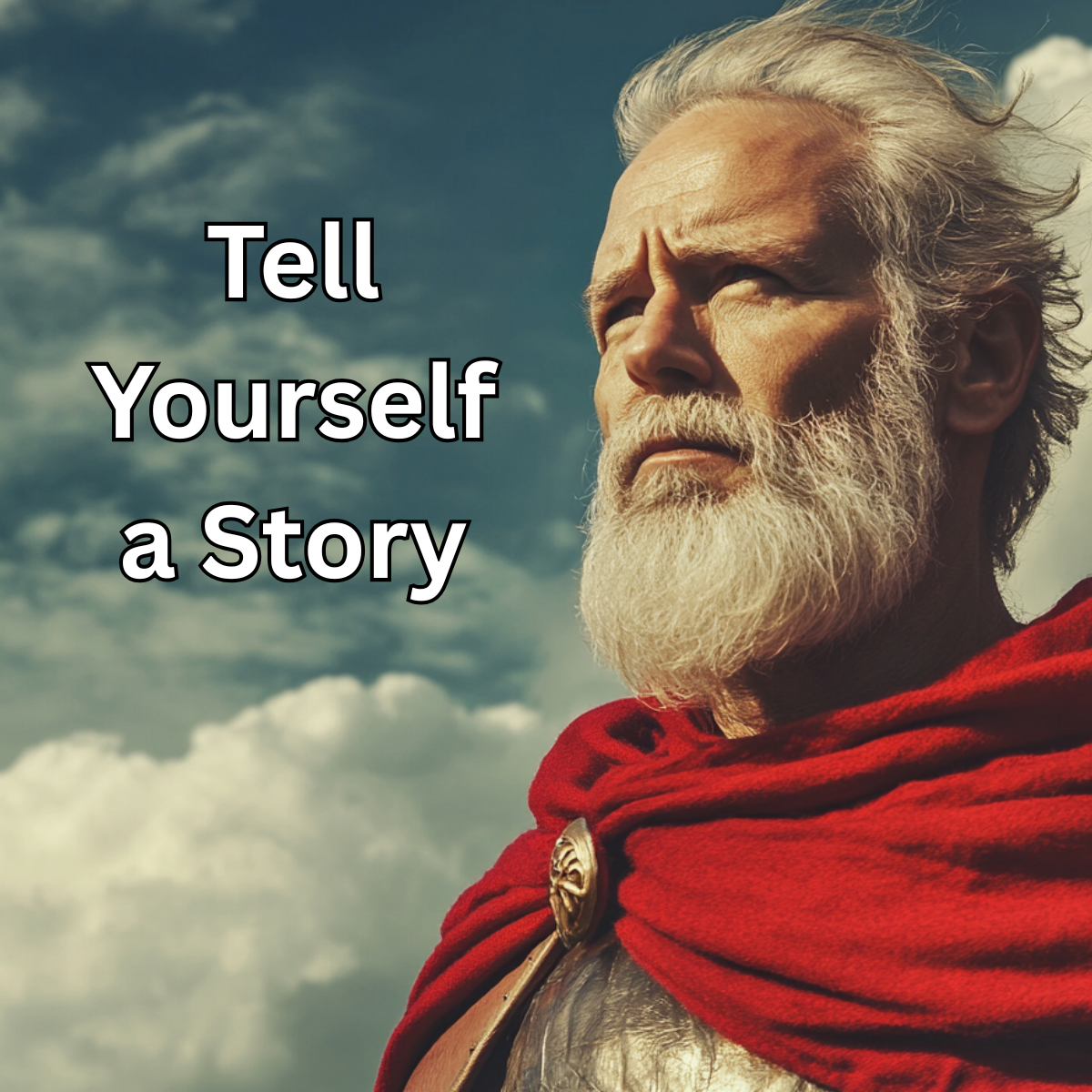
By now, you’ve probably heard of the hero myth. This concept was articulated by the brilliant thinker Joseph Campbell. When I was a kid, I remember watching him on PBS, slowly and thoughtfully explaining how ancient civilizations, though separated by oceans and time, all seemed to tell the same story. The same myth, just different costumes and names.
Campbell gained greater recognition posthumously, especially as his ideas became foundational to books on storytelling. These often point out that George Lucas drew heavily from Campbell’s work when crafting Luke Skywalker’s arc in Star Wars. As it turns out, the hero myth is one of the most deeply embedded patterns in the way humans have told stories for millennia.
But beyond literature and film, this framework has another use. You can use it to tell the story of your life—specifically, your ability to overcome a significant hurdle. Let’s say you lost your job. Or you were seriously injured. Maybe someone close to you died, or you received news of a life-altering diagnosis. Whatever the trial, instead of sinking into despair, you can craft your own hero myth.
That’s right—you can tell the story of how you stood up to the dragon, how you faced the darkness, and how you emerged not just alive, but stronger. And here’s the key: tell this story before it happens.
When you do this, something unexpected occurs. By crafting a story of this nature, you lessen the sting of the obstacle ahead. The burden becomes lighter. In a strange way, the story becomes a prophecy. When you memorize your own victorious outcome, it begins to take root. Your belief in a potential future transforms into something more than hope—it becomes memory. And when you memorize the successful version of your journey, you are far more likely to live it out.
The Hero Myth Framework (Briefly Described)
The hero myth typically follows a pattern: A person lives in an ordinary world and then is called to adventure—usually through a disruption or crisis. They resist at first, but then accept the challenge, often with the help of a mentor. They journey into the unknown, face trials, confront their greatest fear or enemy, and eventually return transformed. They bring back wisdom, strength, or healing—both for themselves and for others.
A Brief Example: The Divorced Man’s Hero Journey
Consider a man whose marriage falls apart—largely due to his own failings. Perhaps he was selfish, inattentive, or emotionally distant. The divorce devastates him. At first, he spirals—consumed with guilt, shame, and regret. But somewhere in that darkness, he hears the call to change. He takes the first step. He gets help. He reads. He listens. He learns how to love well, how to be honest, how to serve.
His journey is long and painful. He has setbacks. He stares down his inner demons. But in time, he rebuilds—not just his life, but his character. And though he may never undo the past, he becomes a man capable of a better future. He becomes a man others can look to for strength. That’s his hero journey.
Conclusion
The hero myth is not just an ancient story—it’s a blueprint. One that you can use to navigate the darkest moments of your life. So when life throws a mountain in your path, don’t just stumble around it. Tell the story of how you climb it. Learn it, repeat it, live it. And in doing so, become the hero of your own myth.