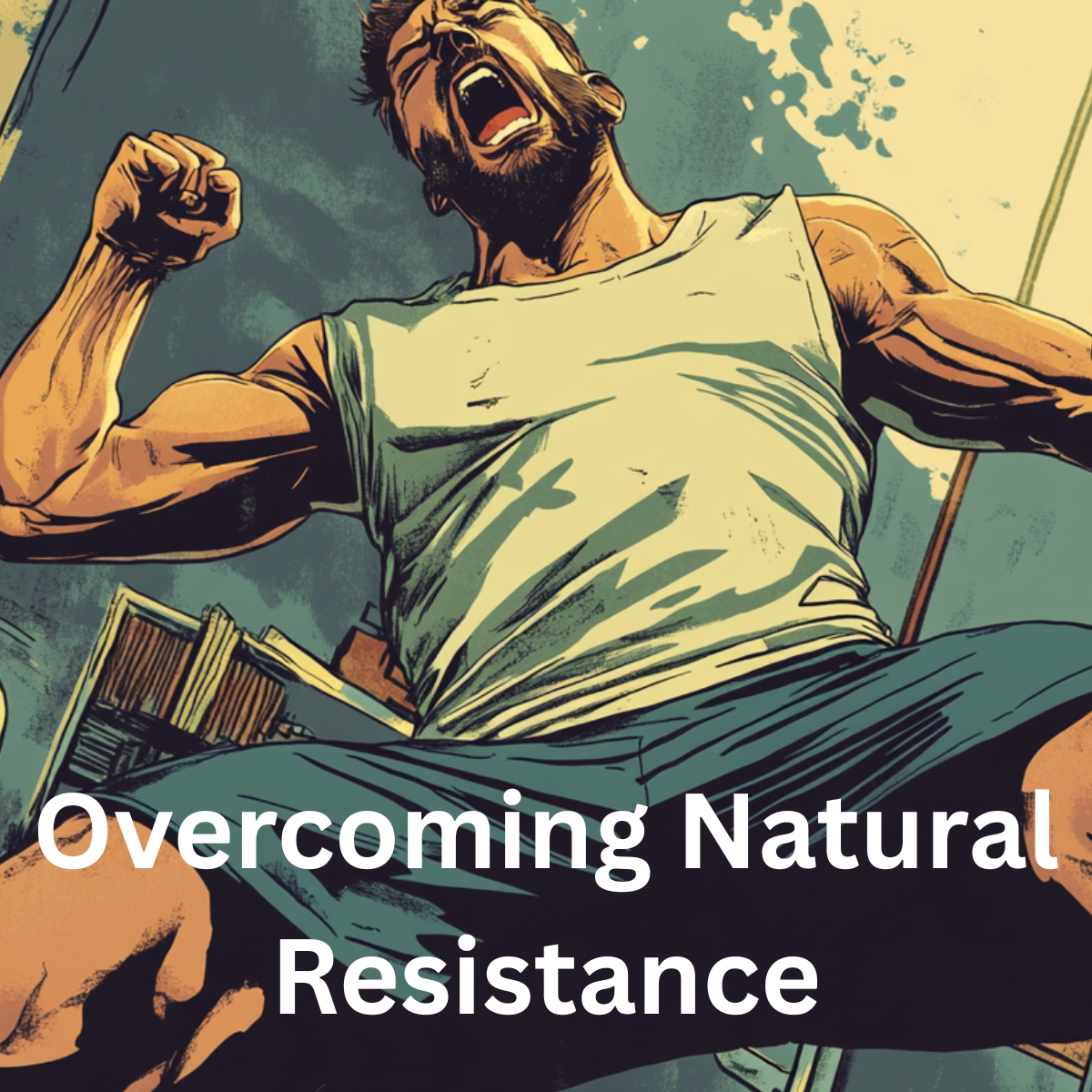
You have something important you need to do. In fact, it’s one of your highest priorities. Yet, when you set out to do it, you face immense resistance. Your mind—and even your body—do everything possible to convince you to avoid the task. You genuinely want to accomplish it, yet there’s a deep internal feeling that’s actively pushing against it. First, understand you’re not alone. Every human being experiences this resistance. If someone claims otherwise, they’re lying. This resistance is a deeply human trait. Considering our natural inclination toward laziness and self-destructive behavior, it’s remarkable that humanity achieves anything at all. Struggling to go to the gym today? Resisting sugary snacks? Finding it tough to go for that run, write that blog, or apply for a job? Welcome to the experience shared by billions of people—it’s perhaps the one thing we all have in common.
The question is—how can you overcome this natural resistance?
First—why am I qualified to discuss this? There’s only one reason: I’ve been writing a daily blog for several thousand consecutive days. I sit down every day and write for at least an hour. Writing, by the way, was my LEAST favorite activity a decade ago. Now, I literally force myself to do it daily. Even at this very moment, I had to overcome substantial internal resistance to sit down and write this blog. It’s a Saturday afternoon, not much is going on with the family, and I have a rare opportunity to relax and do nothing. My inclination was to avoid my desk entirely, yet here I am. Having overcome this resistance daily for years, I consider myself an expert in overcoming natural resistance.
Understand Why You’re Resisting
This might seem obvious but is frequently overlooked. If you’re resisting a beneficial activity that you’ve already committed to, first ask yourself why. What’s behind this resistance? Take a moment to clarify your feelings. Are you bored, tired, or sick? Are you afraid of something? Is the task overly complex or daunting? Understanding the root cause helps you find practical solutions to move forward.
Reduce the Activation Energy Requirement
Usually, the initial effort is the hardest part. With my writing, for example, the toughest step is simply generating an idea. Just sitting and contemplating can feel painful—I’ll avoid it with everything I have. Occasionally, an idea easily emerges, but most times, I have to force something out, like squeezing the last drops of water from a dry sponge. The best tactic here is simplifying the first step into something extremely easy. For instance, I might listen to an audiobook while walking around—an effortless activity that often sparks new ideas. Struggling to get to the gym? Just put on your workout clothes. You aren’t committing to going yet, but you’re taking the first, easy step. Lowering the activation energy can trick your brain into getting started. Today, my goal was just to write the introductory paragraph—nothing more. Yet now, several paragraphs later, I’ve conquered that initial hurdle.
The 5-Minute Rule
If I’m particularly struggling, I tell myself I’ll only do the task for five minutes—no more. Five minutes is easy, right? More often than not, once I get started, I keep going. This might seem like a trivial trick, but it’s surprisingly effective.
Get Small
If the task seems overwhelming, you’re likely to avoid it altogether. Instead, break it down into smaller, manageable parts. My daily writing isn’t done in one sitting; it’s completed in about a dozen small steps. Sometimes I do several steps consecutively, but often it’s just one or two at a time until the whole task is complete. Breaking large goals into tiny steps helps you consistently accomplish extraordinary things.
Habit Triggering
I rely on habit triggers—automatic responses to specific events. These triggers allow me to dive directly into the task without giving my brain the chance to build resistance. It’s much easier to automatically start something than to argue with your primal brain about why it needs to shut up and cooperate.
Accountability Built In Everywhere
The more people you inform about your goals, the more accountability you build, and the easier it becomes to overcome resistance. This often boils down to pride, but pride is a powerful motivator. When I began writing, I pretended I had an audience, even though initially, I didn’t. This simple act made me feel obligated to deliver. My actual audience remains modest, but one day about two years ago, I was late posting my blog—around 11:30 pm—and someone emailed me, “Guy, are you ok?” That moment reinforced that I had to keep delivering consistently. Never underestimate the motivating power of accountability from others.
You won’t always feel motivated, but using a combination of these strategies—especially starting small, triggering good habits, and building accountability—will help you overcome inertia. Over time, this approach cultivates the discipline needed to consistently achieve your goals. Remember, resistance is universal, but so is the human capacity to rise above it.