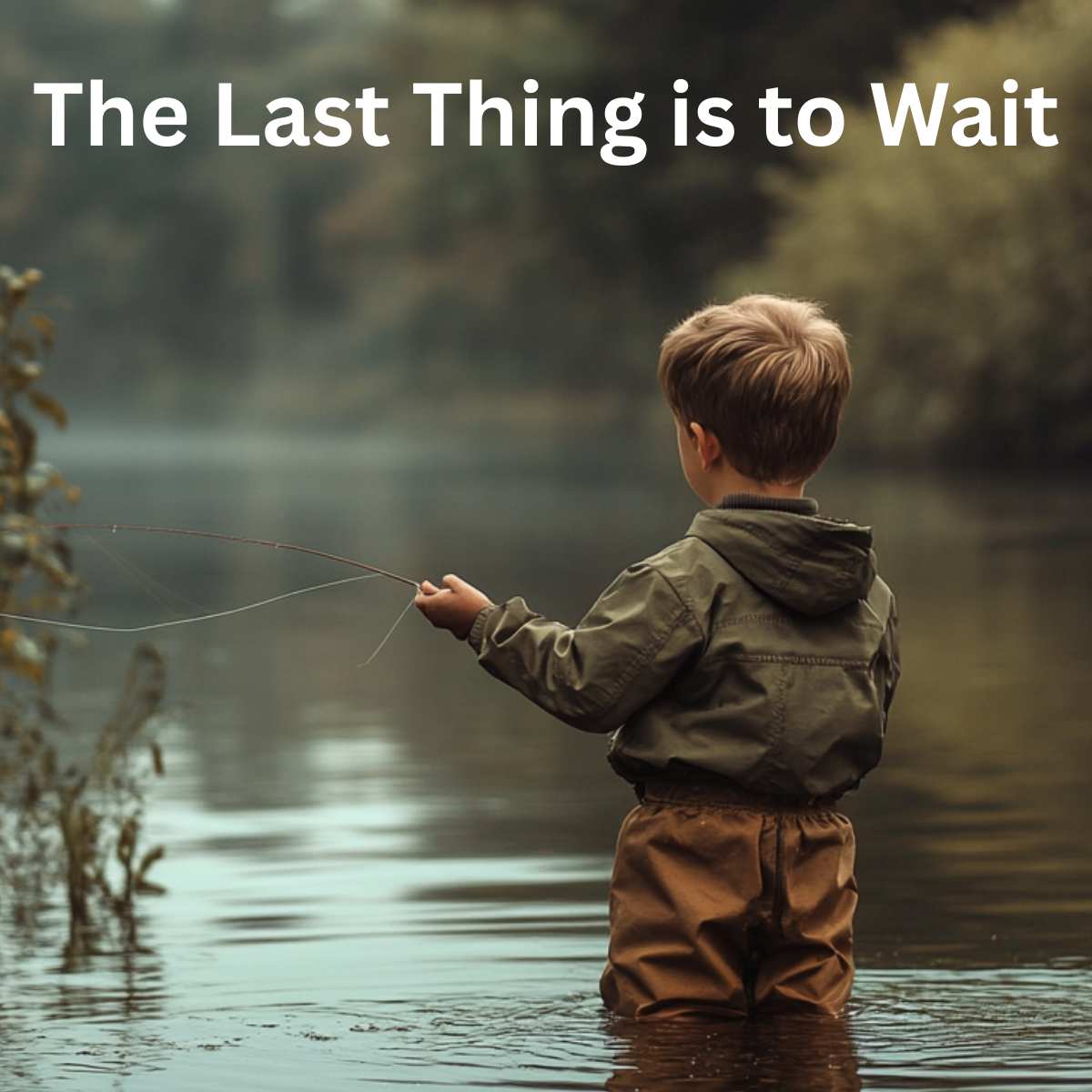
I was frustrated, sitting at the edge of the stream. I had cast my bait into the pool where I knew there were fish. Nothing happened. I tried again. Still nothing. I picked up my stuff and moved to the next fishing hole along the stream. Cast my line in. Nothing.
I sat there, glumly staring into the murky water, watching the fish flutter to and fro beneath the rocks and branches, seemingly mocking me. My grandfather came by, carrying a basketful of fish—just as he always did. He asked me what was wrong.
“The fish aren’t biting,” I said.
My grandfather calmly ran through his troubleshooting checklist.
“Are you using the right bait?” “Check.” “Is your line the right weight?” “Check.” “Have you seen visible signs of fish?” “Check.” “Is it the right time of day?” “Check.”
Everything was as it should be—except it wasn’t. That’s when he gave me a little piece of advice that stuck with me:
“If you’ve done everything right, the last thing you need to do is wait.”
Sure enough, I waited there by the edge of the river for about an hour. I cast my line again and, on the first try, I caught a fish. The missing ingredient had been patience—a step I’ve failed at more than once in my life.
In retrospect, I realize now that I had been loud and clumsy. The fish were spooked. Once I settled down and let the river return to normal, the fish forgot I was there, and their usual feeding routine resumed. Now I understand why my grandfather moved slowly upstream with his fly rod, gently stepping and quietly sneaking up on his prey.
These days, as someone older and weighed down with responsibilities, I can only dream of spending an afternoon fly fishing on the Gunnison River. Instead, I find myself fishing for other things: clients, jobs, investors—even unicorns.
Today, as I impatiently waited for a potential client to join a Zoom call, I realized I was once again that young boy by the river, clumsily throwing my fly into the water, stumbling along the edge. The secret I was missing, once again, was this: Sometimes, when everything is set up correctly, you just have to wait.
Sure enough, the client joined. All was well. My impatience had been unnecessary. I had done everything right; nothing was wrong—he was just a bit delayed.
But how often do we disrupt ourselves simply because we’re being impatient? We do everything we’re supposed to, but just before the moment of reward, we’ve already moved on to something else. We do this all the time. Our impatience ends up costing us the outcome we worked for.
Patience, as the saying goes, is a virtue. Learning to wait is one of life’s hardest lessons. Let others talk. Let them reach the conclusion you’ve already found. Stop trying to force things for a few minutes—and let things happen.
How often are you yanking your bait out of the water just before the fish is about to bite?
Probably more often than you think. I know I have. But today, I was grateful for the reminder—an echo of my grandfather’s wisdom—in the quiet few moments before that Zoom call began.