I’m on to another ancient idiom today: “reading the writing on the wall.” This is one of the many phrases in our language with roots in ancient Biblical texts. In this case, it comes from the story of the prophet Daniel during his captivity in Babylon.
Many people remember the chapters in which Daniel and his companions play a central role in humbling King Nebuchadnezzar. However, we often forget about his grandson, Belshazzar—a ruler even more arrogant—who came to power through a coup d’état. According to the Biblical account, Belshazzar would be one of Babylon’s final rulers and would meet a swift and dramatic end at the hands of his enemies. And from that story comes the origin of the phrase “read the writing on the wall.”
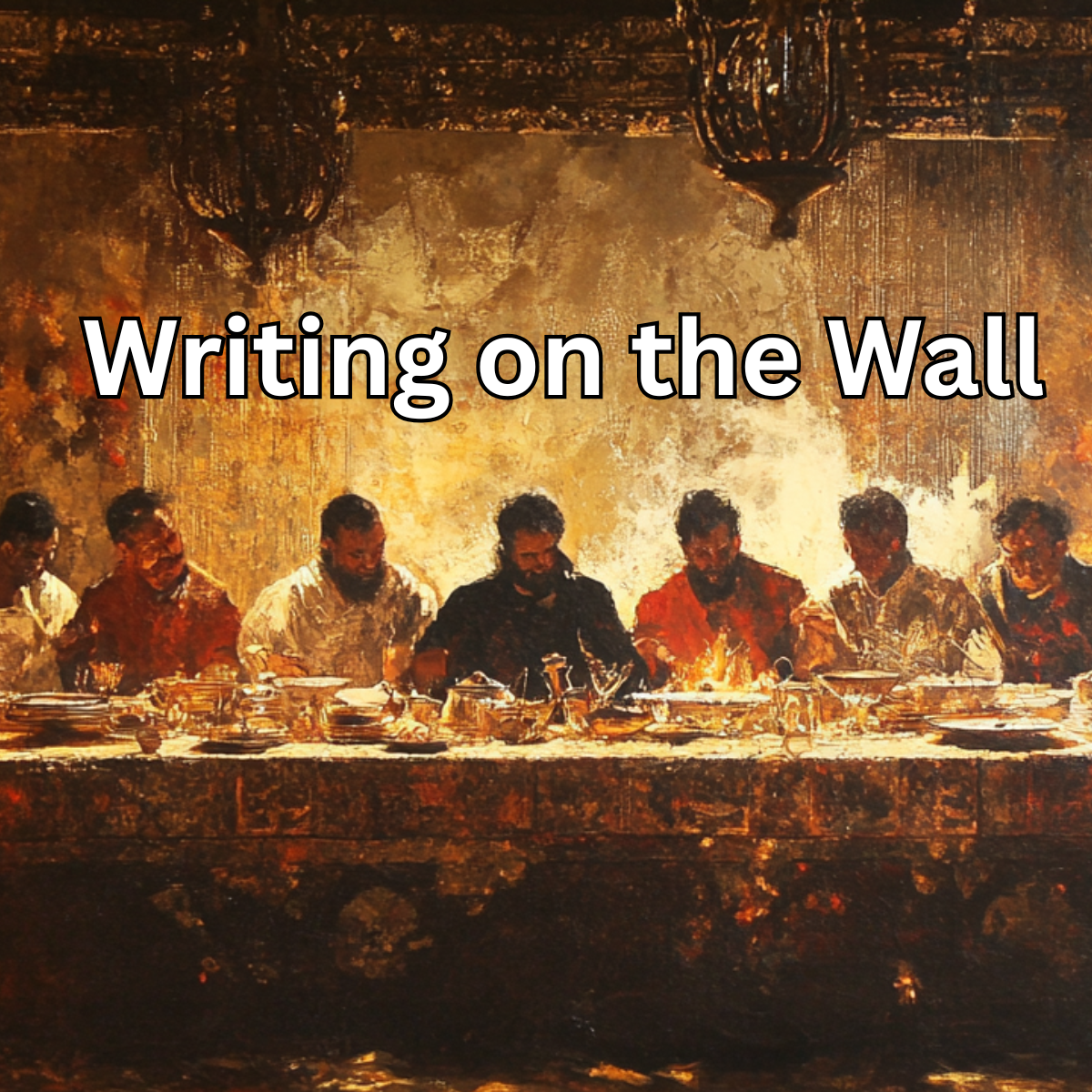
As the story goes, King Belshazzar was hosting a lavish feast. During the celebration, he and his guests drank from sacred vessels looted from the Jewish temple in Jerusalem. At that moment, a mysterious hand—believed to be divine—appeared and wrote a message on the wall:
“Mene, Mene, Tekel, Upharsin”
No one in the Babylonian court could interpret it. On the advice of his courtiers, the king summoned Daniel. The message was grim. Daniel explained that the king and his empire were nearing their end. Belshazzar had been weighed and found wanting, and his kingdom would soon be divided and conquered by the Medes and Persians. That prophecy came true—that very night, the king was overthrown and killed.
Whether Belshazzar could have changed his fate is debatable. But today, the idiom “reading the writing on the wall” refers to the act of recognizing clear warning signs—signs of impending doom, failure, or necessary change. It has become a metaphor for the wise and perceptive among us—those who act before disaster strikes.
So, why bring this up today of all days?
This morning I was calmly puttering around the house, pleasantly surprised by a quiet weekend morning with nothing on the agenda. A rare anomaly. I was meandering down the hallway toward the backyard, mentally prepping to do as little as possible, when my wife—calmly, yet unmistakably—said:
“We really need to paint these walls before we have that party in two weeks.”
That was a clear shot across the bow.
I looked to my left. Then my right. The signs were obvious. The baseboards were scuffed. A small dent from carrying a table out back. A faint handprint near the corner where I often lean and chat with people in the kitchen. Yes—the writing was quite literally on the wall.
Had I been more observant, I would have realized this supposedly free Saturday was never going to be free at all. And, like Belshazzar, my fate was sealed.
I just returned from Lowe’s with several gallons of paint and a few supplies. Before I dive into the job, I decided to take a moment to write today’s blog. As I sit here reflecting on the coming week, the summer ahead, and even the rest of the year, I ask myself:
Am I missing any obvious writing on the wall?
Are there signs I’m overlooking? Warnings I should take seriously? The answer is yes. There are a few. But unlike Belshazzar, I still have time—and the power—to do something about them. I’m grateful for that.
The moral of today’s experience? Take time now and then to pause and reflect. Look carefully at what’s right in front of you. God may not be writing on your literal wall, but there may be messages all around you—if only you’d stop long enough to see them.
So maybe we need to put down the phone. Stop the endless scrolling and streaming. And really see the writing on the wall.