I was recently in a business planning session filled with dynamic, intelligent people, all eager, opinionated, and passionately committed to their ideas. The energy was palpable, the atmosphere charged. At times, we moved mountains, reaching critical breakthroughs and exciting conclusions. Yet just as often, discussions devolved into heated exchanges, with the conversation leaping chaotically from topic to topic.
What struck me most in this scene wasn’t the complexity of our goals or the diversity of perspectives. Rather, it was something subtler, something beneath the surface of words. As I carefully observed the interactions unfolding before me, I noticed something intriguing: those who struggled to be heard, those repeatedly interrupted or overlooked, began amplifying their nonverbal signals. Voices grew louder, tones shifted abruptly, gestures became exaggerated. It was as if their bodies were desperately compensating for what their words alone could not convey.
Witnessing this reminded me vividly of a fascinating lesson from college about nonverbal communication, a lesson crystallized by an unlikely teacher: a horse named Clever Hans.
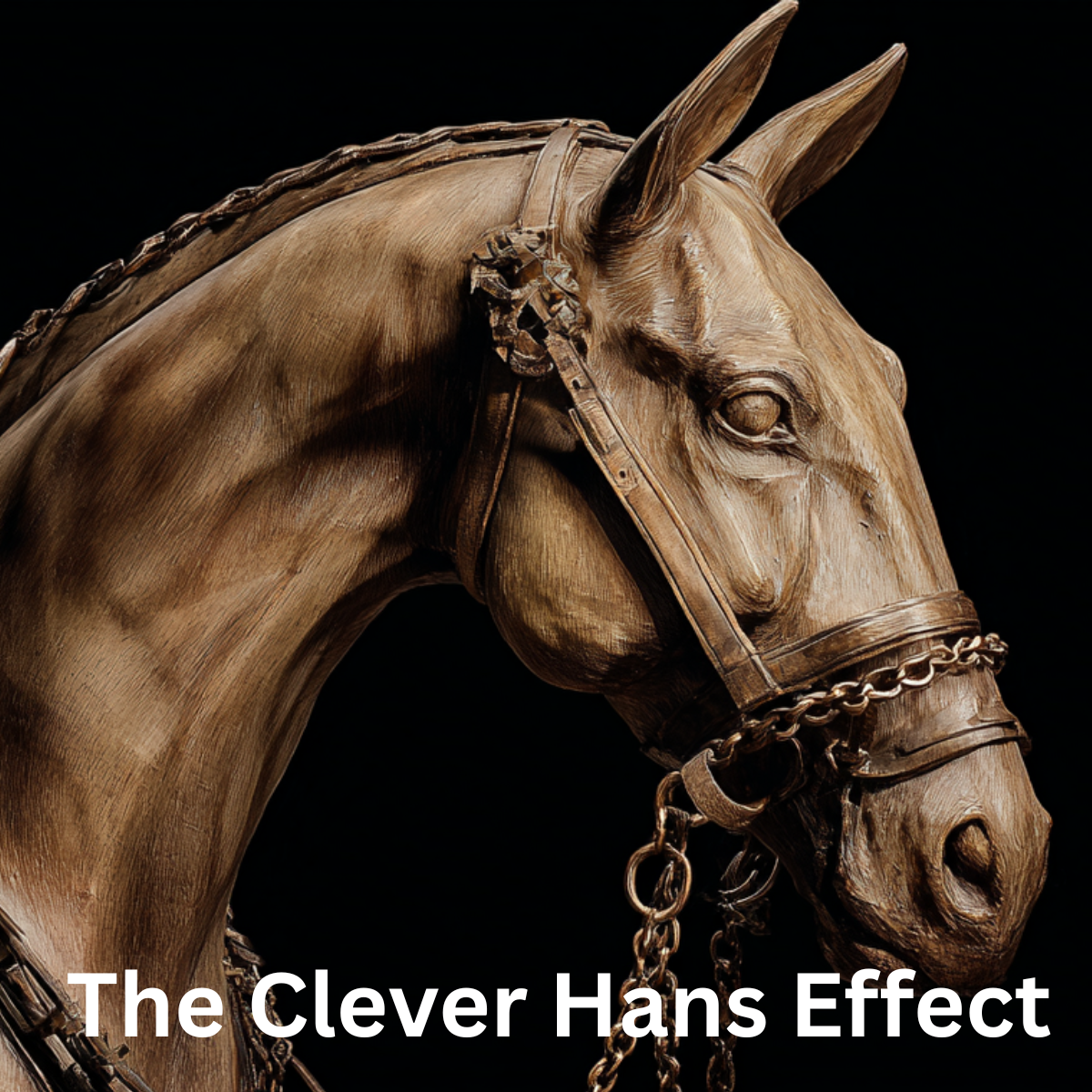
In the early 1900s, a German horse named Hans captured imaginations worldwide. Clever Hans appeared to do the impossible: solving math problems, telling time, and answering questions simply by tapping his hoof. Was this horse truly gifted, a mathematical prodigy? Scientists and curious onlookers alike were eager to find out.
Yet what Hans revealed was not numerical genius but something even more profound about human behavior. He wasn’t performing calculations at all. Instead, Hans was intuitively reading the subtle and unconscious cues of his trainer and audience, tiny shifts in posture, changes in breathing, slight facial expressions, signals humans weren’t even aware they were giving. Hans didn’t know math; he knew people.
This phenomenon, now famously called the “Clever Hans Effect,” highlighted a powerful insight into behavioral science and research. When humans subtly, unintentionally signal approval or expectation, they influence outcomes far more than their words alone could. In research, this unconscious cueing can profoundly skew results, making double blind studies or automation essential to preserving objectivity.
But the Clever Hans Effect isn’t confined to laboratories or research studies. It infiltrates everyday interactions, from office meetings to casual conversations. Consider the salesperson who notices the customer’s slight nod or the manager whose inadvertent frown colors an employee’s update. These small gestures profoundly shape communication, even without our awareness.
Psychologist Albert Mehrabian famously explored this further, formulating the now iconic 7 38 55 rule. According to his research, when expressing feelings or attitudes, only about 7% of the message comes from words, 38% from tone, and a remarkable 55% from body language and facial expressions. The precise numbers can vary, but the underlying truth is undeniable: how we communicate matters profoundly, often far more than the exact words we choose.
This insight has deep implications for leadership, sales, teamwork, indeed, any human interaction. Leaders who master nonverbal communication can inspire trust, motivate teams, and build deeper connections. Conversely, unintentional signals, a furrowed brow, a distracted glance, can undermine relationships, breeding doubt and confusion.
Returning to that spirited planning session, I realized how much of our energy and effectiveness depended not merely on what we said, but on how we communicated. Understanding the Clever Hans Effect, we become more intentional, more thoughtful, in our interactions. By paying careful attention to tone, posture, and facial expressions, we can lead conversations more effectively, foster clearer understanding, and build stronger relationships.
As the session concluded, I took a moment to reflect. The words spoken in that room mattered, but what truly shaped our progress was the dance beneath the dialogue, those subtle, powerful signals constantly exchanged, rarely recognized, yet profoundly influential.
Hans the horse couldn’t perform arithmetic, but he did teach us something invaluable about being human. Perhaps we all could benefit from becoming just a little more aware of the silent, eloquent conversations happening around us.