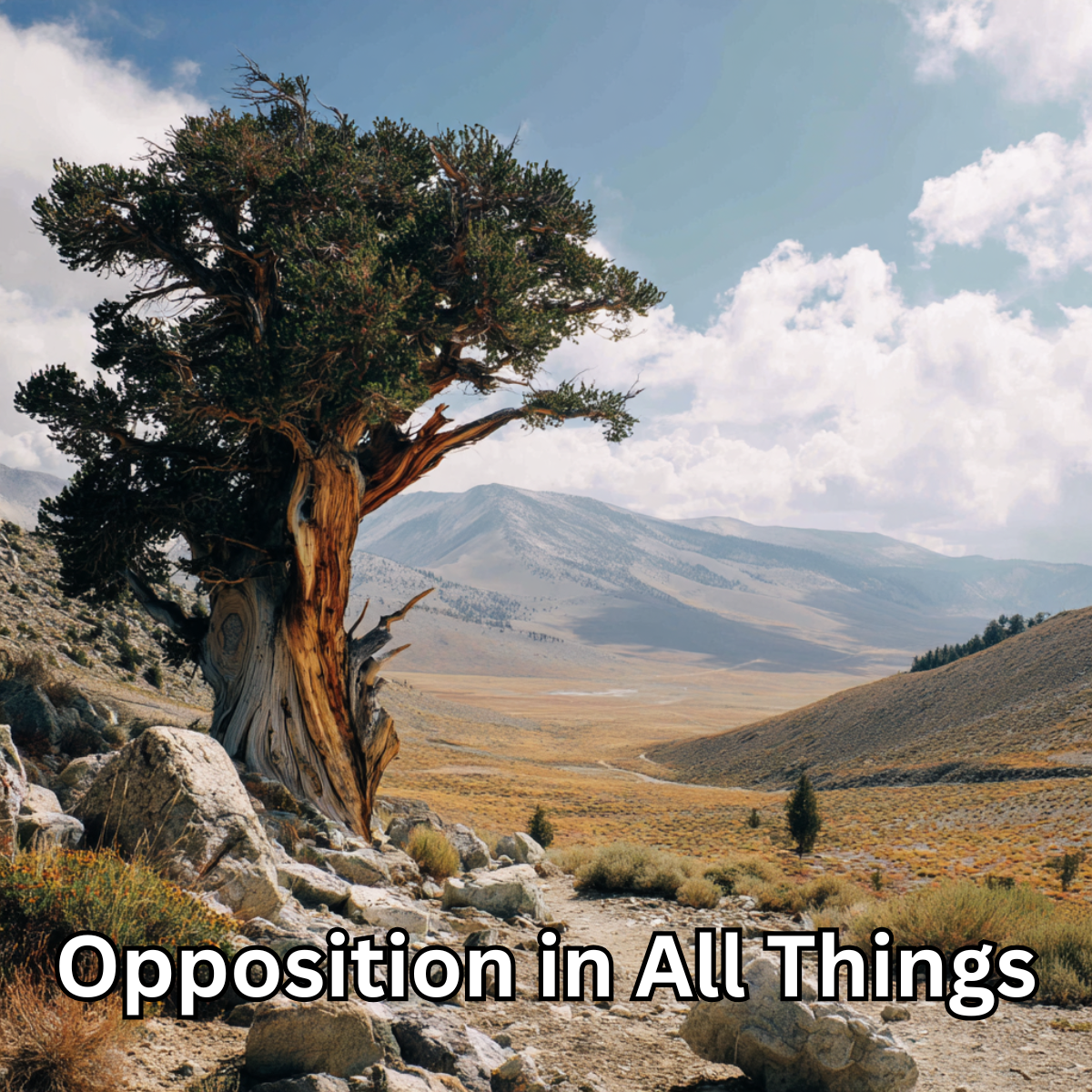
This seems to be one of the laws of the universe: that there is opposition to all things. This became apparent to me during my week-long expedition into the high desert. Everything was in conflict in that environment, but it seemed that over time a balance was found and an equilibrium established. When one thing was tipped in one direction, other things would respond in kind. The lack of water was evident, but not as dramatic an impact as you might think. On one hand, there was clear evidence of recent water activity in terms of washed-out ravines and recent erosion caused by flash flooding. On the other hand, there were signs that water had not been available for several months, evidenced by the dry grasses and parched patches of soil. It was clear, however, that most of the species in this environment had learned to adapt to these circumstances quite well; after all, the signs of abundant life were everywhere. The balance created in this ecosystem was not perfect by any means. There were imbalances visible everywhere, but even with this clear lack of perfection, a sense of stability was prevalent, especially as you walked past one of the giant Bristlecone pines that seemed to emanate a radiance impacting everything around it. These were ancient trees that had established health, strong root systems, armored hides, and branches high up and out of harm’s way, collecting the sun’s rays. If you stopped for a moment next to one of these giants, you could feel the micro-ecosystem all around you, and beneath these leaves, you could see this same balance between opposing forces at play: organic growth versus natural erosion.
In nature, opposing forces are everywhere—protons and electrons, positive and negative, light and dark, cold and warm. Everywhere you inspect, when you find a force, you will find an equal and opposite force working against it. Newton applied this to forces of energy, but it is clearly evident in almost everything else, from chemical bonds to the interactions between different species. With all this opposition occurring around us, is it any surprise that there is opposition against anything we try to do? It shouldn’t be, yet we always lament the fact that anyone or anything should oppose something we attempt. In fact, I think the opposite would be true. If you are trying to do something and nothing is opposing you, then I would really ask the question, “What is wrong?”
I believe there is a difference between opposition and resistance, however. Opposition is a natural force, usually ideological or strategic in nature. Resistance, on the other hand, implies hardship, defiance, or survival. It may involve enduring pressure or pushing back. I think it is healthy to understand which force you are actually dealing with when experiencing a force against you. Opposition is much different than resistance in that opposition will always be there, whereas resistance can be overcome with significant effort. You may decide that the resistance you are experiencing is not worth the effort to overcome; however, you should never decide to stop an effort due to opposition. This is because you will ALWAYS have opposition—it is natural. If you quit because you are opposed, you are a fool. If you quit because you face resistance, you could potentially be wise.
Resigning a chess game because your opponent is opposing you would be ridiculous. However, resigning because the resistance is so strong that you are losing by an overwhelming amount of material is just realistic. Chess is a great example of this principle. The game of chess is amazing because of how balanced it is in the opposition. Everything has opposition in chess—32 light squares and 32 dark squares, equal opposing pieces held in symmetry. The even number of ranks and files creates natural opposition as pieces advance on the board. Everything is balanced, and oftentimes the way to win at chess is to figure out how to throw off the balance of the game and, during that moment of upheaval, create an advantage. In this case, opposition is part of the game, and so it is in nature, so it is in our lives, and so it is in our companies.
When we enter into this wild world armed with our ideas crafted in our playrooms and sandboxes, we get the opportunity to exert our will on others. Is it a shock to know that other people also have a will? Some stronger than others, some more equipped to combine their will with others. Opposition is part of life; finding the right balance and/or a way to disrupt that balance is part of the game of life. In some cases, the bristlecone pine tree has had over 4,000 years to figure that out. You have less than 100. Have fun.


Good article. I am reminded of James 1:2-4. “Consider it pure joy, my brothers and sisters, whenever you face trials of many kinds, because you know that the testing of your faith produces perseverance. Let perseverance finish its work so that you may be mature and complete, not lacking anything“. It is always good to keep in mind that difficulties and trials are designed to help us grow. As James says, as we persevere we become mature and complete, not lacking anything! I have learned probably more in my life from overcoming difficulties as I have in achieving successes. As the old saying goes, “what doesn’t kill you makes you stronger”. As long as we have breath we can grow and learn. So instead of being bitter from the difficulties in life we can get better from them. Bitter or Better, you choose!