It occurred to me today over a nice lunch in the hot sun that I have developed over the years a rather simple system for handling difficult employees, contractors, or anyone else you are responsible for managing. There was a time when I would let difficult employee situations linger for far too long. That non-action would end up creating hostility and resentment between us, as well as confusion with other people who worked around me. The opposite reaction was that often I would find myself responding too quickly. Someone would notify me of poor behavior, and I would immediately overreact and come crashing down on the offender. This had a similar effect, creating hostility, resentment, and confusion among others in that working environment.
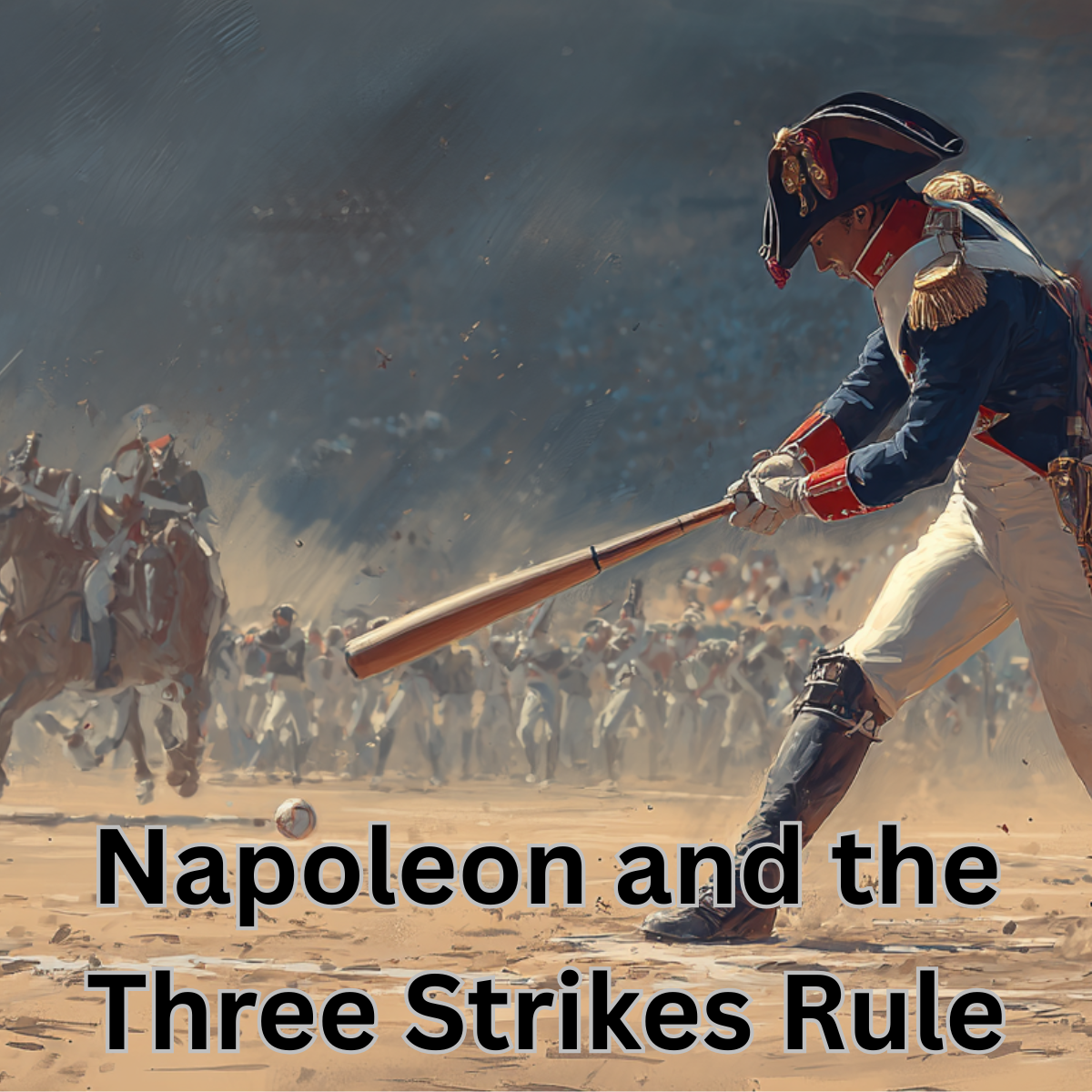
At some point in my career, I started using what I now call “the three strikes rule.” This rule gets its name from a rather unpopular bill that was passed in the State of California which mandated automatic incarceration after three felonies, with very few exceptions. It was unpopular because, although intended to be a serious deterrent to crime, it was also abused by prosecutors in ways that were not part of the original intent. However, the slogan was catchy, so I decided to use it as one of my guiding principles of management. If I ever write a book on leadership, this will be one of the chapters. The rule is basically this: I give everyone the benefit of the doubt three times. If I hear a complaint about someone, I will largely ignore it. I might say something casually or make a small inquiry, but I am not going to overreact, institute some harsh penalty, or launch a big investigation. Assuming this is not a massively egregious offense, of course. Over time, I have learned that one complaint is usually a rumor, the second complaint indicates there might be a repeating pattern, and three complaints mean there is very likely something going on that requires my attention.
This pattern of waiting until after the third offense to react has helped me avoid acting too quickly and has given me permission to act decisively when necessary after the behavior has become a pattern. It has served as a middle ground between extremes. I still get it wrong from time to time, and I still need to do my fair share of investigation, but at least it allows me to focus on the employee or contractor issues that really matter. So how does Napoleon come into this?
This idea really caught on one day when I realized that my life was being controlled by email, SMS, and other forms of instant communication. I was reacting too quickly and spending far too much time on urgent yet trivial issues. The urgent was commanding me too often. I heard an anecdote once about Napoleon’s leadership style in which he would delay opening mail for three days. He did this because he knew that if a problem was truly urgent, it would either resolve itself or find another way to reach him. By waiting, he filtered out the noise of issues that did not really require his attention, allowing him to focus only on the matters that truly endured and demanded his decision. Later, I discovered that this may not have been a regular practice of his but rather a legend that grew over time. Still, the concept was interesting nonetheless.
This inspired me to extend the idea into what I now call a universal wait-for-three philosophy. Is a customer complaint evidence that your sales team is terrible? Not necessarily, but if you hear three complaints, you most likely have a problem. Has your wife complained that you are not spending enough time with her? Once, twice, thrice? At that point, you better pay attention, or you are in trouble. Did your mom ask you to clean your room? If she has asked a third time, then you really need to act. I think you get the idea. The three strikes rule, as it seems, swings both directions. I have noticed this pattern everywhere. I can usually ignore something the first time, perhaps even the second time, but rarely can I ignore something more than three times. The fourth time almost always brings a world of hurt along with it.
In the end, the three strikes rule is less about being rigid and more about giving yourself a framework for patience, balance, and decisive action. It keeps you from being swept up by the noise of every small complaint, and it prevents you from ignoring problems until they fester into something worse. Whether in managing people, handling communication, or navigating personal relationships, waiting for three gives just enough room for perspective without surrendering your responsibility to act. It is a simple rule, but in practice, it can make the difference between being controlled by circumstances and leading with clarity and intent.