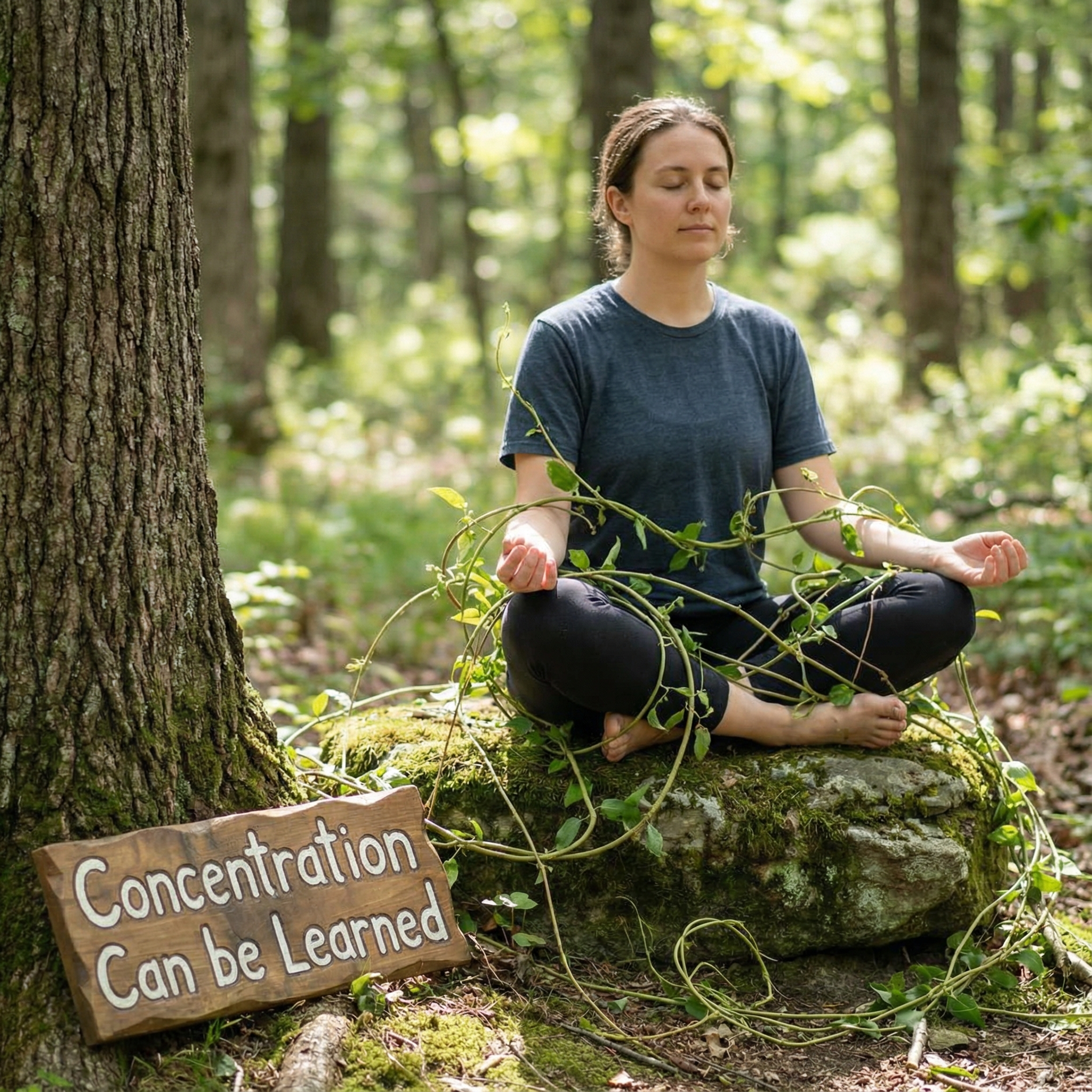
I’ve been thinking a lot about concentration lately, and I’ve come to a realization that feels both obvious and revolutionary: concentration isn’t something you either have or don’t have. It’s a skill. And like any skill, it can be trained. This matters more than you might think, especially when it comes to keeping commitments alive and effective in your life.
Here’s what I’ve learned: most of us can’t actually concentrate for more than five minutes. Seriously. If you’re honest with yourself, you’ll probably discover that your brain wanders constantly, notifications ping, responsibilities pull, and your mind drifts to a thousand different places.
I used to think I was just bad at focus. That it was a personality flaw, something I was born without. But that’s not true. Concentration is absolutely something that can be developed. Some people adapt to it younger, sure, but that doesn’t mean the rest of us are doomed to distraction.
Think about it: what good is writing down your most important tasks each day if you can’t actually focus long enough to complete them? What’s the point of identifying what matters if your attention scatters the moment you try to act on it? The daily practice of considering what’s most important and writing down specific tasks has tremendous power. However, that power only manifests when you can actually marshal your consciousness toward those things. Concentration is the bridge between intention and action.
I’ve decided to spend time focused on how I can concentrate better, and I want to share what I’m working on. Think of these as daily drills, the same way a basketball player practices layups or a monk follows liturgical practices.
1. Practice Meditation (5–10 Minutes Daily)
Just sit still. Do nothing. Let yourself understand what’s impacting you without reacting to anything. Take note of thoughts and allow your mind to move on to the next one. That’s it. Just a few minutes of quiet stillness where you’re doing no activity.
I’ve been doing morning and evening meditation, and it’s had a great effect. It helps me clear my mind, focus on the future, and visualize success. It’s not about becoming a zen master it’s about quieting the noise so you can hear your thoughts clearly.
2. Dedicate Time for Deep Concentration
Spend time each day on puzzles, chess problems, brain games, or simply reading. We don’t allow ourselves time to work out our brains on a regular basis. By spending time each day in focused thinking time, we keep the brain in tune and sharp.
3. Build Up Focus Sessions Gradually
Start small. Really small. Begin with just five minutes of focused work on something that matters to your goals. That may not seem like much, but people are not good at concentrating. You’ll be surprised how hard it is to keep your brain focused on something for even that long.
The next day, try for a few more minutes. Slowly build up until you can consistently focus for 20-minute sessions without having to remind yourself to get back on track. Once you can do that, string together several back-to-back 20-minute working sessions. That’s when you know you’ve trained yourself to concentrate.
Here’s my prediction: if you try to do these three things each day for a week, you’ll probably fail. This isn’t because you’re weak or undisciplined, but because your lifestyle is set up to welcome constant distraction. Take notes on what gets in your way, such as notifications, responsibilities, or other people’s demands. The world isn’t going to make it easy for you, but you always have a choice to show up, refocus, and get back to the work of building this skill.
When it comes to our personal ambitions, our dreams, goals, and commitments we rarely consider adopting the structure of daily drills. Why is that? Why do we assume we can achieve our aspirations without the daily discipline that athletes and monks embrace?
Performing a set of core rituals every day, what I like to call “life drills” is key to staying focused, prepared, and aligned with your intent. These drills aren’t about perfection; they’re about repetition. They ground us, teach us resilience, and ensure that when life throws its curveballs, we’re ready to respond.
This is not a one-and-done process. It’s not about achieving perfection but about progress. Concentration is a skill that requires constant cultivation, like tending to a garden. Sometimes the weeds of distraction will overtake your efforts, but with persistence, you can clear the path again and again.
Embrace the failures as much as the successes. They’re part of the process, teaching you about your triggers and distractions. Concentration isn’t just about focusing on what matters; it’s about learning what doesn’t and letting it go. Self-discipline and consistency aren’t just a switch that can be turned on. They take time, commitment, and lots of practice. However, if you want to do it, you can. It begins with believing that concentration is worth changing for.
So give yourself some grace, but don’t give yourself an out. Concentration can be trained, and you’re in charge of that training. Start today, start small, and keep going. By the end of this week, you might just surprise yourself.