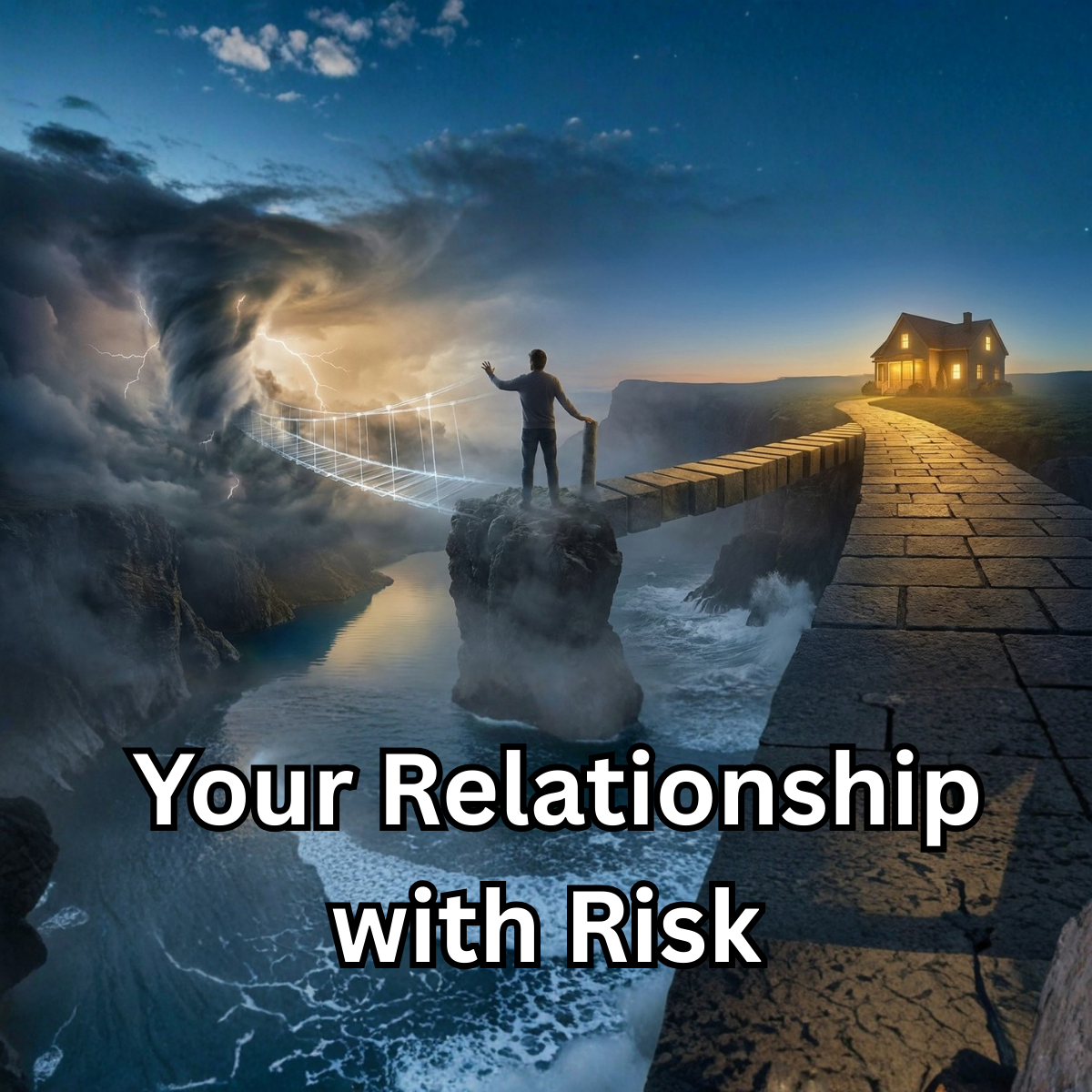
I realized something recently that I should have seen years ago. My relationship with risk is one of the most significant relationships I have. We do not usually think of it that way, but it is worth considering. Risk is not just a factor we evaluate. It is something we relate to, something shaped by family, upbringing, and culture. That relationship, more than almost anything else, impacts our ability to succeed.
I have spent most of my life chasing stability. My relationship with risk has been uncomfortable and hesitant. What makes this strange is that I tend to be a person who is extremely comfortable with risk in the moment. I can make bold decisions. I can move quickly when I need to. But I am always hedging my commitment level out of a fear that runs deep. That fear was born from a family deeply impacted by the Great Depression years. It is interesting how events like that can have generational impacts, shaping the way we see opportunity and danger long after the original threat has passed.
I am not saying that embracing risk is always the right path. Sometimes caution is wise. Sometimes stability is exactly what you need. But I have learned that it is important to consider and contemplate how your relationship with risk might be holding you back. If you grew up hearing that security was everything, you might find yourself turning down opportunities that could change your life. If you were taught to avoid failure at all costs, you might never take the step that leads to something better.
The tension is real. You want to move forward, but something inside you pulls back. You see the opportunity, but you also see the danger. That hesitation is not weakness. It is the weight of history, the voices of people who loved you and wanted to protect you. But those voices were shaped by their own fears, their own losses. They may not speak to the world you are living in now.
“Your relationship with risk, more than almost anything else, impacts your ability to succeed.”
So what do you do? You start by naming it. You acknowledge that your relationship with risk exists and that it has been shaped by forces outside your control. You ask yourself whether the caution you feel today is protecting you or holding you back. You do not have to change everything at once. You just have to be honest about what you are carrying and whether it still serves you. Then you take one small step forward, not recklessly, but with your eyes open. That is how you begin to rewrite the relationship.