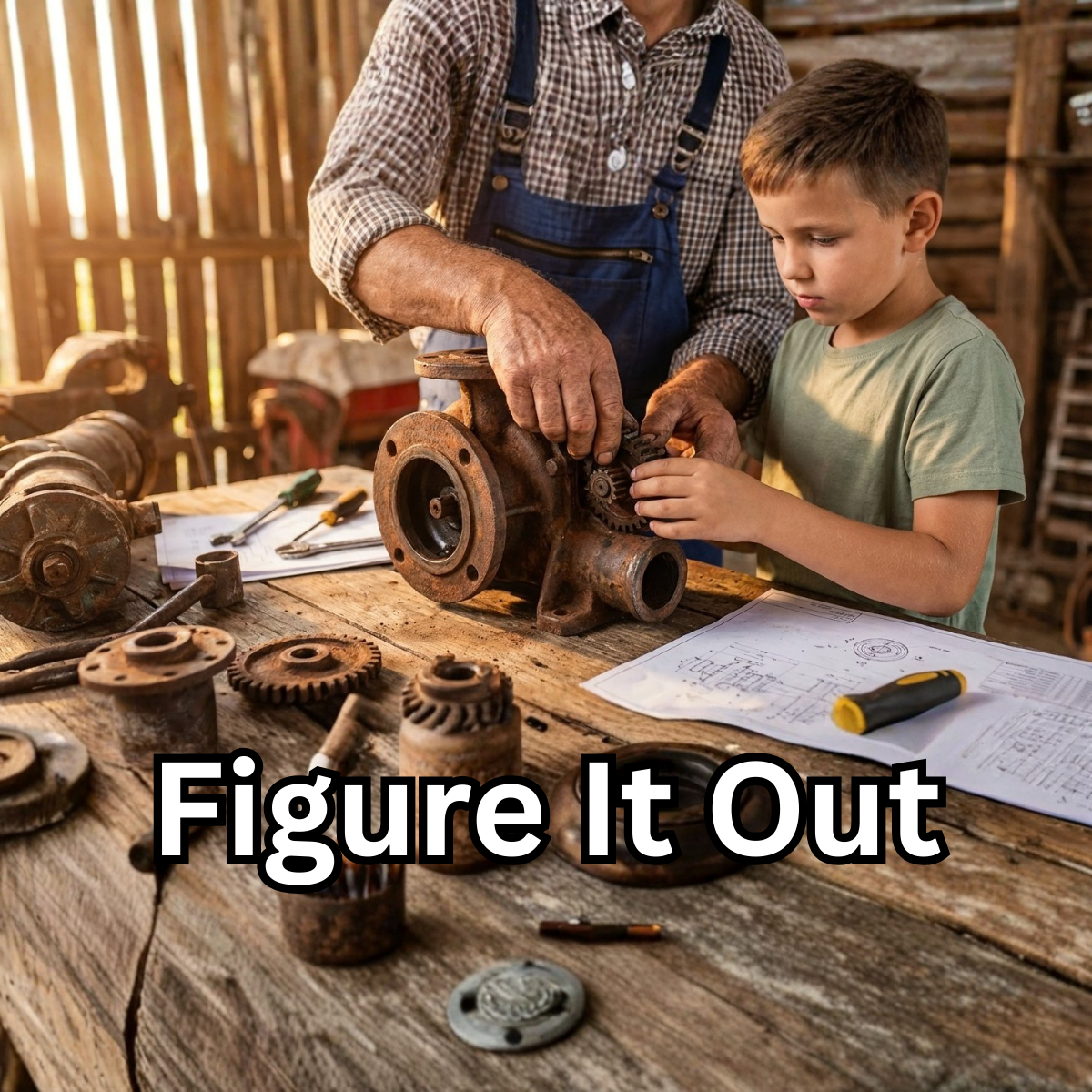
My grandfather bought about thirty acres of farmland when I was a young boy. I spent hours trailing him around, working on projects, watching him tear apart a broken pump or troubleshoot a tractor that would not start. I thought he was an expert. Years later, I realized he was learning on the job, same as me.
Most of what we did together was figuring things out. A siphon valve leaked, so we took it apart until we understood why. A field had a dry spot, so we traced the furrows until we found the problem. He never pretended to have all the answers. He just kept working until something made sense.
One day I walked into his office and asked what we were going to work on. He told me he was not working on anything. The work was mine. My task was simple. Use the tractor and trailer to pick up the leaves our grandmother had raked and haul them to the burn pile.
I went out to start the tractor. It did not start.
I walked back inside to complain. My grandfather looked at me over his spectacles and said two words. “Figure it out.”
So I did. It took me all day. Six hours of tinkering, testing, adjusting. I checked the fuel line, the battery, the starter. I pulled things apart and put them back together. When that engine finally turned over, I felt something I had never felt before. Pride that came from solving something on my own.
I ran back inside to tell him. He nodded, then said, “I still see the leaves piled up in the back yard.”
That moment taught me more than any lecture could have. My grandfather was not being cruel. He was giving me something far more valuable than help. He was giving me the chance to build resilience.
We live in a world that rushes to solve problems for people. We offer shortcuts, templates, answers before the question is fully formed. We mean well. But when we remove the struggle, we also remove the growth.
Figuring things out builds character. It teaches you that most problems are solvable if you stay with them long enough. It shows you that frustration is not failure, it is part of the process. It trains you to trust yourself when no one else is around to give you the answer.
My grandfather could have started that tractor in five minutes. Instead, he let me spend six hours on it. That choice made all the difference.
“When we remove the struggle, we also remove the growth.”
I think about that afternoon often, especially when I am tempted to step in too quickly or when I feel stuck on something myself. The lesson is the same. The work is yours. The answer is out there. You just have to stay with it long enough to find it.
So the next time something breaks, or stalls, or refuses to cooperate, resist the urge to ask for help too soon. Sit with it. Tinker. Try again. You might spend all day on it. But when it finally works, you will have earned something no one can take from you.
And then, when you are done celebrating, go finish the job. The leaves are still waiting.



Love this idea!