I watched an engineer share their work on a video call last Monday. They had spent two weeks building a workflow automation, and this was the moment to show what they had accomplished. The screen is filled with diagrams and front-end code. Their voice carried that particular mix of pride and nervousness that comes when you put something you made in front of people who will judge it. Then something unexpected happened. Instead of polite nods or a few clarifying questions, three teammates leaned in. One suggested a different way to map the data flow. Another pointed out a pattern they had used before that might simplify the logic. A third asked if they could sketch an alternative approach to one section. The engineer did not retreat. They did not defend. They got excited. They started drawing on the screen, reworking pieces in real time, asking questions, and building on the suggestions. What began as a presentation became a collaborative refinement session. I realized I was watching something rare in startup culture. Not a code review. Not a critique session. A quilting bee.
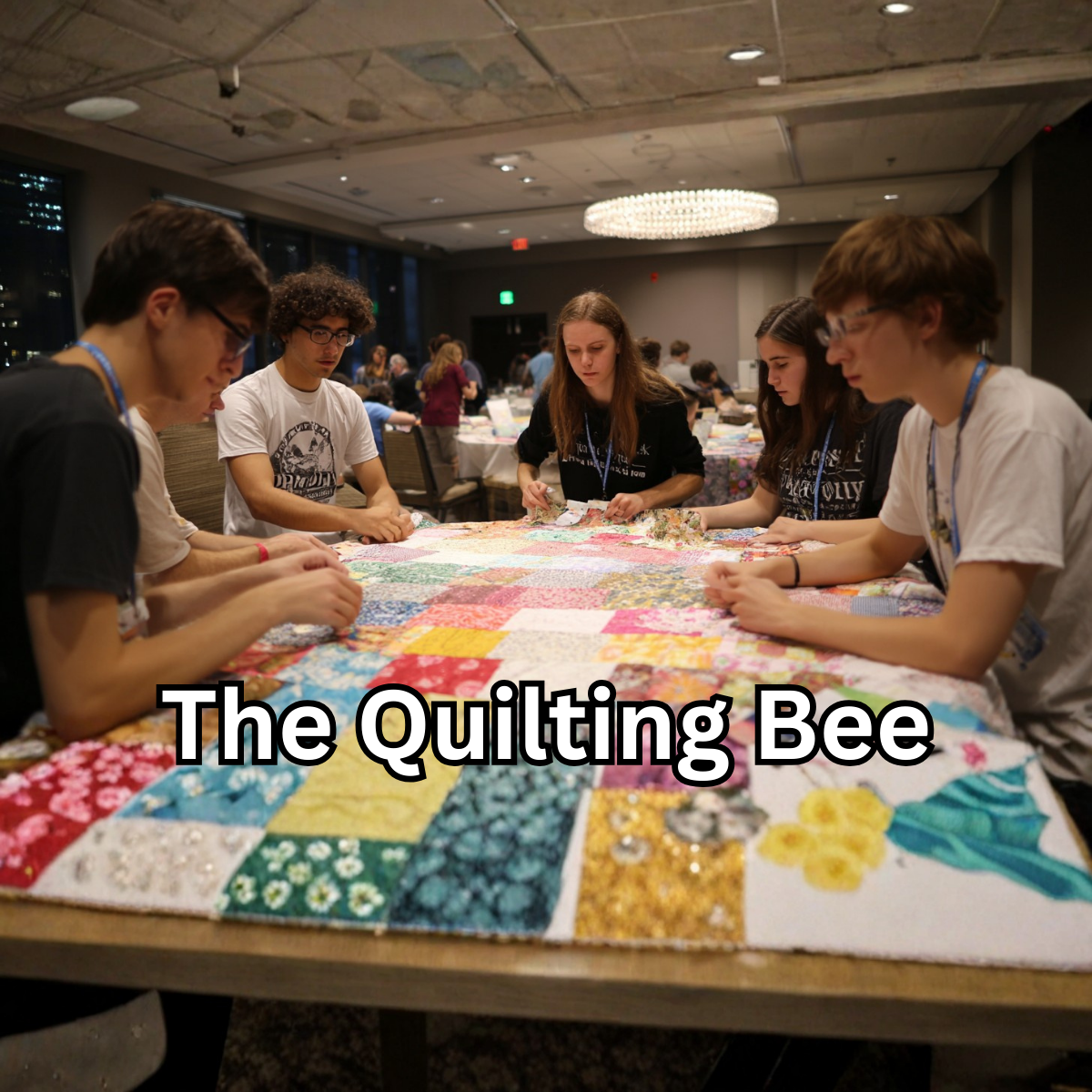
The original quilting bee was a practical invention born from necessity. A woman would spend weeks or months piecing together fabric scraps into a quilt top. The stitching that held it all together, the quilting itself, was slow, tedious work if done alone. So she would invite others. Four to eight women would gather around a large frame, each working on a different section. What might have taken one person weeks could be finished in a day. But the quilting bee was never just about speed. It was a space where skills were shared, techniques were refined, and community was built. The quilt that emerged was better because many hands touched it. The women who gathered left with new knowledge and stronger connections. The bee was the moment of culmination where individual craft met collective momentum.
We lost this when factories arrived. Industrialization collapsed the human chain into mechanized processes. Efficiency increased, but the collaborative refinement moment disappeared. Modern software development inherited this factory mindset. We build in assembly lines of tickets and handoffs. Work gets divided into isolated tasks. We celebrate collaboration in theory, but structure our days for isolation. Async communication replaces real-time collective creation. Code reviews become gatekeeping rather than gift-giving. We optimize for throughput and forget that the best work happens when people build together.
The quilting bee worked because of a few simple conditions. First, psychological safety. The engineer on that call was not defensive because the environment felt collaborative rather than critical. People brought incomplete work, knowing others would help finish it. Second, shared purpose. Everyone wanted the project to succeed more than they wanted individual credit. Third, complementary skills. Different perspectives enhanced what one person started. Fourth, social reinforcement. Participation itself was rewarding. The energy of building together created momentum. Pride in showing work transformed into collective excitement, which became shared ownership of the result.
You can create quilting bee moments in your team. Start with structured showcase sessions. Not demos for approval, but works in progress for collaborative refinement. Explicitly invite suggestions, improvements, and alternative approaches. Time-box the collaborative portion to make it feel contained and focused. Reframe your feedback culture. Shift from review to refinement. Make jumping in with ideas the norm, not the exception.
Celebrate when someone’s suggestion gets incorporated. Design for real-time collaboration. Create synchronous moments for key decisions. Use pair or mob programming for complex problems. Reserve async for execution, not for creative breakthroughs. Recognize the supply chain. Acknowledge all the people whose work made this moment possible. Make dependencies visible and valued. Celebrate the network, not just the final creator. Protect the energy. Notice when criticism feels like judgment rather than gift-giving. Cultivate the excitement you observed. Make quilting bee moments a named, valued practice.
The quilting bee was not just about finishing quilts faster. It was one of the few socially acceptable spaces for women to gather, share knowledge, and build community. Modern teams need this too. The loneliness of remote and distributed work makes these collaborative creation moments even more critical. They are not just about better code. They are about connection, learning, and shared accomplishment. The startup ecosystem glorifies speed, but sustainable velocity comes from teams that know how to harness collective momentum rather than just individual heroics.
That engineer’s excitement was the signal. When someone lights up because their teammates are jumping in to help refine their work, you have created a quilting bee moment. The question is how many of these moments does your team create in a week, in a month? What would it look like to make them intentional rather than accidental? The quilting bee survived for centuries because it met a fundamental human need: creating something meaningful together. Our tools have changed, but that need has not. It is time to bring the quilting bee back.