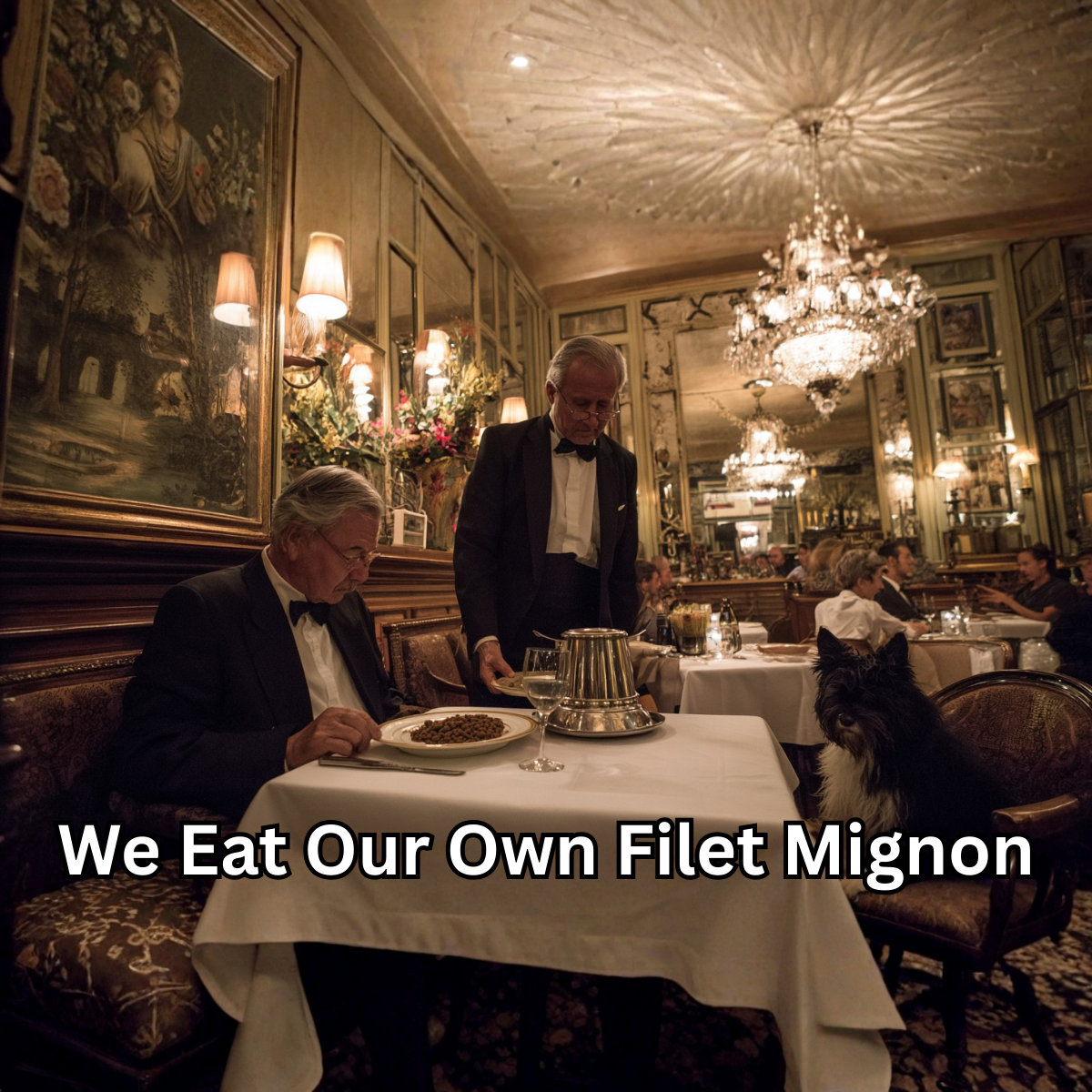
Last night my wife and I ate dinner at a fancy restaurant. I couldn’t get reservations for Valentine’s Day, so we went with the 15th instead. Perhaps this is a good practice overall: celebrate all holidays the day after.
The place was decorated with some flamboyance, and I was expecting the food to be horrible. Usually, that is the case, but I was pleasantly surprised. The food was amazing.
While I sat there, I started thinking about a phrase we use often in the company.
We need to eat our own dog food.
I get what that saying is trying to do. It is supposed to keep us honest. Use what we build. Feel what customers feel. Fix what breaks because it breaks on us first.
But sitting there eating a really delicious meal, I realized something simple. I like sitting there and eating wonderful food. Sure, there are some things I don’t like about the restaurant, but the food makes up for it. And that is when it hit me.
I need to stop telling customers that we eat our own dog food. I need to stop telling employees they need to eat their own dog food.
I am not changing the point. I am changing the picture in people’s heads.
Dog food is a duty. It sounds like a suffering you sign up for. It does not sound like pride. It does not sound like craft. It does not sound like something you want to wake up and do.
So I want a new saying. Something that keeps the same meaning, but feels like the kind of work we want to do.
We need to eat our own filet mignon. If you are a vegetarian, we have our own samosas. Or tamales. I am still deciding, but you get the point.
We need to eat our own samosas.
That is a sentence you can live with. That is a sentence that says the product should be good enough that we enjoy using it, not just tolerate it. It says we build something we are glad to sit down with, even if the room has a few things we do not like.
And yes, I am leaning into it. I want people to start saying we are “on a filet and champagne budget,” or “They’re living the tasting menu life,” or “They’re in their Michelin era.” Not because we are pretending. Because words shape mood, and mood shapes how we show up.
We are not here to eat dog food, we are here to eat what we built and actually enjoy it.
By the end of the meal, I felt clear about one small step forward. Starting today, I am changing the phrase. Same expectation, use what we ship. But I want it to sound like something we are proud to serve, starting with ourselves.