I was talking with a friend this morning who was convinced AI is going to destroy our society. He listed entire professions that would be wiped out. Then he told me he was going to fight it, because someone had to. I sat there thinking his fight was probably in vain. The continuous adoption of AI just seemed inevitable.
But that word, inevitable, kept sitting wrong with me.
Most of what we call inevitable is just momentum that feels too large, too complex, or too costly to challenge. That distinction matters more than we think. Your three options when facing any major force are fight it, join it, or redirect it. Those options are not equal. They depend entirely on whether the force you are facing is truly fixed or just currently dominant.
There is a more grounded way to decide. Ask yourself three questions. Is this truly inevitable, or just dominant right now? Do I have leverage in this system, or just opinions about it? What would this look like if I didn’t engage with it at all? Your answer usually reveals the path.
The mistake is not choosing the wrong strategy. It is mislabeling the situation.
People fight things that are already locked in. They join things they could have disrupted. They avoid creating new paths because the current one feels too real. I have done all three at different times. I fought a market shift that was already complete and wasted two years. I joined a trend I should have questioned and ended up building something I did not believe in. I avoided starting something new because the existing system looked permanent, and by the time I moved, someone else had already done it.
None of those failures came from bad effort. They came from bad framing. I treated momentum like fate. I mistook dominance for permanence. I confused the current state with the only state.
“Clarity on what you’re actually dealing with matters more than the choice itself.”
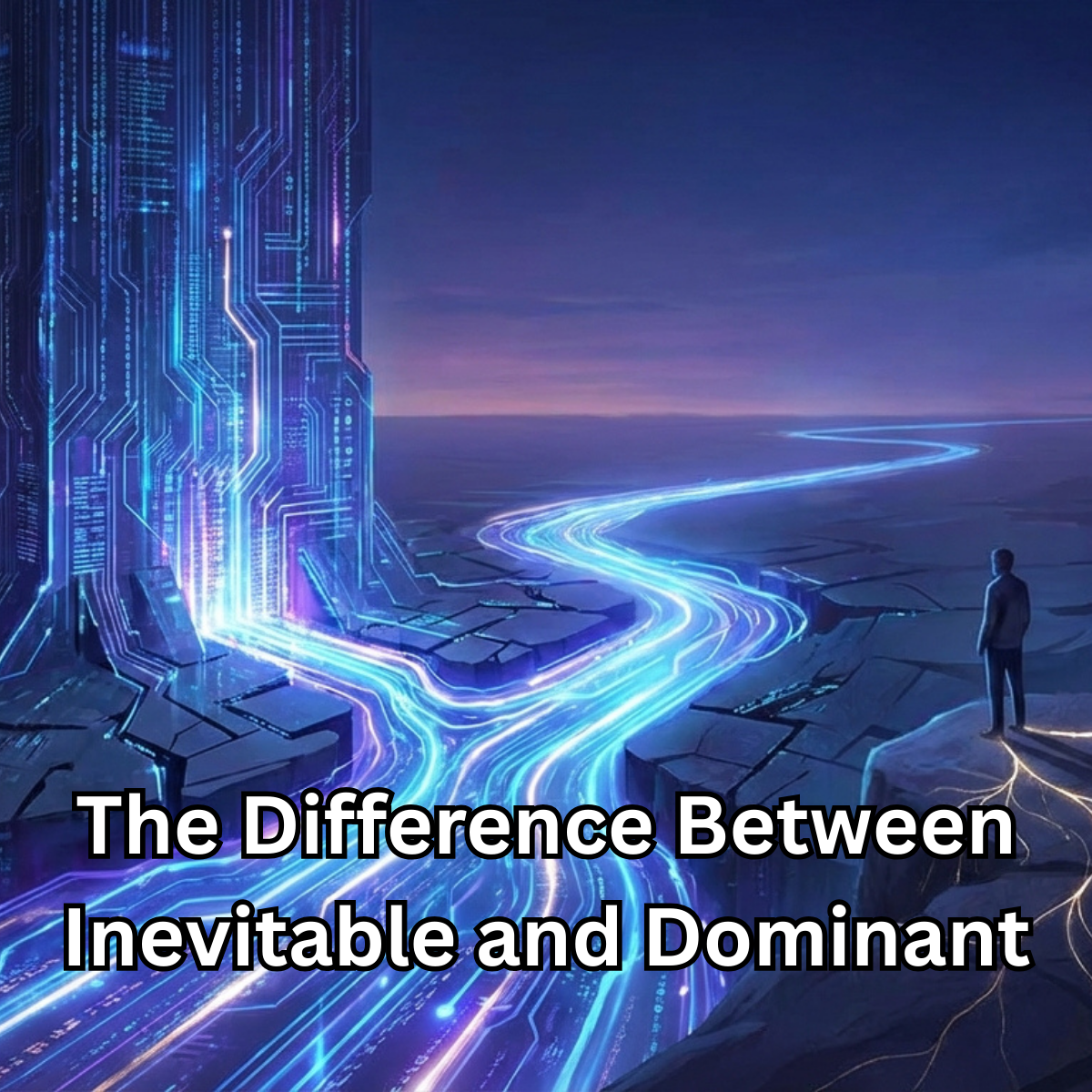
When I think about my friend now, I do not think he is wrong to care. I think he has not yet asked the right question. If AI adoption is truly inevitable, fighting it head on is just noise. If it is only dominant right now, then the fight might be worth it, but only if he has real leverage. And if he has no leverage in the system itself, then his best move might be to step outside it entirely and build something the system cannot touch.
That is not surrender. That is strategy.
I am not telling you to stop caring about the forces reshaping your work, your industry, or your life. I am telling you to name them correctly first. Then decide. Sit down today and pick one thing you have been calling inevitable. Write down whether it is truly locked in or just currently winning. Then write down what leverage you actually have. Not what you wish you had. What you have right now. That clarity will show you whether to fight, join, or walk a different path entirely.