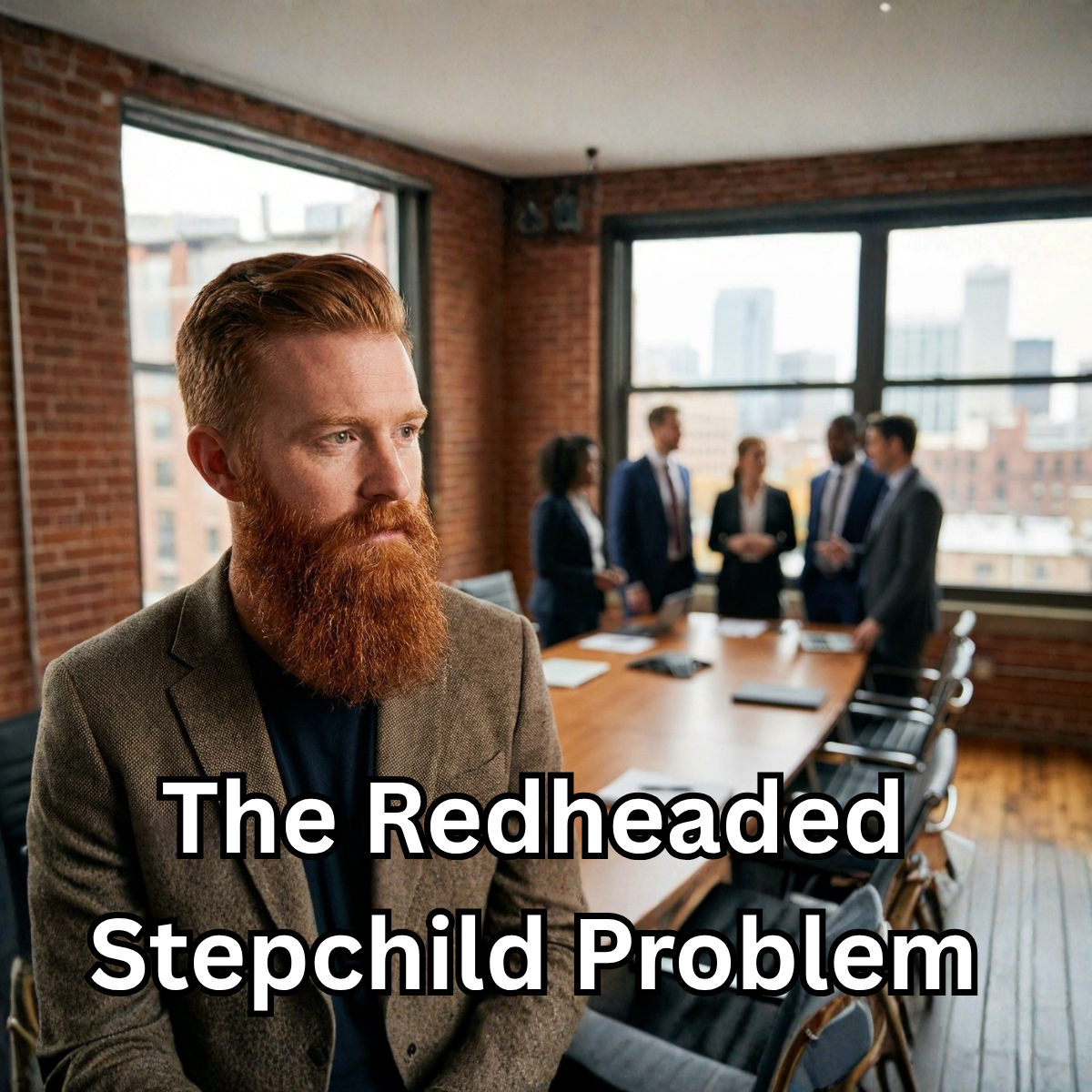
I have Irish roots, and if I let my beard grow out, it turns red. So I have always looked a little sideways at the phrase “treated like a redheaded stepchild.” It is harsh. Probably too harsh. It carries baggage that makes it uncomfortable, and honestly, as someone with a little red in my family, I feel at least partially implicated. But the phrase survives because it points to something people recognize. It describes something that belongs, but is not treated like it belongs. Something that is technically part of the family, but does not receive the same attention, care, or priority as everything else.
That happens all the time with side projects.
In business, a side project might start with real enthusiasm. A team sees an opportunity. Someone has an idea for a new product, a better process, a marketing campaign, an internal tool, or a new way to serve customers. People agree it has potential. Then reality takes over. The main business gets the best time, the best people, the clearest ownership, and the most consistent attention. The side project gets whatever is left over. It gets pushed to the end of meetings. It gets assigned to people who already have full plates. It gets discussed in theory, but rarely supported in practice. And yet, we still expect it to perform.
That is the problem. We expect serious outcomes from things we have not seriously supported.
The same thing happens in personal life. We say we want to get healthier, write more, build something new, improve a relationship, deepen our faith, or develop a skill. But then we give that goal the scraps of our schedule and the leftovers of our energy. Then we wonder why it does not grow.
The issue is not always desire. Sometimes we care about the thing deeply. But care without structure is usually not enough. A project needs ownership. A goal needs time. A relationship needs attention. A dream needs a place to live.
Not every side project deserves to become the main thing. Some ideas should stay small. Some should be paused. Some should be abandoned altogether. But we should be honest about what we are doing. Either we give the project enough support to have a real chance, or we admit that it is not a priority. What does not work is pretending something matters while treating it like an afterthought.
That is where the old phrase becomes useful, even if we would not choose it today. It forces the question: What are we treating like it belongs, while giving it none of the care that belonging requires?
“We expect serious outcomes from things we have not seriously supported.”
In business, that question might reveal a neglected initiative. In life, it might reveal a neglected goal. Either way, the lesson is the same. Things rarely mature when they are only casually supported. If we want something to grow, we have to stop treating it like the leftover priority.
So look at what you say matters. Look at what you actually support. If there is a gap, close it. Either give the project real time and real attention, or let it go. But stop pretending that scraps will be enough. They never are.