I realized with some frustration that I was struggling to learn something today. Learning did not come as easily for me as it used to. Then I realized that I had a lot more patience when I was younger. I was more willing to put in the time doing mundane things to learn. Not so anymore. If I do not get it right away, I am ready to hang it up for more productive things that I can do with my time. I have a lot more pressure on me now than I did when I was younger.
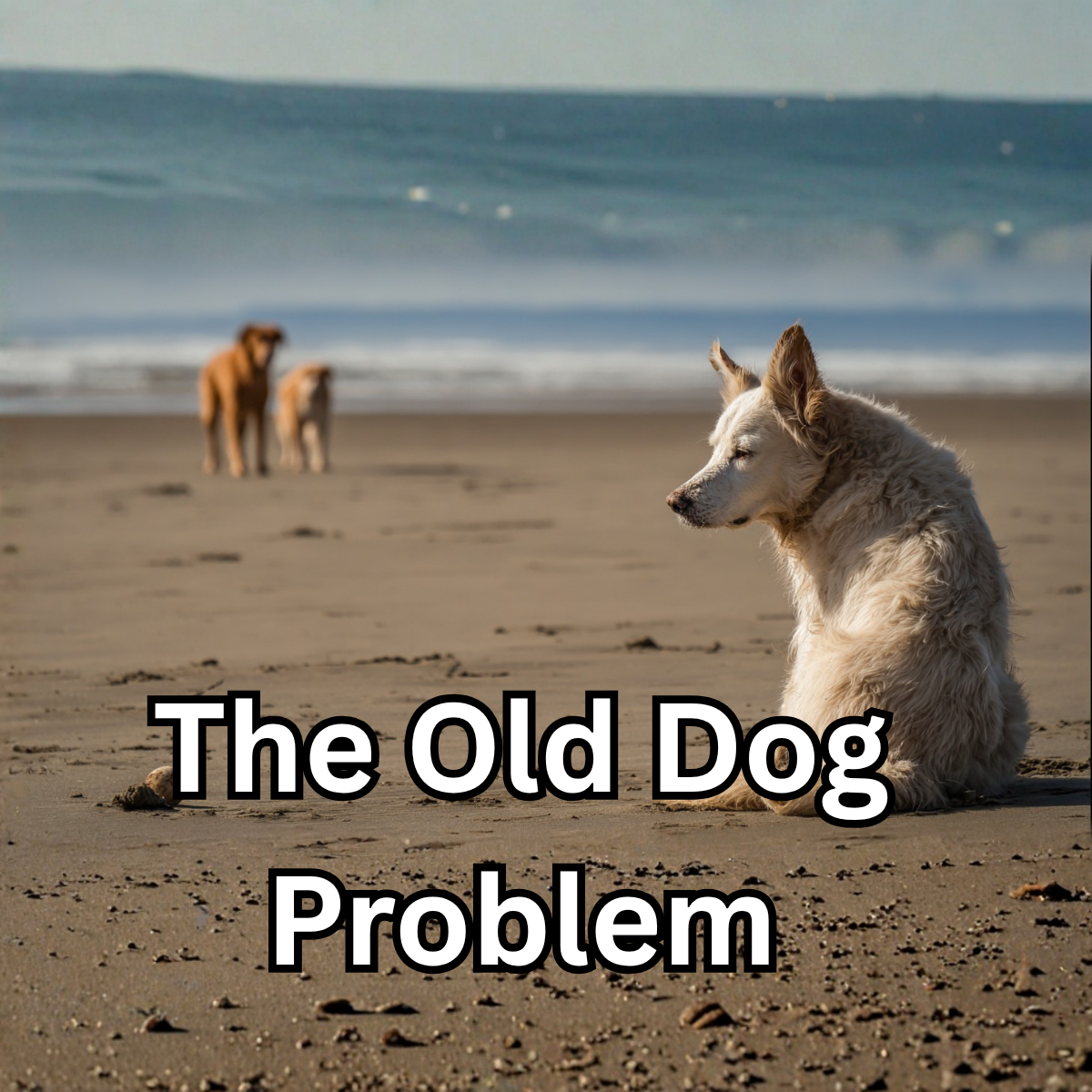
The phrase came to my mind. You cannot teach an old dog new tricks. I realized that statement was not actually true at all. There might be a better way to think about it.
The problem is not that older people cannot learn. The problem is that we have less tolerance for the slow part. When you are young, you have time. You can spend hours fumbling through the basics. You can repeat the same exercise fifty times without feeling like you are wasting your life. You do not have competing demands screaming for your attention. You do not have a mental calculator running in the background, tallying up the opportunity cost of every minute spent on something that is not producing immediate results.
When you are older, that calculator is always running. You know what your time is worth. You know what you could be doing instead. You know that every hour spent learning something new is an hour not spent on something you already know how to do well. So when the learning curve feels steep, when the progress feels slow, when the frustration sets in, you bail. Not because you cannot learn. Because you have decided it is not worth the cost.
But that decision is based on a false assumption. The assumption is that learning should feel the same as it did when you were younger. That if it does not come quickly, something is wrong. That if you have to struggle, you are not cut out for it. None of that is true. Learning is supposed to be hard. It is supposed to take time. The difference is not in your ability. The difference is in your willingness to sit with the discomfort.
The old dog can learn new tricks. The old dog just needs to remember that learning is not about speed. It is about patience. It is about showing up even when the progress is invisible. It is about trusting that the work will add up, even when it does not feel like it is adding up. The old dog has something the young dog does not have. Experience. The knowledge that hard things eventually become easy if you keep doing them. The proof that struggle is not failure. It is just part of the process.
“Learning is not about speed. It is about patience.”
So the next time I catch myself ready to quit because I am not getting it right away, I am going to pause. I am going to remind myself that the frustration is not a sign that I cannot learn. It is a sign that I am learning. I am going to give myself permission to be slow. To be clumsy. To repeat the same thing over and over until it finally clicks. I am going to stop treating learning like a race and start treating it like what it is. A practice. One that takes time. One that I can still do. One that I will do.