I visited West Point several years ago and heard a retired general talk about the alleged conspiracy against Washington at Valley Forge. The Conway Cabal sounds like a neat, secret coup, but the real story is messier. Private letters, jealousy, congressional politics, military frustration, wounded pride, and Washington quietly outmaneuvering people who thought he was vulnerable. What struck me was not the drama of the conspiracy itself, but how Washington handled it.
In late 1777, Washington’s reputation was under real strain. The British had captured Philadelphia after his defeats at Brandywine and Germantown. His army went into winter quarters at Valley Forge, where they endured supply shortages, exhaustion, and political anxiety. Meanwhile, Horatio Gates had just become the hero of Saratoga. The northern army under Gates forced British General John Burgoyne’s surrender, a huge American victory. Washington congratulated Gates, but there was tension. News of such a major victory reached Washington by rumor and unofficial channels rather than by direct report from Gates himself. In a military chain of command, it looked like Gates was basking in glory while treating Washington as optional.
Thomas Conway was an Irish born officer in French service who had joined the Continental Army. He had real military skill, but he was also ambitious and abrasive. After the Battle of Brandywine, he wanted promotion to major general. Washington opposed it because many senior brigadier generals outranked Conway and would resent being jumped over. Conway then wrote privately to Gates. The explosive line, as Washington received it, was this: “Heaven has been determined to save your Country; or a weak General and bad Councellors would have ruind it.” That weak general was understood to mean Washington.
Washington sent Conway a chilly little note quoting the sentence back to him, without much commentary. It was devastating precisely because it was so restrained. I know what you said. The leak came through James Wilkinson, Gates’s young aide. After Saratoga, Wilkinson was sent to Congress with dispatches. On the way, he stopped at the headquarters of Lord Stirling, a Washington loyalist, and apparently talked too freely after drinking. Wilkinson repeated the weak general line to one of Stirling’s aides. Stirling passed it to Washington. That is the almost comic engine of the whole crisis. Not a spy network, not intercepted enemy intelligence, but a loose tongued aide talking over drinks.
Conway replied to Washington by denying that the exact weak general phrase appeared in his letter, but he did not exactly soothe matters. He admitted he had criticized the army’s operations and told Washington, in effect, that Washington was brave, honest, patriotic, and sensible, but too influenced by inferior advisers. So Conway’s defense was basically this: I may not have called you weak, but I do think your staff is dragging you down. This ended in meetings in front of Congress where all the would be conspirators backed down and ultimately had no bite to their bark.
Conway Cabal is a dramatic name for what may have been closer to a political faction, rumor storm, and leadership crisis.
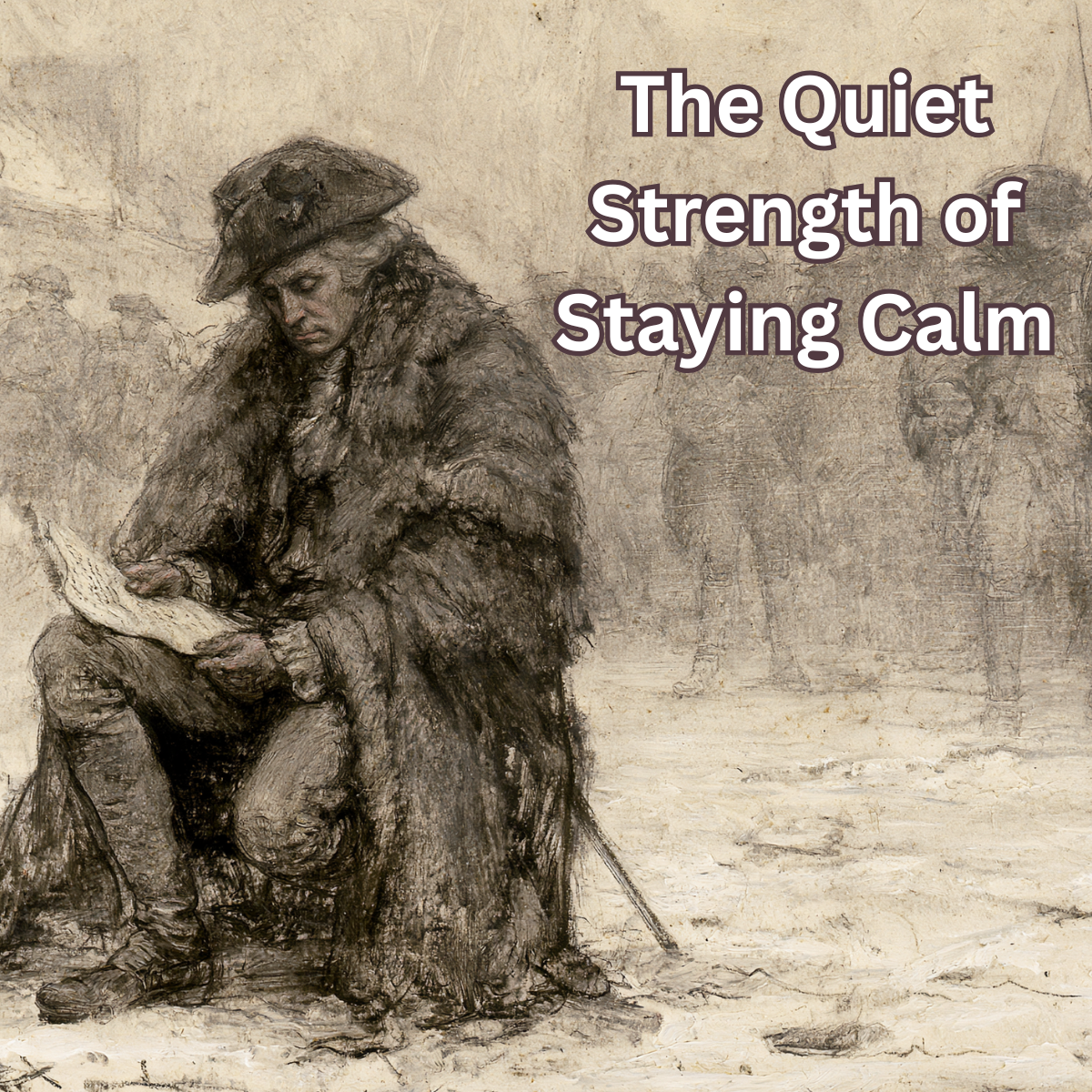
The real lesson from this moment in history is not the make believe conspiracy that has been concocted by some historical fiction authors but rather how Washington handled the situation. Washington survived it not by crushing his rivals dramatically, but by doing three things unusually well. He stayed calm in public while others overplayed their hands. He let the facts expose the intrigue instead of turning it into a personal shouting match. And he kept the loyalty of the institution that mattered most, the Continental Army’s senior officers.
“When abandoned or undermined, Washington did not merely stay the course by being stubborn. He stayed the course by preserving his dignity, documenting the truth, refusing to panic, and making himself look like the only adult in the room.”
That is the deeper lesson. When you are abandoned or undermined, you do not have to crush your rivals dramatically. You do not have to turn it into a personal shouting match. You stay calm. You let the facts speak. You preserve your dignity. You refuse to panic. You make yourself look like the only adult in the room. That is what Washington did, and that is what carried him through.
The next time you feel undermined or questioned, pause. Do not overreact. Do not turn it into a fight. Let the facts do the work. Stay calm. Protect your dignity. That small shift in posture will change everything.