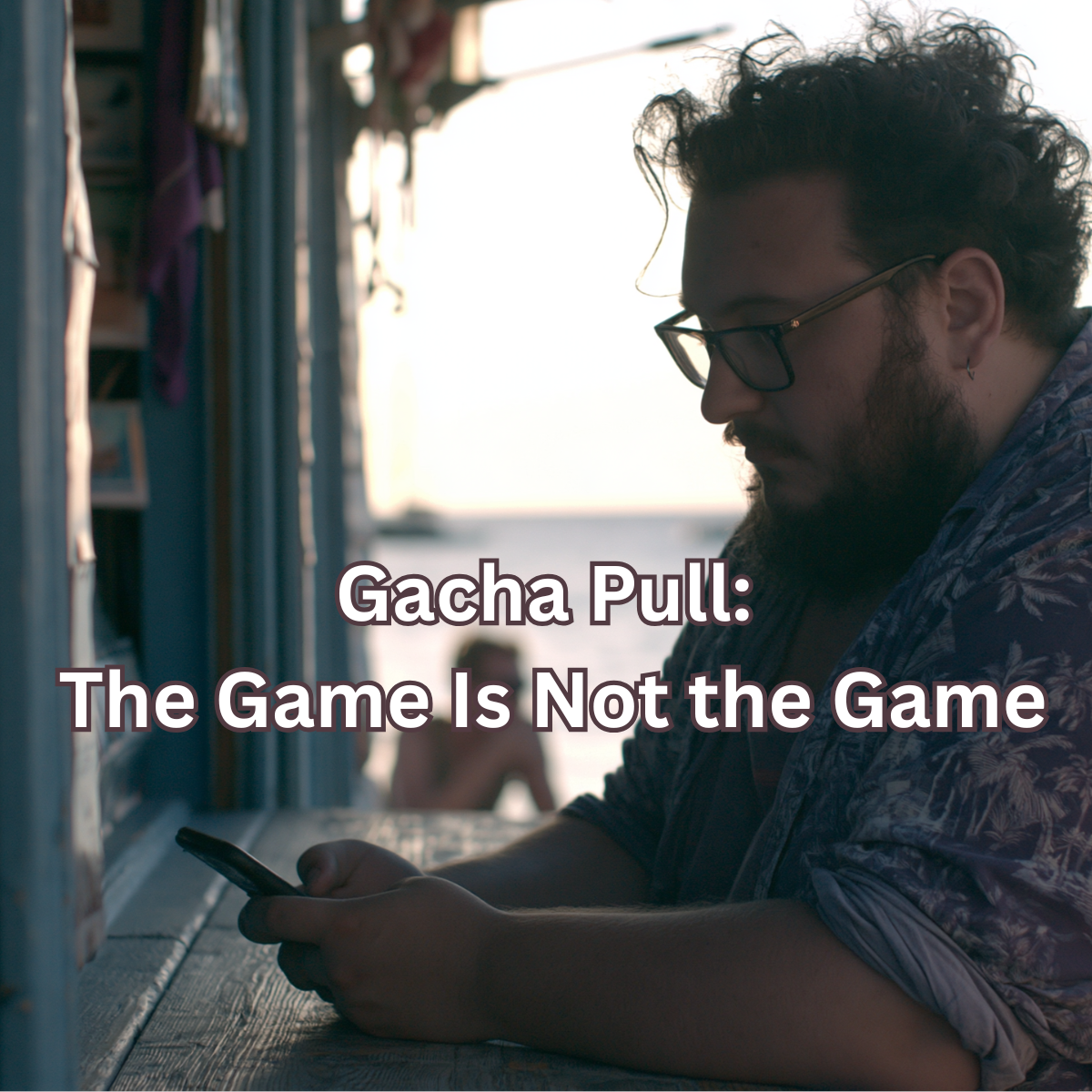
My wife and I were in Florida a few weeks ago, walking through one of those tourist spots where kiosks line the boardwalk selling sunset cruises and parasailing packages. I noticed a young man at one of the booths, deeply absorbed in something on his phone. We passed him several times that afternoon, and each time he was still there, eyes locked on the screen. I caught a glimpse of what he was playing and decided to check it out later. As an entrepreneur, I am always curious about what captures attention so completely.
What I found was not what I expected.
On the surface, the game looked like a typical mobile RPG. Rewards, progression, upgrades, randomness, scarcity, streaks, guild goals, constant small wins. The mechanics are designed to keep people returning. There is always one more upgrade, one more summon, one more event, one more objective. But what held my attention was not the reward loop. It was the social world wrapped around it.
I was looking at a little digital village.
The guild I joined was run by an autistic 12 year old. He was not just playing. He was leading. He recruited members, organized events, and held a position of status and responsibility. In this space, his interests and rhythms were understood in ways they might not be offline.
There was a woman in a dead end job who demonstrated mastery in the game. She was competent, witty, fast, and respected. In this space, she was more fully seen than she was at work.
An older woman in her 70s had become an elder. Not because of wealth or title, but because she had earned trust. People went to her for strategy and life advice. The game had created a place where age became wisdom instead of irrelevance.
There was a cat lover, an EMT in Illinois, a transportation worker in Korea. They were not demographic categories. They were fragments of human lives that would probably never intersect otherwise. The guild became a crossing point for people who live in different worlds.
People are hungry for belonging, competence, recognition, and contribution. A game like this packages those things efficiently. It gives people a place where they can say, I matter here. I know how to do something here. People expect me to show up. People notice when I am gone. I can be useful. I can be funny. I can lead. I can be known.
“Humans will build meaning almost anywhere if you give them repeated contact, shared goals, visible contribution, and a reason to care about one another.”
Community does not always form around lofty ideas. Sometimes it forms around repeated shared activity. A guild boss. A resource push. A tournament. A daily check in. A joke that becomes an inside joke. A player who needs help. A player who disappears and everyone asks where they went.
The mechanics create repetition. Repetition creates familiarity. Familiarity creates trust. Trust creates disclosure. Disclosure creates community.
The game is engineered for addiction, but the people are using it for connection.
There is also an identity shift happening. In ordinary life, someone may be a kid with autism, a woman stuck in a bad job, an old lady, a worker, a stranger. In the guild, they become our leader, our top player, our comedian, our advisor, our cat person, our firefighter EMT, our Korean friend. The game gives them a role. And roles are deeply human.
Virtual spaces can feel more emotionally honest than physical ones. In a game, people are often less guarded. They are not dressed up for status. They are not performing their résumé. They are doing something side by side, and in the gaps they tell the truth about their lives.
I entered expecting game mechanics and found sociology, psychology, identity, loneliness, leadership, humor, care, and community. The addictive part is not just the gacha pull. It is the possibility that when you log in, someone might be there.
The next time you see someone absorbed in their phone, consider what they might be building. It may not be what it looks like from the outside.