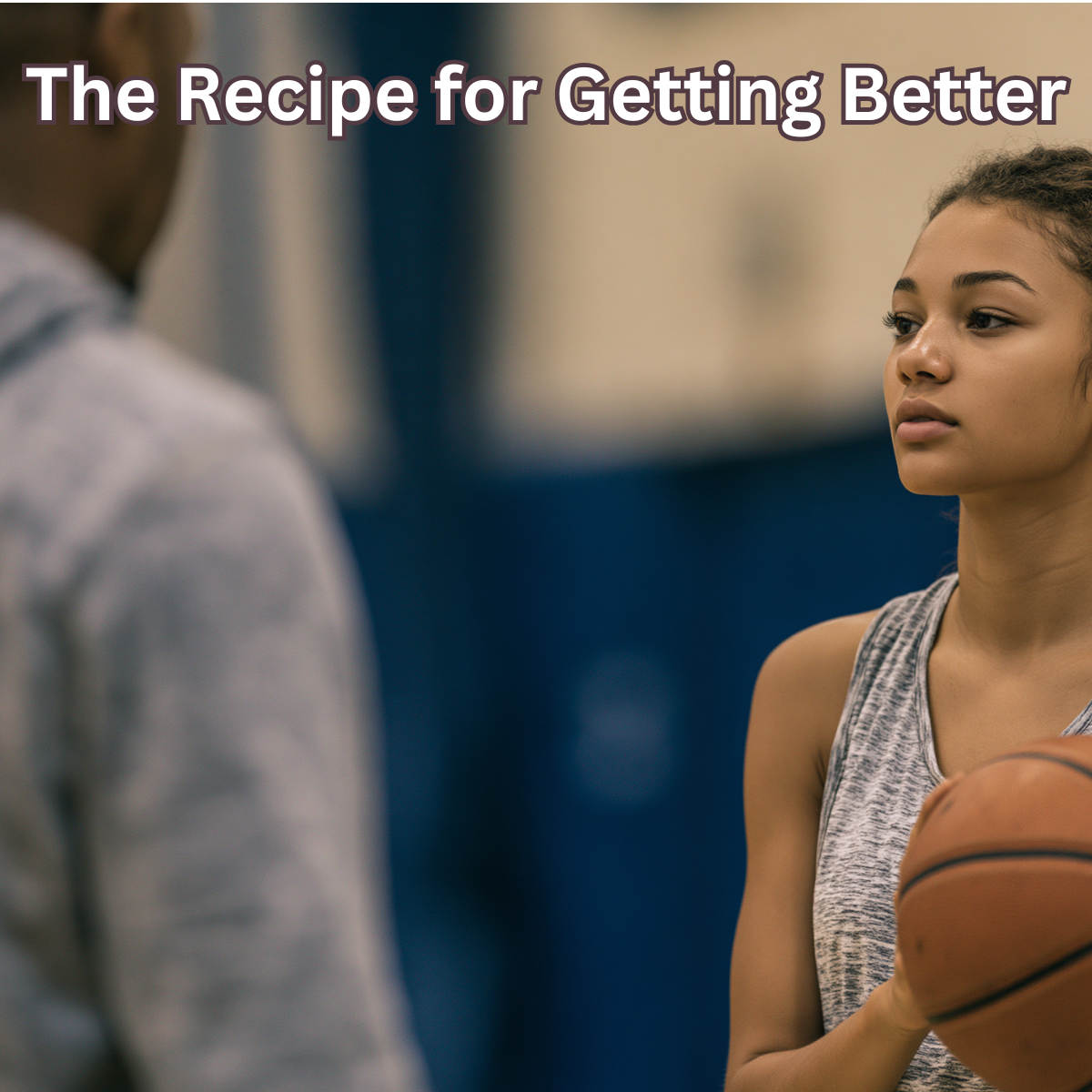
I was watching my daughter play basketball again today. This could be the thousandth game or the ten thousandth. I have lost count. She sometimes gets discouraged, but if I were to compare her now to where she was even a year ago, the difference is astonishing. That got me thinking about what exactly it takes to improve at something. Since I have been at her practices and her games, I have noticed a clear pattern. I will call it the recipe for improvement.
The pattern is simple. Choose a specific skill. Define the standard. Practice repeatedly. Get feedback. Work at the edge of your ability. Isolate weaknesses. Repeat long enough for the gains to compound. Or even shorter: Focus, Reps, Feedback, Adjustment, Consistency.
Focus
The first step is choosing what to improve. Not everything at once. Not a vague ambition. One specific skill. My daughter did not set out to become good at basketball in general. She focused on free throws, then footwork, then positioning. Each skill got its own attention. When you try to improve everything, you improve nothing. The focus narrows the work down to something you can actually practice.
Reps
Repetition is the only ingredient that cannot be replaced. You cannot think your way to improvement. You cannot plan your way there. You have to do the thing over and over until your body and mind learn it. My daughter has spent thousands of hours on the court. Not because she loves every minute of it, but because that is what it takes. The work has to be repeated until it becomes automatic. There is no shortcut.
Feedback
Repetition without feedback is just motion. You need to know what is working and what is not. My daughter has coaches who watch her, correct her form, and point out what she is missing. She also watches herself. She reviews what went wrong after a bad game. Feedback is what turns repetition into progress. It tells you where to adjust.
Adjustment
Once you know what is not working, you have to change it. This is where most people stall. They keep doing the same thing and expect different results. The trainer tries to isolate the weakness, work on it separately, and then bring it back into the full practice. My daughter does not just play more games. She drills the specific thing that broke down. Adjustment is what makes the reps count.
Consistency
The final piece is time. Not a week. Not a month. At least a year of consistent effort before you see real results. My daughter has been at this for a few years now. The early days were brutal. She was behind everyone else. But she kept showing up. She kept doing the work. And now, when I watch her play, I see someone who belongs on that court.
“The gains compound when you stay with it long enough.”
I sat in the bleachers today, watching her move with confidence that was not there when she started. She still gets discouraged. She still has bad games. But the pattern is clear. Focus on one thing. Do it repeatedly. Get feedback. Adjust. Stay consistent. That is the recipe. It works for basketball. It works for anything else worth doing.
The next time you want to improve at something, do not look for the shortcut. Pick one skill. Start practicing. Get feedback. Adjust. Then do it again tomorrow.