This seems like an obvious thing to say, but I was struck by this thought when I woke up this morning and discovered that one of the systems that I had built exhausted all of its funding. When I went to check on why, I learned that the AI system that was performing the operation was stuck in a loop and had exhausted all of the credits allocated to it. The loop was silly; it was a small error that tripped everything up, and the system had been looping through this same error for over 48 hours. The only reason it caught my attention is because the credit allocation was exhausted, and I got an alert in my email indicating the problem.
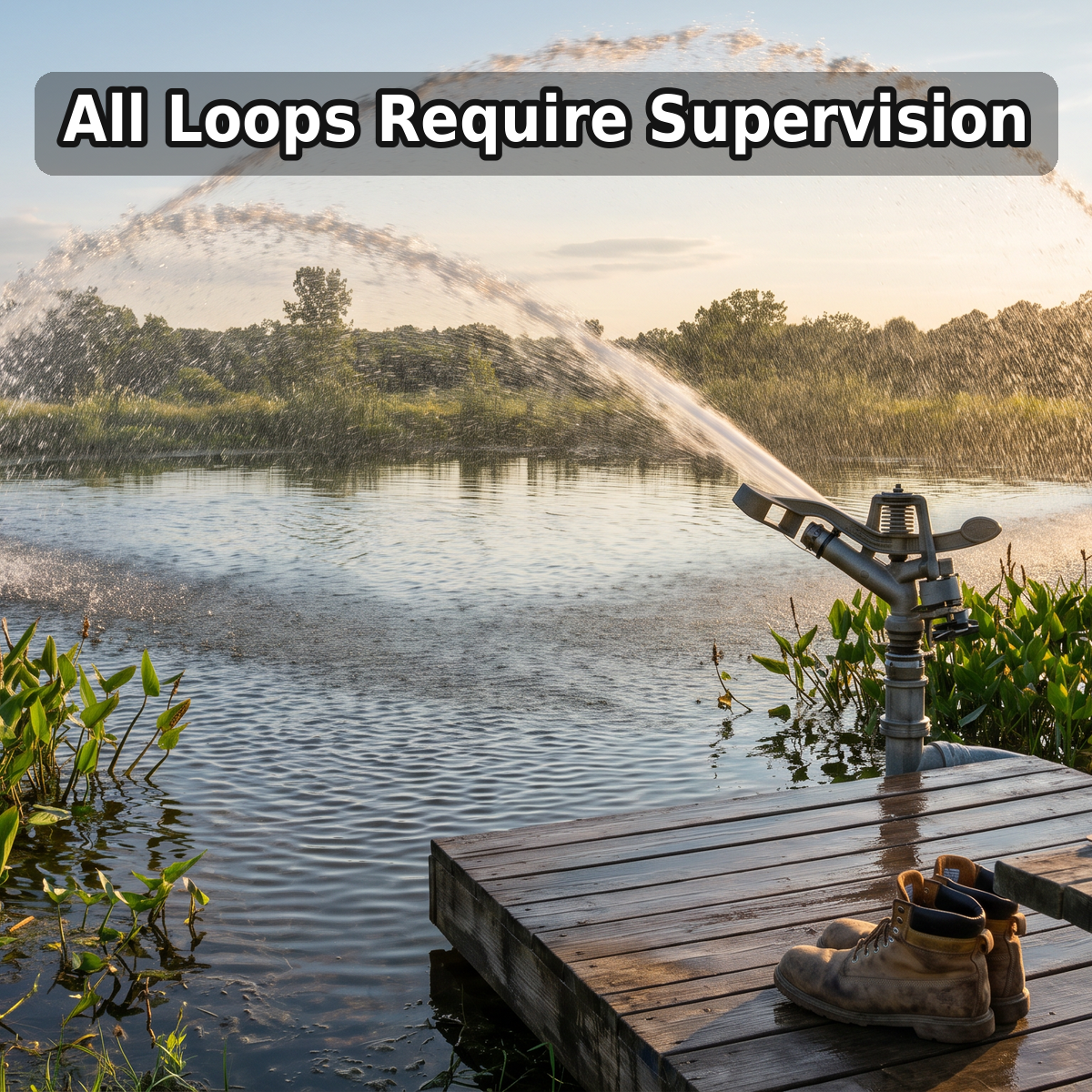
Which made me realize something critical. I will use my sprinkler system as an example. I put in this wireless sprinkler system, which allows me to control everything from my home automation system. It was a great improvement over my old timer system that was always breaking and difficult to understand. However, a few weeks ago, a real estate agent knocked on my door to inform me that there was a large puddle of water collecting in my side yard. They were asking me if I could fix it because they were showing a neighboring property and wanted to clean up the fence line. I hadn’t noticed this issue because the trouble spot is only visible from the corner of my house. You would have to physically walk over there to see it.
Upon investigation, I realized that I could have known this issue was happening. My system had been generating a few alerts that my water usage was higher than usual. These were logged entries that I had ignored because the sprinkler system has many notifications that I have just trained myself to ignore after a while. So a leak was occurring; the system detected it, and despite me getting alerts to this fact, the automated system kept turning on every morning at 2 AM. The leak kept saturating the fence line until eventually a giant puddle had started to develop unbeknownst to me. It took a knock at my door for me to be alerted by the rather obvious problem on the east side of my fence line.
In this case, the automated loop was completely unsupervised. Just like my unfortunate AI loop, the system kept performing the function, despite the fact that it was wasting resources. It had no sensor or methodology for knowing it was continuously pursuing an automated loop that was no longer serving its purpose. My epiphany is that we often create processes, both in our lives and in our businesses, that we want to run on autopilot. We want it to just happen. Now that I have the marketing team finally working and in place, I want them to just do their job and let me move onto other things. Now that I have this AI doing this annoying thing for me, I want it to just run so that I never have to deal with it again.
You see, we create systems and processes in a vain hope that it absolves us of responsibility. It does not. What it does is reduce the amount of mental energy and time we have to allocate to the process, but it does not clear us from the requirement to perform some level of supervision. We often consider supervision as a reactionary requirement. I fixed the sprinklers after the real estate agent sunk her $500 heels into a foot of mud. I fixed my AI loop after I discovered that my rogue agent had spent all the token budget on a worthless process for 48 hours. Supervision is and can never be considered a reactionary requirement. The concept is essentially designed to be proactive. The more automated things become, the more necessary supervision becomes.
The real implication is in our daily lives. I have routines that I follow. They are mostly on autopilot. When I wake up, I follow this routine, and it really does not deviate much. If I am not careful, if there is something unhealthy in this routine, several months will go by before I discover the negative impact that routine has had on my health. Routine habit is great when it is beneficial to you, but you must monitor these repetitive behaviors. Often they are repeating an action that is also causing you harm. For example, my morning routine is mostly good for me. It helps me stay hydrated, in a good mindset, improves my physical stamina, and several other benefits. However, one day I noticed that my knee was starting to hurt. I realized that where I was sitting each morning, I had this habit of tucking my leg underneath my other leg when I sat to write. The knee pain was being caused by this repetitive motion, and I only noticed this mindless behavior after I started experiencing discomfort.
So, maybe the real takeaway here isn’t about ditching automation or trying to micromanage every little thing. It’s more about finding that sweet spot where we let things run smoothly, but also keep an eye on the bigger picture. It’s like having a good co-pilot; you trust them to fly the plane, but you’re still there, checking the instruments and making sure you’re headed in the right direction. It’s about building in those little check-ins, those moments where we pause and ask, "Is this still working for me? Is this still serving its purpose?" Because even the best systems, whether they’re digital or just our daily routines, can sometimes go a little off course without us even realizing it. It’s not about being paranoid, just present enough to steer things back on track when they need a gentle nudge.