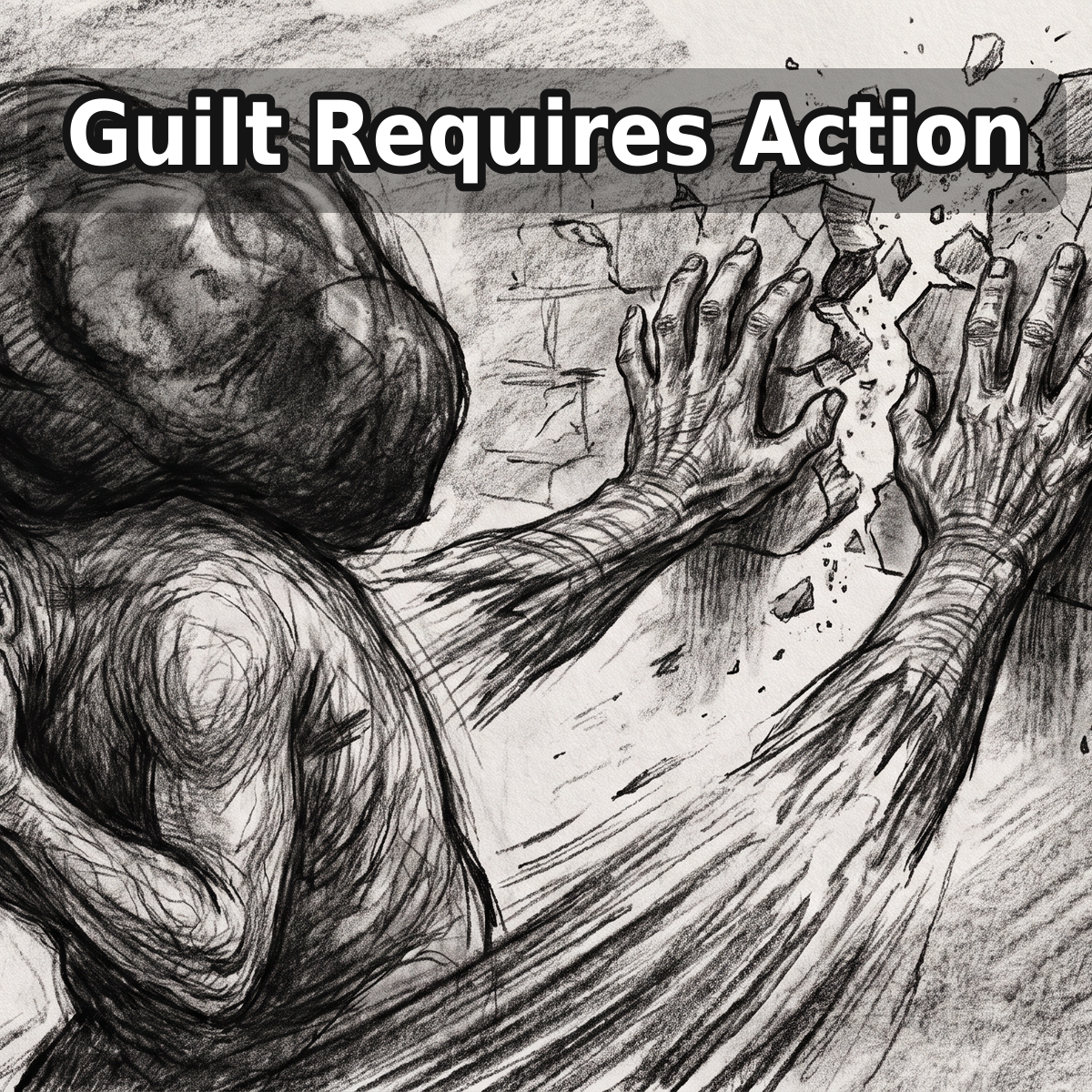
It has long been discussed by psychologists, theologians, and other circles that holding onto feelings of guilt is bad for your health. Carrying a heavy burden of shame around for things that you did wrong can have serious consequences in your life. The recommendation is to always seek restitution or to make apologies where possible. There is a reason why many major religions have included some form of confession along with a process around repentance. Confession, or admittance to wrongdoing, can go a long way toward absolving or relieving a person of guilty feelings.
I recently stumbled upon a fascinating video from Aeon, titled "The Conscience Files," which delves into the intriguing phenomenon of visitors to Arizona’s Petrified Forest National Park who, after pilfering souvenirs, mail them back with letters of apology. This documentary, found here, isn’t a scientific study, but rather a compelling cultural observation. It highlights a recurring pattern: individuals attempting to rectify a moral transgression through confession, restitution, and a desire to make amends. It’s a powerful testament to the human need to "drop the rocks" of guilt and seek a form of personal absolution.
In many cultures, superstition will develop around this concept of harboring guilt for wrongdoing. Stories of hauntings, vengeful spirits, or just bad luck will circulate until they become folklore and then mythology. Perhaps some of them are true, but one thing is absolutely certain: Humans do carry guilt around with them, and that guilt can often impact their lives in direct and indirect ways. Eventually, people will seek a remedy for this, and that often is associated with an action. In this case, people returned the stolen item with a note of apology.
I remember hiking in the desert years ago, and while traversing an island of rocks trying to get a better view of the sunset, I stumbled across a book lodged in a crevice. The book was highly worn, and mice had chewed up many of the pages. This was a library book and had been checked out but clearly never returned. I brought the book home with me, and for years I would notice it sitting on the shelf in the garage where I keep my backpacking supplies. For some reason, I started feeling guilty about holding onto this book. So one day, because the thoughts about this book kept taking up headspace, I decided to mail the book to the library that originally had it in their circulation over 30 years ago. I left a little note about where the book was found. It was several hundred miles away, and clearly the book would never be reintroduced into their collection. However, I thought whatever librarian would receive the package would have a little laugh at my note. I never got a response.
Anyway, the mental energy regarding the book went away after that. I have never thought about it again until I watched this video. The fact that I would feel guilty about this probably says a lot about me as a person, but one thing that did teach me was this: If you are feeling guilty about something, the best thing you can do is take action on it immediately. Fix the problem, seek restitution, apologize to whomever you offended. Harboring guilt is never good for the soul, this much I do know. Sometimes restitution is impossible, so instead, find another outlet to seek forgiveness either from the person or from someone else. I suppose this is the key advantage of having faith in a divine being: at least you have someone to apologize to when all other sources fail.
I have one recurring cringe moment that comes up all the time. My freshman year of high school was a tumultuous time for me, as it is for many. I was going through a lot, because of my circumstances but also because I was just an awkward nerd without a single ounce of cool. One day in Geometry class, this girl did something or said something to me that I did not like. I lashed out at her and called her a dork. That was a popular word during the 80s; it was something you could say that was mean but not get in trouble for using. Anyway, the girl looked devastated. She turned her head, and I could tell that she was crying. I never saw her again after that day. I do not know what happened to her or where she went. However, this is an unresolved guilt thing for me. Even though I have forgiven myself and asked for forgiveness a thousand times, this moment always comes back to me. It was the first time that I had ever said something harsh to another soul (other than my little sister, of course), and I have never forgotten it. I have no idea who this girl was; I do not know her name. She will never read this, but just in case she does, believe me when I say that I am sorry!
So, whether it’s a small regret or something that really weighs on you, maybe the trick is to just acknowledge it, do what you can to set things right, and then, if you can, find a way to let it go. It’s not about forgetting or pretending it didn’t happen, but more about not letting it define your path forward. After all, the journey’s a lot more open and interesting when you’re not lugging around a bunch of unnecessary baggage.