Many of us struggle with behavioral patterns ranging from depression to mental health disorders, and I do not want to delegitimize that at all. However, I do think all of us deal with a highly variable mood pattern that is not always tied to what we eat or our circumstances. We all have to contend with many thousands of years of evolution when our species was largely hunter-gatherer.
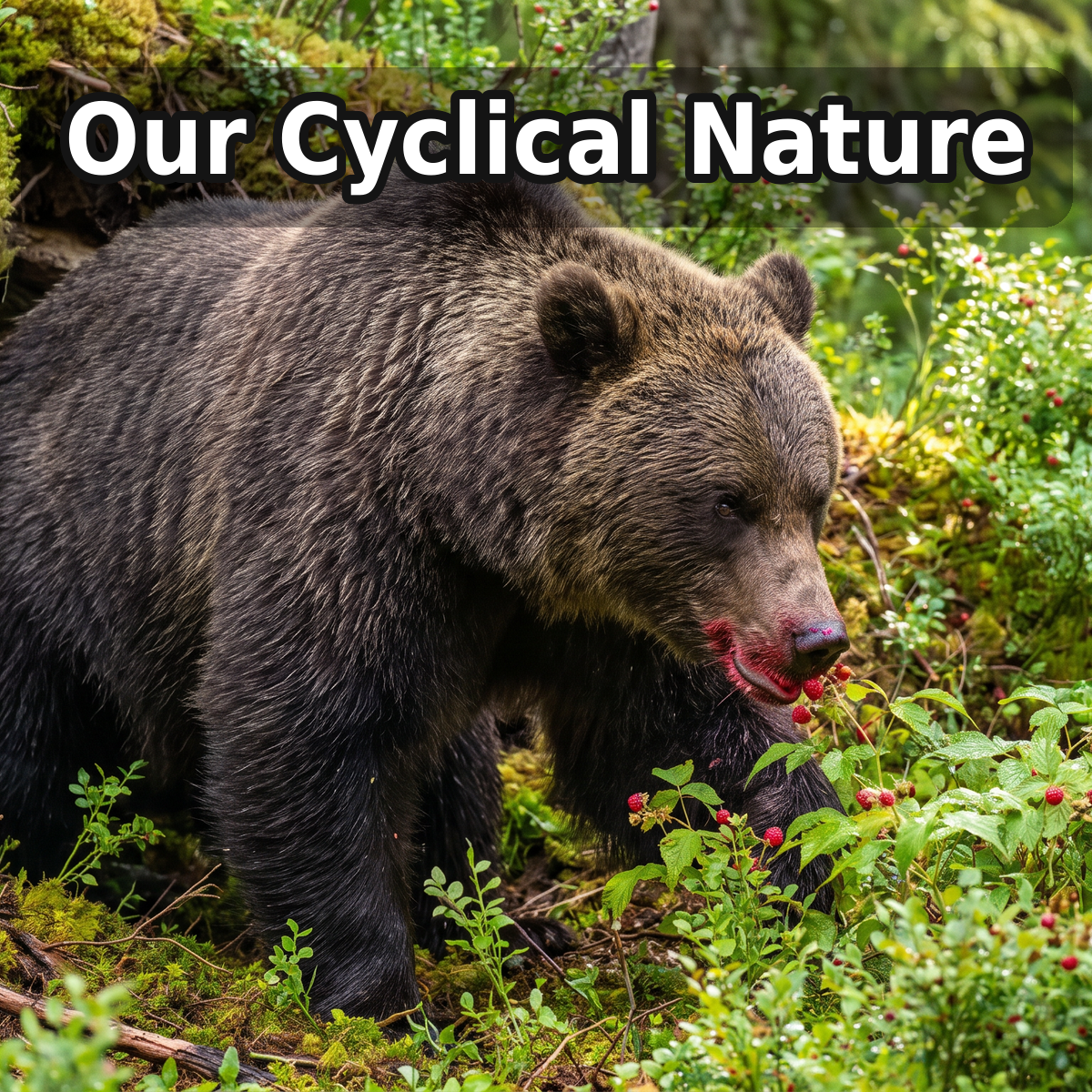
I ran across a bear once, during the first days of summer. This bear looked malnourished, and he was stuffing his face with as many wild berries as possible. He wasn’t worried about me at all because he was on a mission: to eat every berry in the nearby forest and gain weight. He had been slumbering all winter and was probably dreaming of that warm spring day when he could come out of hiding and start eating berries. This bear, probably about 20 years old, was used to this. This was his process: the natural cycle of hibernation followed by an eating frenzy.
It seems to me that human evolution has produced a highly cyclical nature in ourselves that is hard to avoid. We were used to staying in place, sheltering during the winter and then venturing out during the summer. This pattern, deeply ingrained, reflects how climate changes, such as ice ages, prompted periods of cultural innovation and biological adaptation in our ancestors. Our physiology, honed over hundreds of thousands of years, adapted to the demands of hunter-gatherer life: high mobility, intermittent stress, and close interaction with natural surroundings.
It will take a lot longer than a thousand years for the cycle in our physiology to change. We have to deal with that hard-coded evolutionary trait and at the same time function in modern society. This creates an evolutionary mismatch, as modern life, with its constant sensory stimulation, artificial light, and sedentary lifestyles, has outpaced our biological evolution. Researchers even suggest that living in an “eternal summer” may adversely impact our health, highlighting the dangers of disrupting these ancient rhythms. The struggle I experience from January to April, which I’ve come to recognize as a seasonal cycle impacting mood, is a testament to this enduring biological programming. My Viking ancestors, with their winter preparations of hunkering down, feasting, and resting before spring conquests, understood this innate rhythm, perhaps better than we do today.
So, perhaps the invitation isn’t to fight against these ingrained rhythms, but to acknowledge them, to understand that the ebb and flow of our inner landscape is as natural as the changing seasons. It’s about recognizing that some days will feel like the deep quiet of winter, and others the vibrant burst of spring, and that both are essential parts of the journey. By leaning into this understanding, we might find a more harmonious way to navigate our modern lives, honoring the ancient wisdom within us as we move forward.