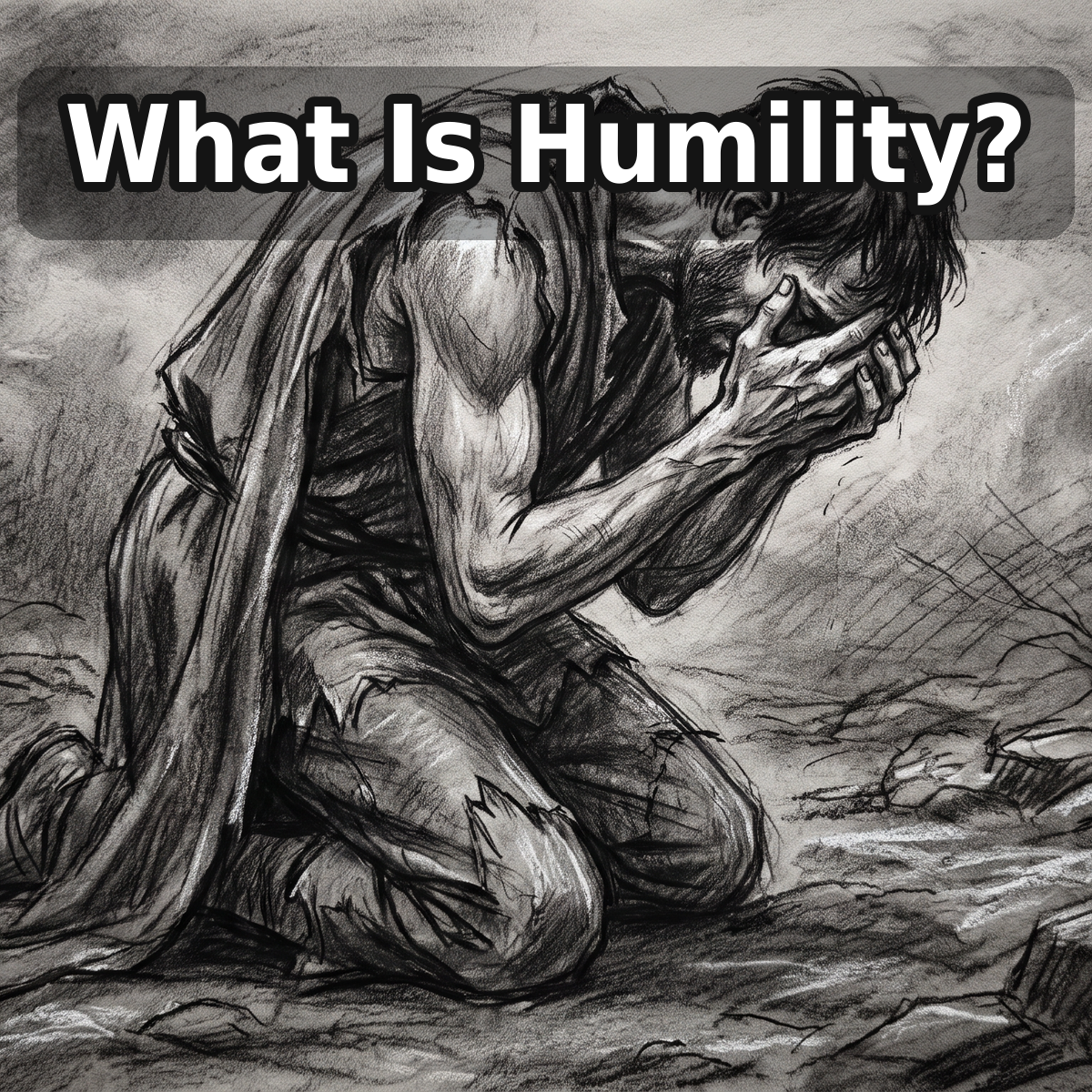
When people hear the word humility, they instantly think of someone beaten down, stripped of all pride, and suffering a great loss. Many religious people aspire to a higher ideal of becoming humble without having been forced to do so. Over the centuries, a wide variety of creative methods of "bringing a person to their knees" have been invented for this purpose. I think the error in thinking here is that humility is viewed as a trait that can be mastered, when in reality humility is a practice that becomes a disposition. Another view is that humility is simply the concept of thinking less of yourself and more for others, but that is also misguided. I think a better definition is:
Humility is the ability to see yourself accurately, including your strengths, limitations, dependence on others, and possibility of being wrong.
A confident person can therefore be very humble. In fact, genuine confidence can make humility easier because you don’t have to defend your identity every time one of your ideas turns out to be wrong. Viewed in this light, you can start to see why humility can be useful rather than a fictitious state of constant suffering.
Without humility, we tend to defend our existing beliefs. New information becomes a threat. With humility, you can say, "I have good reasons for believing this, but I may be missing something." That seemingly small change makes learning dramatically easier.
The dangerous person is often not the person who knows little, but the person who doesn’t know what they don’t know. Humility introduces some questions that a person uses constantly to improve their judgment. They might ask, what assumptions am I making? What evidence would change my mind? Who knows more about this than I do? Where might I be fooling myself?
There is also a powerful interpersonal benefit. Humble people tend to be easier to disagree with because disagreement doesn’t automatically become a contest over status. They can hear criticism without immediately counterattacking. They can apologize. They can give someone else credit. They can change their minds without feeling humiliated.
You can always tell when you have a leader who has humility. They do not have to be the smartest person in the room. They want a room full of people telling them things, and they listen carefully. They are quick to say that they do not know, admit when others are right, accept that they misunderstood, and take corrective action quickly. When you are in an organization with one of these leaders, information flows in an upward direction.
I have a tendency toward arrogance. I can tell you with absolute authority that arrogance requires constant maintenance. If your identity depends on being right, competent, important, successful, knowledgeable, or respected, then every mistake becomes threatening. You have to explain failures, protect your reputation, rationalize decisions, and reinterpret criticism.
Humility gives you another option, and that is quite simply, "I was wrong." And then life continues. That can be enormously freeing. However, too little ego is absolutely not humility by this definition. Someone who constantly says, "I’m terrible, I don’t know anything, everyone else is better than me," may actually be intensely preoccupied with themselves. Humility is not removing yourself completely; it is a paradox. You have the confidence to know that you have something valuable to contribute, but are also willing to believe that you are capable of being wrong. That combination of conviction without certainty may be one of the most valuable mental habits a person can develop.
This is what I call humility.