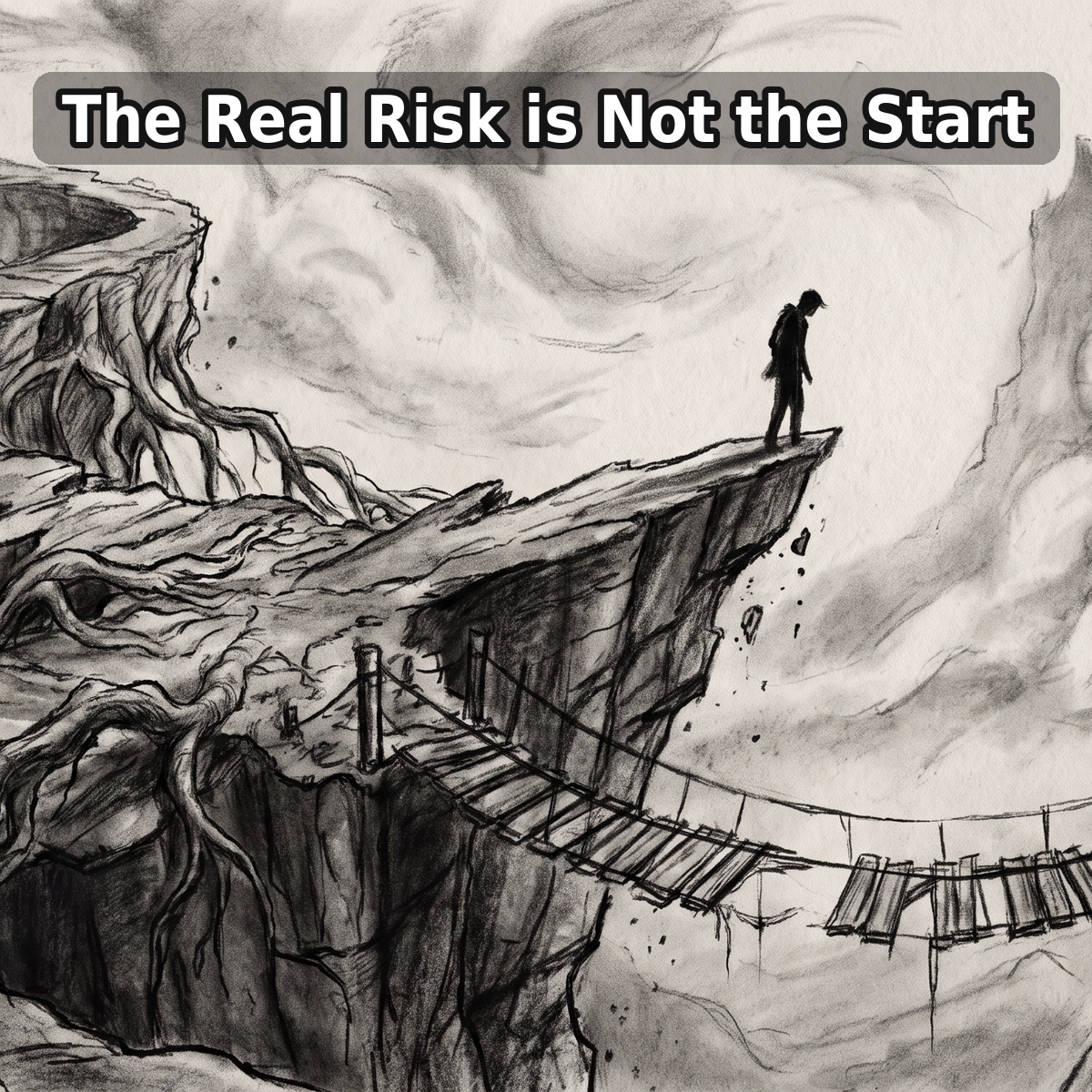
We are inundated with advice these days about setting goals, creating specific and measurable objectives, and devising OKRs. We’re regaled with stories of exciting and successful people who attribute their incredible achievements, at least in part, to their meticulous goal-setting practices. We’ve developed elegant software to set these goals up and track progress in real-time. We carefully craft goals to reflect our ambitions and articulate, in precise language, our path to success. Yet, in our fervor for detail-oriented goal setting, we’ve effectively stripped goals of their true power. With all our focus on minute details—objectives, tasks, and metrics—we’ve lost sight of a profoundly important aspect of goals.
They should be unobtainable.
“What?” you ask. “That’s ridiculous!” you say. “How can a goal be effective if it’s unobtainable?” There’s a simple answer to this: the most inspiring, sought-after, and revered goal statements are often nebulous and beyond reach for ordinary individuals. There’s a reason for this. Humans are inspired by the unattainable. When you set a goal and then immediately define it with precise, easily attainable steps, you strip it of its power. Consider the world’s major religions. Each has lofty, almost impossible goals, yet they command devout and loyal followings.
Christianity promises eternal life with God in heaven after death. Islam aims for Jannah, an eternal paradise in the presence of Allah. Hinduism’s ultimate goal is Moksha, liberation from the cycle of life, attaining divine unity, and eternal bliss. Buddhism seeks Nirvana, a similar state of liberation and peace. These religions thrive on goals that are grand and elusive, at least in our current existence. Humans are clearly wired to chase the impossible.
So, what type of goal is the most inspiring? The one that’s specific, with clearly defined language and measurable criteria? Or the one that’s audacious and larger than life? I would argue the latter. Consider weight loss, a goal many of us share at some point in our lives. The weight loss industry has become a significant force in the United States. Now, let me ask you this: which of these two statements inspires you more?
“I am going to lose 10 lbs before 8/1/24.”
or
“I am going to look great naked.”
The latter statement captures the imagination and appeals to a deeper sense of aspiration. It’s not just about a number on a scale; it’s about a transformative vision that taps into our desire for confidence and self-improvement. The audacious goal is more likely to ignite passion and drive, making the journey toward it more motivating and meaningful.
I get it. I really do. We need measurable and specific goals to track our progress. That’s true. However, which statement is actually going to get me out of bed in the morning and running down the street? Clearly, the specific “lose 10 pounds” goal isn’t cutting it. Everyone has that goal, and we all end up eating the pizza and sleeping in anyway. The problem is, we need more inspiration. We need a goal that will reach down into our core and yank us awake.
Goals are more than just metrics on a spreadsheet. They shouldn’t require endless time to create, track, document, and report. If you’re spending all your time on these activities, you’re not doing the real work needed to achieve the goal. Jesus didn’t hold a seminar on OKRs; he simply told his apostles, “Feed my sheep.” That directive was powerful, inspirational, and got people moving.
So, yes, while measurable goals have their place, they often lack the spark that truly motivates us. We need goals that resonate deeply, that stir our passion and drive us to action. Those are the goals that will get us out of bed and onto the path of real achievement.
I remember a fun moment at a large sales kickoff. A few colleagues and I were sitting in anticipation of the leader’s annual message. This was important because if the growth goal was set too high, our bonuses would be out of reach. Conversely, the lower the goal, the easier it would be to earn our bonus pay. So, needless to say, this was a critical moment. What would the corporate goal be this year?
People were betting it would be less than 10%, but not much lower. Most were hoping for 6-7%, a fair growth rate for a business our size. The moment came, and with great fanfare, the leader announced that there would be no significant growth expected—just 1-2% at the most. It would be a rather flat year. The audience collectively responded with a resounding “meh.”
They should have been excited! Bonuses would be easy this year. Instead, everyone left the meeting deflated, confused, and discouraged. Easy goals are just never good. Despite all the logic behind having easy-to-reach goals, no one likes an easy goal. We all want to be stretched.
Please, for the sake of all the business people out there, do not sit in an office, surrounded by staff, and pontificate on a perfectly crafted goal statement that lands like a lead balloon because it lacks emotion. I want to believe. I want to care. I want to be part of something great. I want to reach for the stars and achieve the impossible, even if I fall short. I want to strive and stretch, even if it means facing failure. I love it! I thrive on it!
No more lukewarm, milquetoast, well-rehearsed corporate goals designed to make everyone look good. Shock us! Wake us up! Dig into our souls and help us see what we are blind to. Give us goals that ignite our passion and drive us to push beyond our limits. We need goals that inspire, challenge, and elevate us. Only then can we truly unleash our potential and achieve greatness.
Sign up to Recieve Articles Like this in your Inbox: https://alumni.the365commitment.com/signup
Video Version of these Articles on Youtube: https://www.youtube.com/@GuyReams
Audio Version of these Articles on Spotify: https://open.spotify.com/show/3e8ydbtlAEOJEuxRXwTzcY?si=3f92a97573a6446d