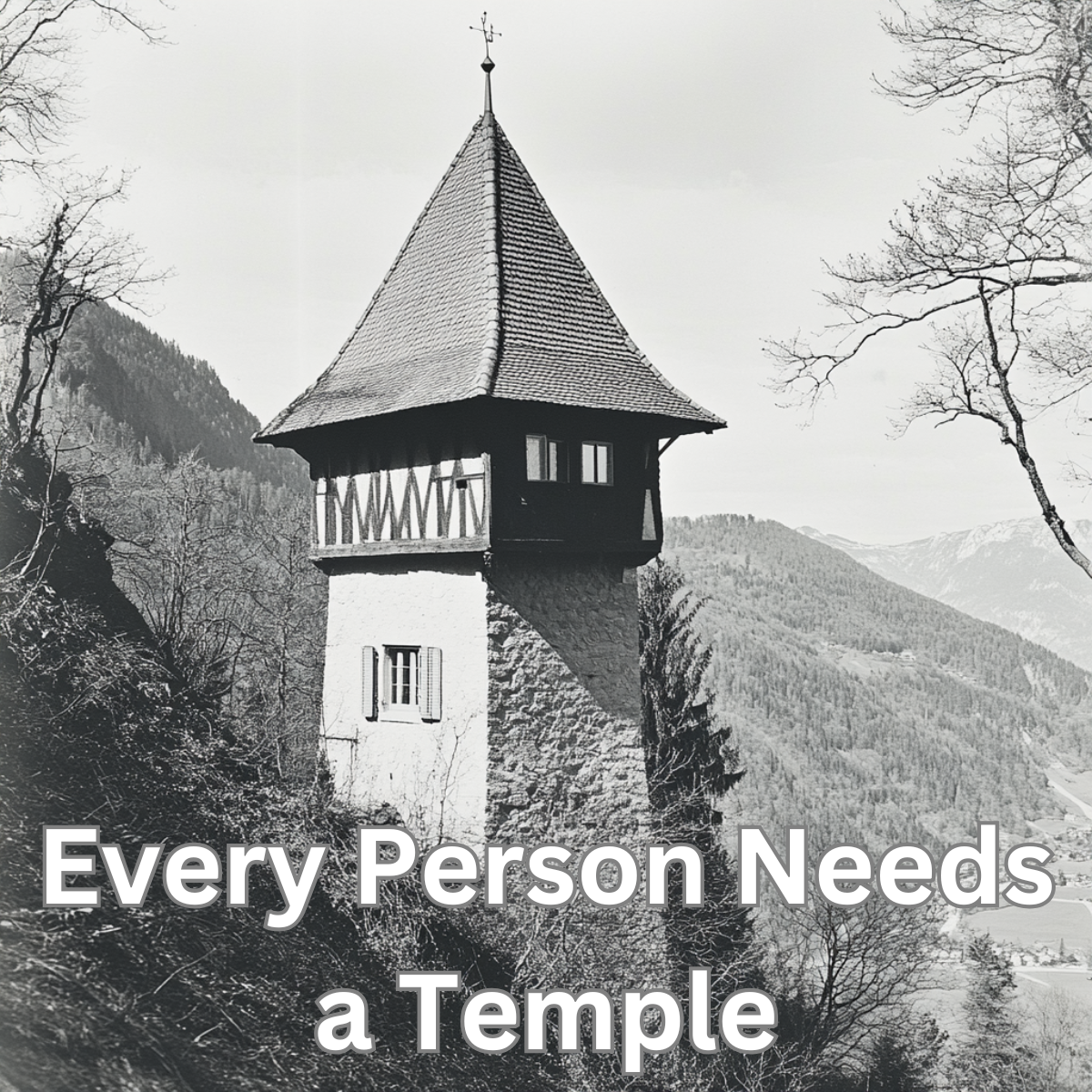
A few days ago, I was feeling despondent and trying to figure out why. After some contemplation, I realized that I had been cooped up indoors for several days, working exclusively in my office. I realized my restlessness stemmed from excessive screen time and artificial light. However, that was not the only cause. The primary cause was that I had not been to my temple recently. A temple? You are now wondering what religion I am going to push on you. No, that is not what I am here to do. However, I am going to try to emphasize the need for you to discover what your temple is. I have no criticism for religions that practice temple worship. There are many, and I know full well that temple attendance is usually at the center of focus on their worship. A physical location where they might commune with the deity and perform important and sacred ceremonies. However, that is not the temple that I am referring to.
This temple is a place of solitude—where you, as an individual, may commune with whatever you call God, if you choose. A place where you can be alone and not distracted. A place where your soul can find peace, or at least be given the space where you might wrestle with your most complex and difficult challenges. A place you can visit regularly—free of stress and available whenever you need it. This temple serves as the foundation of your intellectual, spiritual, mental, and creative pursuit. If you seek greater truth, this is where you will find it.
Throughout history, many have sought solitude as a source of strength. This is the place where they find out who they are and where they learn what will become their life’s work. I cannot think of a significant leader, author, or religious founder that did not revere solitude in their own wilderness.
John the Baptist sought refuge in the wilderness, living as a traveling preacher. He was said to have eaten locusts and honey and to wear homespun clothes. He was a vagabond but in his isolation in the wilderness became a great spiritual leader who created a social movement that was impactful enough to play as the pre-cursor to the much larger movement to develop known as Christianity. Jesus himself is said to have spent 40 days and nights in the wilderness, dedicated to prayer and fasting.
Two of the greatest authors of all time, and both fast friends growing up both had a special place where they would work out their thoughts and ideas prior to a writing session. Tolkien often took quiet walks in the English countryside, frequently visiting a small copse of trees near his home. Lewis, on the other hand, withdrew to ‘The Kilns,’ a small home in Oxford where he did most of his writing. The worlds we know so well today were born in these authors’ places of solitude.
The examples are many. St. Francis of Assisi had Mount La Verna. Søren Kierkegaard found solace in the quiet streets of Copenhagen at night. Albert Einstein had his summer retreat in the Swiss Alps, and later the countryside in Princeton, New Jersey. Carl Jung had the Bollingen Tower, Leonardo da Vinci preferred isoliation in nature, as did Hermann Hesse. Others, like the great author Dostoesvsky were forced into solitude, but somewhere in the suffering wilderness of Siberia were born some of the greatest works in literature.
So you need a temple. It could take any form, but it must be isolated and free from distraction. A place where you could cry, pray, scream outloud. A place where you can talk to yourself without scrutiny. A place where you might pen your Pensees, Iliad, or some other thesis of great importance. Simply put, you will never truly find yourself unless you can be alone in a place where you are free to be.