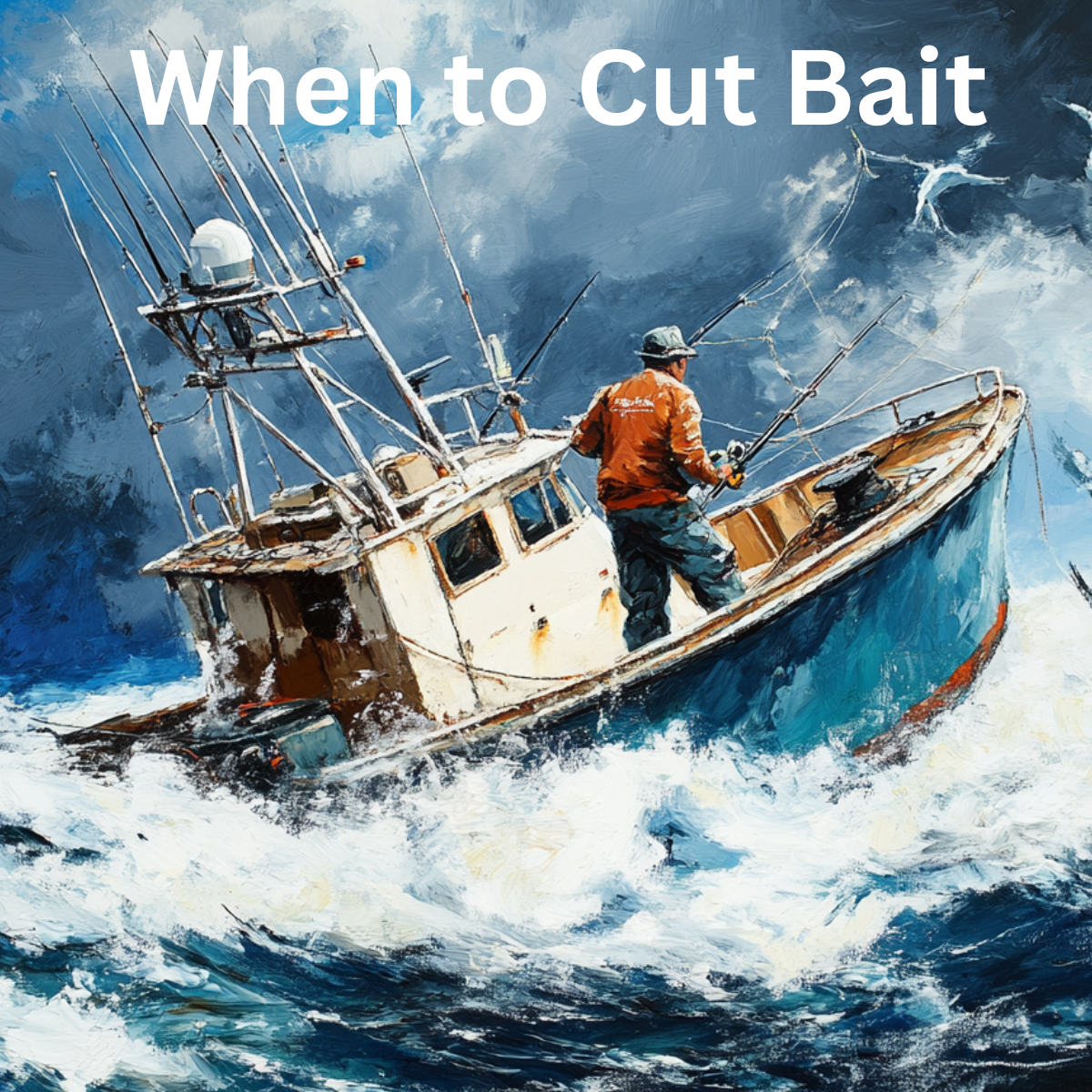
There’s an old phrase—“know when to cut bait.” It originates from the world of deep-sea fishing, a trade where decisions are measured not in emotions but in energy, safety, and the return on effort. When you’re trolling the vast ocean, time and strength are limited resources. A fisherman might snag a fish that fights for hours, pulling hard against the line, leading the boat off course, and draining every ounce of focus and stamina. The instinct is to hold on. After all, what if this is the big one?
But experienced fishermen know better. They understand that sometimes the smartest move is to cut bait. Not because they’ve given up, but because they’ve chosen to preserve their energy for the real catch—the one worth bringing home. The goal, after all, is not just to fight fish, but to return with something meaningful, and to return safely.
That same principle echoes through the choices we face in life. And perhaps no one struggles more with this concept than the young.
When you’re just starting out, every opportunity gleams with potential. Each job, idea, or connection feels like the one—the big break, the life-changer. You dive in with enthusiasm, building castles in the air from the mere possibility of what could be. But with time, the work becomes disproportionate to the reward. The promise fades, and you’re left tethered to something that drains you more than it drives you.
Still, we hesitate to let go. We fear what it says about us—what if walking away means we didn’t try hard enough? What if this is as good as it gets?
This is where maturity quietly enters.
Contrary to the popular idea that growing up means gaining more responsibilities, maturity is often about learning to relinquish. To stop chasing everything that shines and start choosing only what truly matters. To recognize that saying no is not a loss—it is a deliberate act of alignment.
Immaturity seeks to please, to impress, to accommodate every request and entertain every possibility. It wants to be everything to everyone. Maturity, on the other hand, is the ability to say, “This isn’t for me. I’m on a different path.”
Cutting bait isn’t a failure. It’s the discipline to acknowledge that your time, energy, and talents are finite—and they deserve to be directed toward goals that bring you closer to who you’re becoming.
And here’s the quiet truth: saying no can be a deeply positive act.
You’re not rejecting a person, or even an idea—you’re simply honoring your own direction. You can say no with kindness, with clarity, and with conviction. When someone offers you a detour, you can respond: “I really respect what you’re doing, but my current focus is leading me elsewhere. I’ve set some goals that require my full attention, and I need to stay committed to that.”
That’s not selfish. That’s purpose.
So if you’re feeling worn, distracted, or discouraged by something you’re holding onto—whether it’s a job, a relationship, or an ambition that no longer serves you—ask yourself this: is this the catch I came to sea for?
And if the answer is no, then maybe it’s time. Maybe it’s time to cut bait.
Let go not because you’re giving up, but because you’re finally ready to fish with intention.