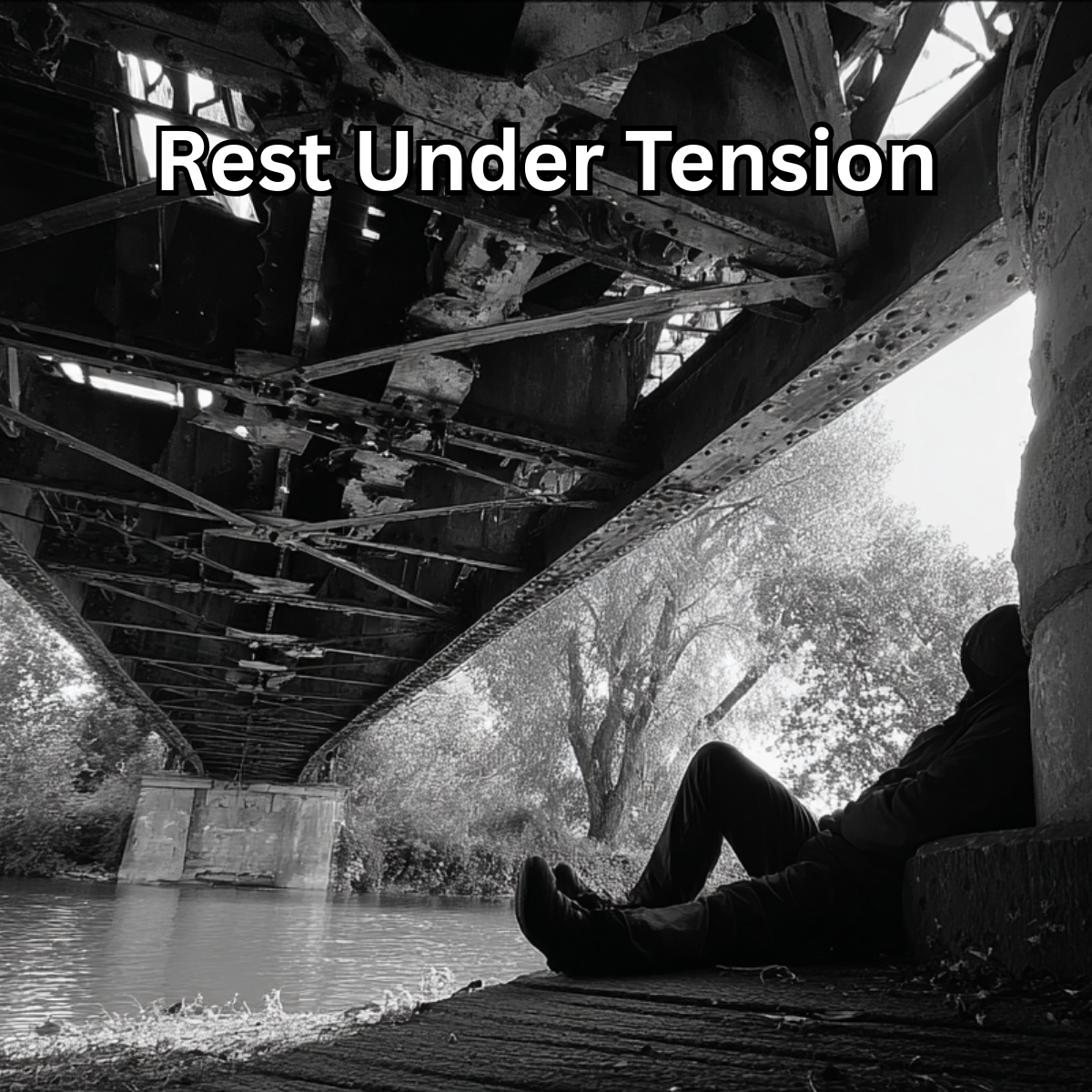
“Rest while under tension” is one of the hardest skills a driven person can learn. Tension creates a story, and that story says you’re needed, this matters, now is not the time to slow down. Push through. That story has probably served you well. It helped you build, helped you compete, helped you endure. But there’s a deeper layer worth discussing.
There are two kinds of tension. The first is productive tension, the kind that sharpens you. A deadline. A challenge. A bold goal. This tension has edges and endpoints. You can see it, measure it, finish it. The second is ambient tension, the constant hum in the background. Responsibility. Expectations. Identity. The feeling that you’re always on, always accountable, always carrying something you can’t quite set down.
It’s the second one that makes rest hard.
When tension becomes identity, resting feels like betrayal. You’re not just stopping work. You’re stepping away from who you are. That’s the real friction. The driven person doesn’t fear laziness. They fear irrelevance. They fear that if they stop, even for a moment, the whole structure might shift or collapse. So they stay tense, stay ready, stay engaged, because that posture has become inseparable from their sense of self.
I’ve felt this. The weight isn’t always the task itself. It’s the belief that I must be the one holding it, right now, without pause. Rest starts to look like weakness or indulgence, something other people can afford but not me. Not yet. Not until everything is handled. But everything is never handled. The list refills. The inbox grows. The ambient tension remains.
Here’s what I’m learning. Rest while under tension doesn’t mean the tension disappears. It means you acknowledge it, name it, and choose to rest anyway. You don’t wait for permission from your circumstances. You don’t wait until the pressure lifts. You rest because you’re still needed tomorrow, and the week after, and the month after that. You rest because endurance requires it, not because you’ve earned it.
This is not about balance. Balance suggests equal weight on both sides, a perfect equilibrium that rarely exists in real life. This is about rhythm. Tension and rest, effort and recovery, output and input. You can hold tension and still step back. You can carry responsibility and still sleep well. You can be driven and still be human.
“When tension becomes identity, resting feels like betrayal.”
The shift starts small. One evening where you stop early, not because the work is done but because you decide the work can wait. One morning where you don’t check messages before you’re fully awake. One weekend where you let the ambient hum fade into the background, just for a day. These aren’t grand gestures. They’re quiet decisions that slowly reshape the story you tell yourself about what it means to be reliable, to be serious, to be someone who shows up.
Rest while under tension is a skill, and like any skill, it improves with practice. The first few times feel wrong. Your mind will protest. Your body will stay alert. But over time, you learn that rest doesn’t erase your drive. It sustains it. You learn that stepping back doesn’t mean stepping down. It means you’re still in this for the long run.
Tonight, or tomorrow, pick one small moment. Let the tension stay where it is. Rest anyway.