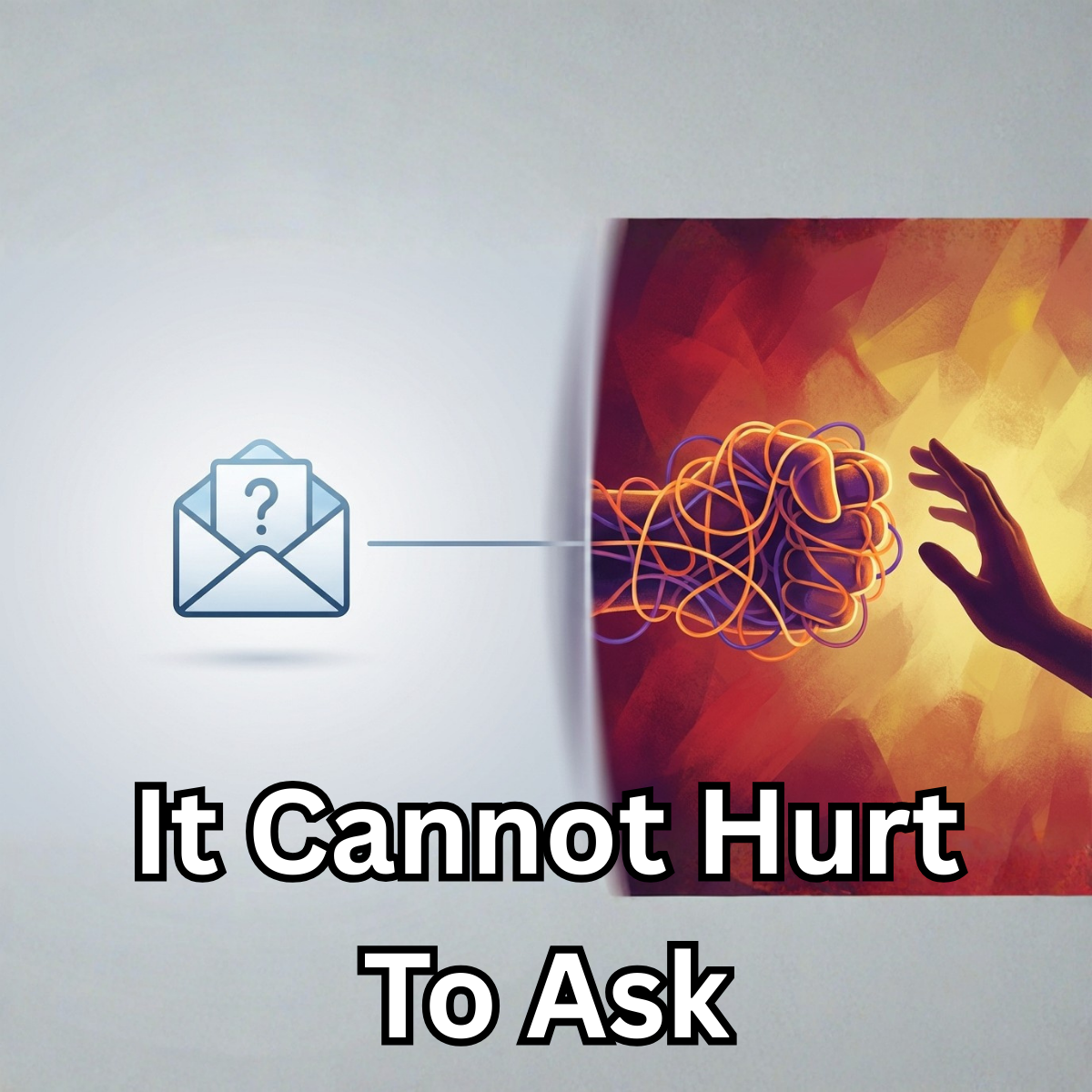
Someone told me again today that it cannot hurt to ask. The worst they can say is no, right? I have heard this from successful people my entire life, and every time, it sounds so simple. But then I sit down to write the email or pick up the phone, and I freeze.
If it cannot hurt to ask, why does it feel so hard?
Because the phrase is only logically true. It is not emotionally true.
On paper, asking costs nothing. You type a few sentences, hit send, and wait. But in reality, asking risks something very real. When you ask, a few things happen quietly inside you. You expose a gap. You admit you do not know something, need something, or want something. You risk rejection. Someone could say no, or worse, ignore you entirely. You give up control. The outcome is no longer fully yours. And you invite judgment, real or imagined.
Your brain treats those as social threats. Humans are wired to avoid anything that could lower status, belonging, or safety. So even a simple ask can feel disproportionately heavy.
There is also a deeper layer at work. Identity.
If you see yourself as competent, asking can feel like admitting weakness. If you see yourself as independent, asking can feel like dependence. If you see yourself as respected, asking can feel like risking that respect. The resistance is not about the ask itself. It is about what the ask might say about you.
That is why it feels hard.
Here is the strange part. Most people respect others who ask clearly and confidently. But internally, we assume the opposite. We assume that asking diminishes us. So you end up with this gap. Reality says asking often creates opportunity. Perception says asking feels like risk. And that tension is exactly where growth tends to happen.
“The resistance is not about the ask itself—it is about what the ask might say about you.”
If you want to make it easier, do not try to remove the fear. Just shrink the meaning of the ask. Instead of thinking this defines me, think this is one small attempt. The ask is not a statement about who you are. It is just a question. One question among many you will ask in your life.
So the next time someone tells you it cannot hurt to ask, know that they are right. And know that it will still feel hard. That does not mean you are doing it wrong. It means you are doing something that matters. Pick one small ask today. Write it down. Send it. Then move on.