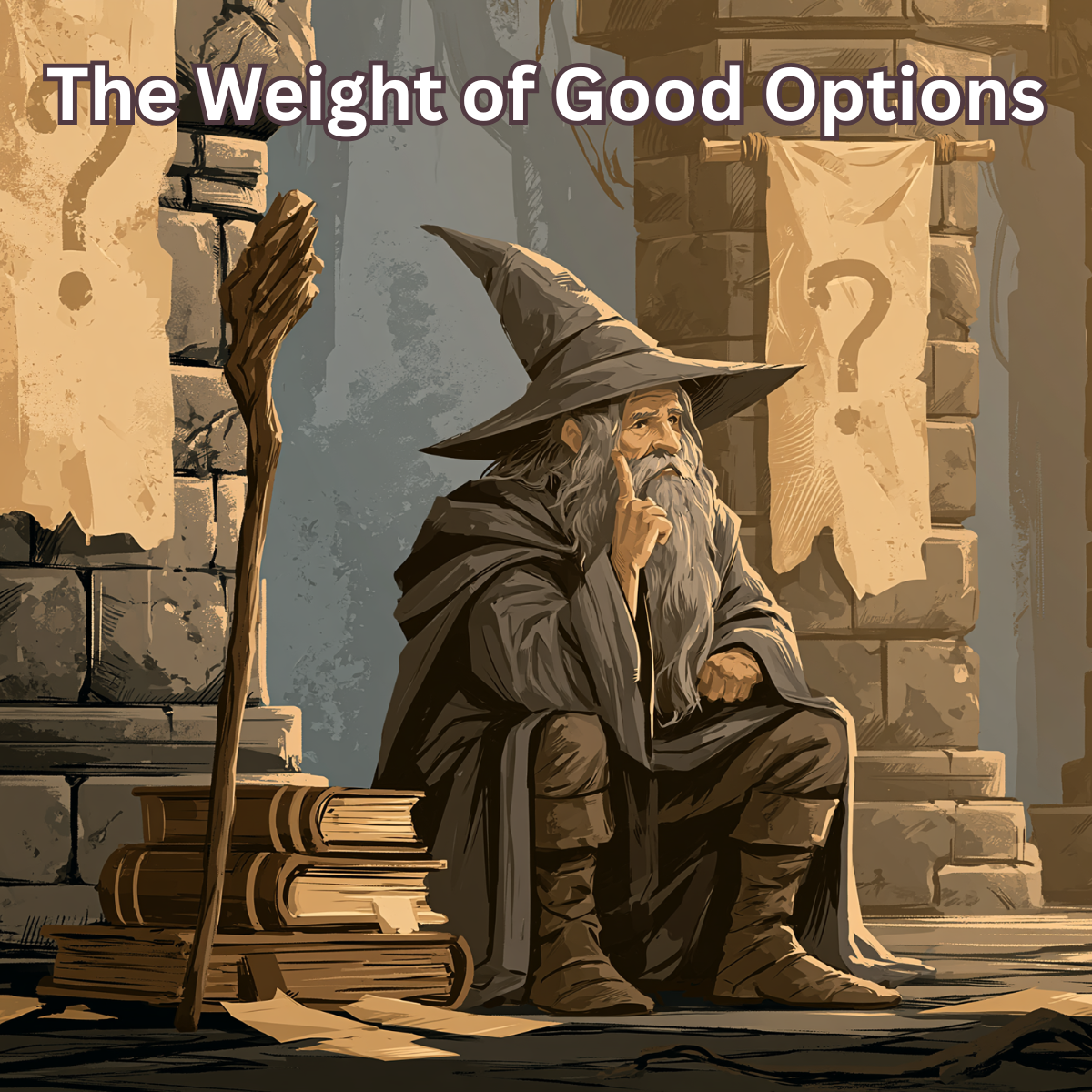
I woke this morning with a familiar tightness in my chest. Not panic, but something close. I had slept well. Nothing urgent was broken. But when I opened my eyes, I felt the weight of too many possibilities pressing down. I have several good paths in front of me right now. New projects. New directions. Each one promising. Each one viable. And yet I found myself dreading the moment I would have to sit down and commit to any single one of them.
This is not the anxiety of having no options. That kind of anxiety is painful, but it is clear. You know what you have to do because there is only one thing left to do. This is different. This is the anxiety that comes when every door is open and you have to choose which one to walk through, knowing that walking through one means closing the others.
You are not just choosing an option. You are losing the others.
When every option is good, the question is not only which one should I pick. The question becomes, what if I lose the better life that was hidden behind the option I did not choose? That is why good options can create grief. Every choice contains a small death of the alternatives. You are not only saying yes to one path. You are saying no to several possible versions of your future.
The brain wants certainty before it commits. The anxious mind tries to solve the decision by demanding impossible information. Which path will work best? Which one will I regret least? Which one will make me happiest five years from now? Which one is the right one?
But most meaningful decisions do not come with that level of certainty. So the mind keeps analyzing, comparing, imagining, rehearsing, and delaying. It feels productive, but often it becomes a loop.
When one option is obviously bad, the decision is easier. But when several options are promising, the responsibility feels heavier. You start thinking, if I choose wrong, it is on me. That is a hard burden. Having options gives you freedom, but freedom also brings ownership. That ownership can create anxiety because now the outcome feels connected to your judgment, your wisdom, your courage, your identity.
You may be trying to optimize instead of choose. A lot of option paralysis comes from trying to find the best possible path instead of a good enough, aligned path. There is a big difference. The optimizer asks, which one is perfect? The wiser decision maker asks, which one fits my values, direction, constraints, and season of life? The first question can trap you. The second can move you.
Sometimes the anxiety is not about the option itself. It is about what the option says about who you are becoming. Choosing one business direction may feel like abandoning another version of yourself. Choosing one relationship path may feel like admitting something about your desires or fears. Choosing one career move may feel like declaring what kind of person you are now. That kind of choice is heavier because you are not just selecting a path. You are editing your identity.
“Having many good options creates anxiety because it exposes the cost of freedom. You are free to choose, but you are not free from loss, uncertainty, or responsibility.”
The way through is usually not more analysis. It is better framing. A helpful question is, which option am I willing to take responsibility for? Not which option guarantees success. Not which option removes all regret. Not which option will everyone understand. But which path can I choose, commit to, and make meaningful?
Because with many good options, the difference is often not in the option itself. The difference is in what you do after you choose. A good path becomes a great path through commitment, effort, adaptation, and patience. But if you stay stuck trying to avoid the pain of choosing, none of the paths can mature.
So the deeper truth may be this. Having many good options creates anxiety because it exposes the cost of freedom. You are free to choose, but you are not free from loss, uncertainty, or responsibility. That does not mean something is wrong. It means the choice matters.
I am going to sit down this morning and ask myself one question. Which path am I willing to take responsibility for? Not which one is perfect. Which one I can commit to. That is the next step.